Jaishankar at Munich: US-China rivalry best in 'Goldilocks zone', not too hot or too good
Synopsis
At the Munich Security Conference, EAM Jaishankar delivered his most quotable distillation yet of India's strategic doctrine: on the US-China rivalry, 'you don't want it too hot, you don't want it too good.' The Goldilocks framing isn't just a quip — it is a roadmap for how India and other emerging powers intend to navigate a world where choosing sides is neither possible nor desirable.
Key Takeaways
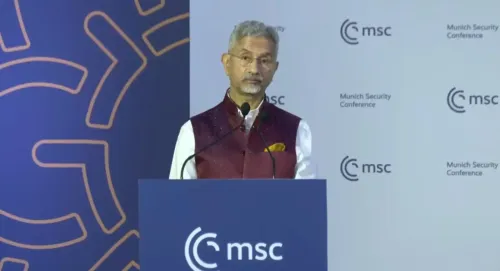
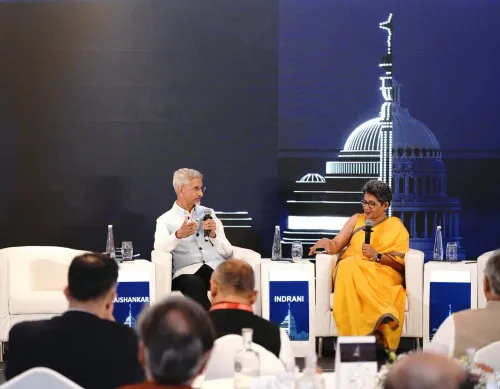
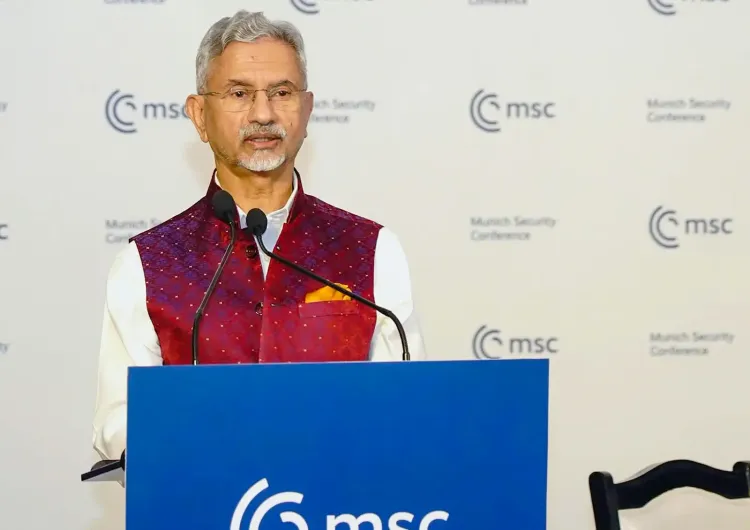
EAM S Jaishankar spoke at the Munich Security Conference on Sunday, 4 October 2026 .
He described the ideal state of US-China rivalry as a ' Goldilocks scenario ' — not too hot, not too harmonious.
Jaishankar argued that emerging and middle powers are focused on diversifying, de-risking , and building resilient supply chains.
He introduced multi-alignment as a rising norm: countries maintaining relationships with multiple major powers simultaneously, even when those ties are difficult to reconcile.
He warned that the shift toward hedging places additional pressure on multilateralism , with the United Nations already 'very visibly gridlocked.'
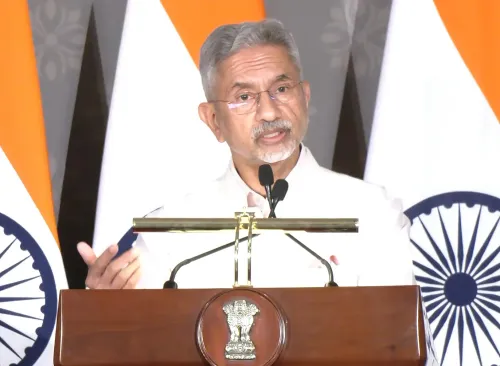
External Affairs Minister S Jaishankar on Sunday offered a striking framing of the US-China rivalry, comparing the ideal state of competition between the two superpowers to a Goldilocks scenario — one that is neither dangerously escalatory nor uncomfortably harmonious. Speaking at the Munich Security Conference, Jaishankar argued that for countries like India, the optimal geopolitical temperature lies somewhere in between.
The Goldilocks Doctrine
'In the context of a US-China rivalry, I think we are looking at what is often called a Goldilocks scenario: You don't want it to be too hot; you don't want it to be too good. You want it somewhere in between, at the right temperature,' Jaishankar said. The remark encapsulates a long-standing Indian strategic posture — maintaining room to manoeuvre between the world's two dominant powers without locking into either camp.
Where Emerging and Middle Powers Fit In
Jaishankar turned the lens on what this rivalry means for countries that are neither Washington nor Beijing. He argued that most emerging and middle powers are now focused on diversifying, de-risking, and building more resilient supply chains. 'They are working out new arrangements; they are developing agenda-based cooperation,' he noted, adding that 'a reasonable degree of convergence' — rather than an identity of views — is sufficient for nations to work together today.
He contended that demanding a 'very strong congruence of interest' is 'too high a bar today,' signalling a pragmatic, transactional approach to multilateral engagement. This framing is notable given India's own simultaneous engagement with the United States through the Quad, with Russia on energy and defence, and with China through trade and border diplomacy.
The Rise of Multi-Alignment
Jaishankar highlighted that a 'third way' — distinct from alignment with either superpower — is becoming a norm rather than an exception. He described the emerging principle as multi-alignment: the idea that countries will maintain relationships with multiple major players, even when those relationships are difficult to reconcile with one another.
'How to engage while hedging, while diversifying — what will come into increasing practice will be the idea of multi-alignment. The idea that countries will have relationships with players that may not always be easy to harmonise, nevertheless are a reality or a compulsion for countries,' he said. He characterised this as 'a strategy of advancing by hedging.'
Pressure on Multilateralism
The minister also raised concerns about the broader consequences of this multi-polar scramble for multilateralism. He pointed to the United Nations as a body that is 'very visibly gridlocked,' warning that the shift toward hedging and multi-alignment will place further stress on institutions designed for a different era of global cooperation.
This comes amid growing frustration across the Global South with UN deadlock on issues ranging from climate finance to conflict resolution, and a broader debate about reforming multilateral bodies to reflect contemporary power realities. Jaishankar's remarks add India's authoritative voice to that conversation at one of the world's most consequential security forums.
Point of View
But not so combustible that every nation is forced to pick a side. The 'multi-alignment' framing is the diplomatic vocabulary India has been building for years, and Munich gives it a global platform. What is underexamined is the tension at its core — hedging works best when the hedger has leverage, and India's leverage depends heavily on its own economic and military weight, both of which are still works in progress. The warning about UN gridlock is real, but India's own record on reforming multilateral institutions — including its decade-long Security Council permanent membership campaign — shows how hard converting rhetorical influence into structural change actually is.
NationPress
4 Oct 2026
Frequently Asked Questions
What did Jaishankar say about US-China rivalry at Munich?
Jaishankar described the ideal state of the US-China rivalry as a 'Goldilocks scenario' — one that is neither dangerously hot nor so cooperative that it sidelines other nations. He made the remarks at the Munich Security Conference on Sunday, 4 October 2026.
What is multi-alignment and why is Jaishankar advocating it?
Multi-alignment is the foreign policy approach of maintaining meaningful relationships with multiple major powers simultaneously, even when those relationships are difficult to reconcile. Jaishankar argued it is becoming a norm for emerging and middle powers navigating the US-China rivalry, allowing nations to hedge and diversify rather than choose sides.
What did Jaishankar say about the United Nations and multilateralism?
Jaishankar warned that the shift toward hedging and multi-alignment places further stress on multilateralism, describing the United Nations as 'very visibly gridlocked.' He questioned what this trend means for global institutions built for a different era.
Why does the 'Goldilocks' framing matter for India's foreign policy?
The framing reflects India's long-standing strategic posture of engaging with both the United States and China without formally aligning with either. It signals that India views a moderate level of US-China tension as beneficial to its own diplomatic room to manoeuvre, a position with significant implications for groupings like the Quad, BRICS, and the SCO.
What did Jaishankar say about emerging and middle powers?
He argued that most emerging and middle powers are currently focused on diversifying and de-risking their economies, security arrangements, and supply chains. He said these countries should aim for 'a reasonable degree of convergence' with partners rather than requiring full alignment of interests.