Jaishankar reaffirms India First policy, cites China reset and Europe FTA gains
Synopsis
EAM Jaishankar has put a name to India's foreign policy doctrine — 'India First' — explicitly echoing the language of 'America First' while insisting it is independent of Washington. In the same breath, he declared Europe India's biggest diplomatic gain in 12 years, even as he carefully stopped short of calling the China relationship fully restored.
Key Takeaways
Jaishankar reaffirmed an 'India First' foreign policy doctrine in an interview with DD India on Tuesday .
He drew a direct parallel with the US 'America First' policy, stating India's stance is independent of Washington's choices.
On China , he said the border situation has 'settled down considerably' since the 2020 disruptions, but stopped short of declaring full normalisation.
Europe was identified as the single biggest improvement in India's diplomatic relationships, driven by the India-EU FTA and deepening strategic ties.
Ties with Russia and Japan were described as steady ; India's non-NATO status was cited as a buffer against direct US policy impact.
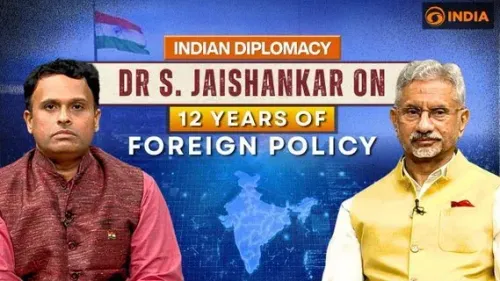
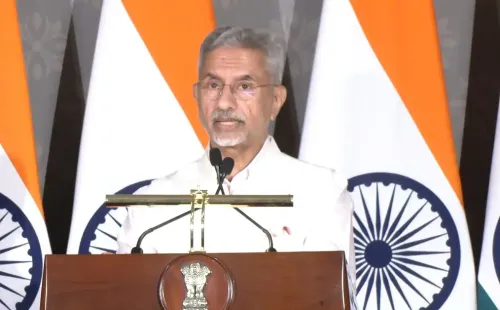
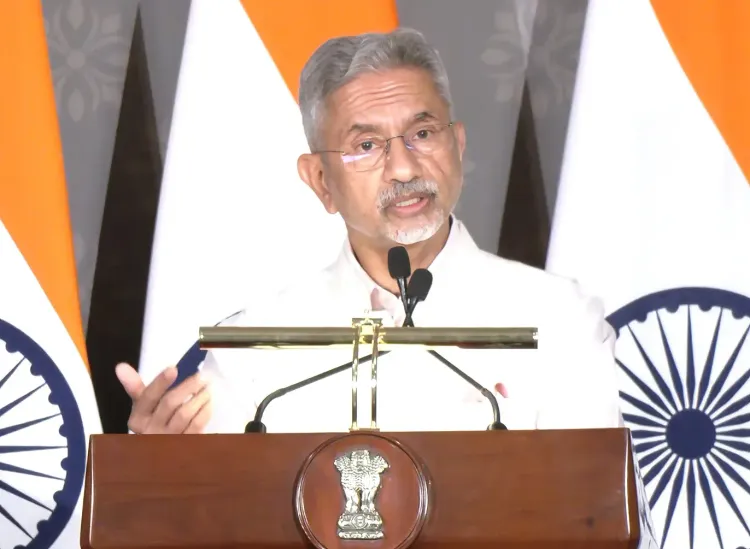
External Affairs Minister S. Jaishankar on Tuesday reaffirmed that the current government's foreign policy is unambiguously anchored in national interest, stating that India's diplomatic decisions must always be tested against what serves the country first. Speaking to DD India in a wide-ranging interview titled '12 Years of Foreign Policy', Jaishankar offered a candid assessment of India's evolving relationships with major powers — from a cautious reset with China to a significantly warmer partnership with Europe.
India First: The Core Doctrine
Jaishankar drew a pointed parallel with Washington's own posture. 'The United States today very openly says that, look, we follow an America First policy. Now, I think from our side, quite independently of what the US does, I think we should always be clear that we follow an India first policy,' he said. He emphasised that the test of any foreign policy decision is, ultimately, what best serves India's national interest — not alignment with any bloc or power.
He noted that a 'big part' of diplomacy today involves achieving optimal positioning among the major powers, describing it as a 'very complex and not an easy thing to do.'
On the US: Tariffs, Multilateralism, and Distance from NATO
Addressing shifts in US engagement with the world, Jaishankar said India was not directly affected in many ways because it is 'not a member of NATO.' However, he acknowledged that tariffs, market access pressures, and Washington's changing stance on multilateral organisations and regional issues had created ripple effects that touched every country, including India.
China: Stabilised, But Not Restored
On the most watched bilateral, Jaishankar offered a measured assessment. 'We went through a difficult period starting with 2020, when peace and tranquillity in the border areas were disturbed, but in the last year, I think things have settled down. Things have settled down politically between us to a considerable degree. I would not say it has gone back to where it was,' he said. The remarks signal a deliberate recalibration — acknowledging progress without overstating normalisation.
Europe Emerges as the Standout Diplomatic Win
Jaishankar identified the relationship with Europe as the single biggest improvement in India's diplomatic ledger. 'The most notable in all our diplomatic accounts, where has been the biggest improvement, I would say without question, it is in Europe — the FTA, the strategic relationship, partnership that we have, really created a new, much closer template for cooperation,' he said. Progress on the long-stalled India-EU Free Trade Agreement and deepening strategic ties have elevated the relationship to a new register.
He also noted that ties with Russia and Japan remained steady, underscoring a multi-vector foreign policy that resists dependence on any single partner.
What This Signals
The interview comes as India navigates an unusually complex global environment — managing a partial thaw with China, hedging against US unpredictability, and deepening economic integration with Europe. Jaishankar's framing of an 'India First' doctrine, explicitly mirroring the language of 'America First,' is a deliberate signal to domestic and international audiences that New Delhi's foreign policy calculus is interest-driven, not ideology-driven. How these recalibrations hold under continued geopolitical pressure will define the next phase of India's strategic positioning.
Point of View
Including one with Washington. The China assessment is the more revealing passage: 'settled down considerably' is diplomatic language for a fragile equilibrium, not a restored relationship. The effusive praise for Europe is also strategic — at a moment when the US is less predictable and China remains a contested partner, Europe becomes the diversification play. The question is whether the India-EU FTA, long delayed by agriculture and tariff disputes, can actually close — and whether 'much closer template' translates into durable economic integration or remains a talking point.
NationPress
16 Sept 2026
Frequently Asked Questions
What is the 'India First' foreign policy that Jaishankar described?
It is the principle that every Indian foreign policy decision must be tested against national interest, independent of what other major powers do. Jaishankar explicitly stated this stance is not contingent on the US adopting its own 'America First' policy — India's position stands on its own terms.
Has India's relationship with China fully normalised after the 2020 border tensions?
Not fully, according to Jaishankar. He said things have 'settled down politically to a considerable degree' since the 2020 disruptions to peace and tranquillity in border areas, but added, 'I would not say it has gone back to where it was' — indicating a cautious, partial recovery rather than a full reset.
Why did Jaishankar call Europe India's biggest diplomatic improvement?
He cited the progress on the India-EU Free Trade Agreement and the deepening strategic partnership as creating a 'new, much closer template for cooperation.' He described the Europe relationship as the single biggest improvement across all of India's diplomatic relationships.
How has India been affected by changes in US foreign policy?
Jaishankar said India was not directly affected in many ways because it is not a NATO member. However, he acknowledged that US positions on tariffs, market access, multilateral organisations, and regional issues created effects that touched all countries, including India.
What is the current state of India's ties with Russia and Japan?
Jaishankar described relationships with both Russia and Japan as 'steady,' signalling continuity rather than major shifts, consistent with India's multi-vector foreign policy approach of maintaining independent ties with all major powers.