Jaishankar: 12 Years of Indian Foreign Policy Serving People's Aspirations
Synopsis
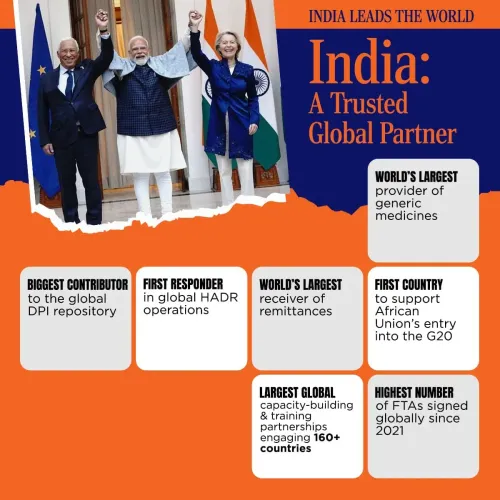
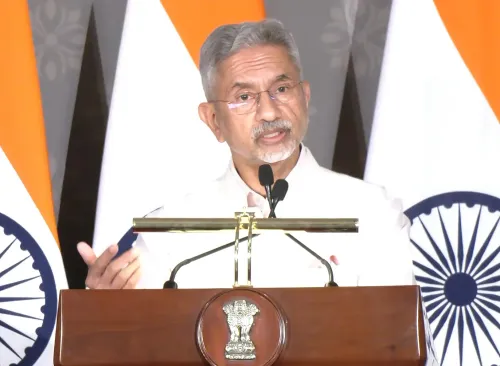
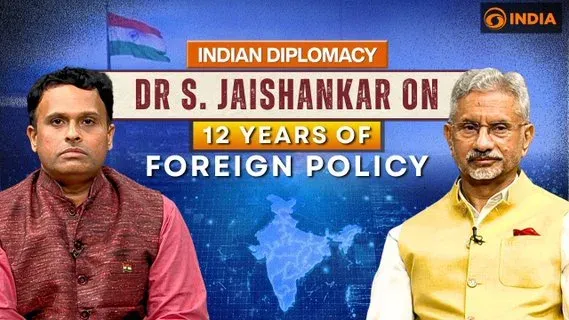
External Affairs Minister Dr. S. Jaishankar on June 9, 2026 said India's foreign policy over 12 years has delivered on citizens' aspirations, sharing a video conversation with scholar Sreeram Chaulia on how PM Modi's leadership deepened global partnerships.
Key Takeaways
Jaishankar stated that 12 years of Indian foreign policy have been oriented toward citizens' ambitions, aspirations, and expectations.
The minister shared a video conversation with foreign policy scholar Sreeram Chaulia on June 9, 2026 .
India's foreign policy since 2014 has evolved from non-alignment to issue-based multi-alignment, building ties with the US , Japan , Australia , the EU , and Gulf states .
Key policy pillars launched under PM Modi include the Act East Policy and the Neighbourhood First policy, both announced in 2014 .
The people-centric framing of foreign policy — linking global partnerships to domestic benefits — is a consistent feature of the government's diplomatic communication.
Upcoming Quad , SCO , and BRICS forums will be key tests of the multi-alignment framework going forward.
Union External Affairs Minister Dr. S. Jaishankar on Tuesday, June 9, 2026, shared a video conversation with foreign policy scholar Sreeram Chaulia, asserting that India's foreign policy over the last 12 years has been oriented toward delivering on the ambitions, aspirations, and expectations of its citizens under Prime Minister Narendra Modi's leadership.
Context
In his post, Dr. Jaishankar wrote that India's foreign policy has, over the past 12 years, 'worked to deliver on the ambitions, aspirations and expectations of its people.' He invited followers to watch his conversation with Sreeram Chaulia — a prominent scholar on Indian foreign policy — discussing how global partnerships have 'deepened reflecting our growing interests and capabilities' under PM Modi's leadership. The post was accompanied by a YouTube link to the full conversation.
The framing is notable: rather than anchoring the assessment in geopolitical events alone, Jaishankar explicitly ties foreign policy performance to domestic constituencies — a recurring theme in the government's diplomatic communication since 2014.
Policy Backdrop
The 12-year period referenced spans from May 2014, when PM Modi assumed office, to the present. During this window, India formally launched the Act East Policy in 2014, deepening economic and strategic engagement with ASEAN and East Asian nations, and articulated the Neighbourhood First policy to prioritise connectivity and development with immediate neighbours.
In 2015, India and the United States issued a Joint Strategic Vision for the Asia-Pacific and Indian Ocean Region, marking a significant upgrade in defence and maritime cooperation. More broadly, Indian foreign policy has shifted from classical non-alignment toward issue-based multi-alignment — building denser institutional ties with the United States, Japan, Australia, the European Union, and Gulf states, while sustaining engagement with Russia and China.
Dr. Jaishankar, who has served as India's Ambassador to the United States, China, and Singapore before becoming External Affairs Minister in May 2019, has been a principal architect of this posture and a consistent public communicator of its rationale.
Stakeholders and Impact
The explicit framing of foreign policy as serving 'the ambitions, aspirations and expectations' of Indian citizens signals that New Delhi continues to present its global engagements as having tangible domestic returns — whether through diaspora welfare, trade access, technology partnerships, or energy security. This people-centric narrative has become a defining feature of how the current government communicates foreign policy to a domestic audience.
For diplomatic partners, the statement reaffirms India's trajectory as a confident, interests-driven actor whose external engagements are shaped by internal growth imperatives. Sreeram Chaulia, with whom Jaishankar held the conversation, is the Dean of the Jindal School of International Affairs and a widely cited voice on Indian strategic affairs, lending the discussion academic credibility alongside official perspective.
What's Next
The coming months will test the durability of the multi-alignment framework, with Quad leaders' summits, SCO and BRICS ministerial meetings, and potential bilateral trade and technology agreements on the horizon. Each of these forums will offer Dr. Jaishankar further opportunities to demonstrate that deepened global partnerships translate into concrete gains for India's economy and its citizens.
The minister's decision to amplify the conversation publicly suggests the government intends to keep the foreign policy narrative active in public discourse as these engagements unfold.
Point of View
He implicitly draws a contrast with the pre-2014 period and frames the Modi government's record as a coherent, sustained achievement rather than a collection of episodic events. The choice of an academic interlocutor rather than a party platform also signals an effort to give the narrative credibility beyond partisan audiences. As India approaches a dense calendar of multilateral engagements, this kind of proactive framing is likely to intensify.
NationPress
23 Oct 2026
Frequently Asked Questions
What did Jaishankar say about India's foreign policy in his June 2026 post?
Dr. Jaishankar said that in the last 12 years, India's foreign policy has worked to deliver on the ambitions, aspirations, and expectations of its people, and shared a video conversation with scholar Sreeram Chaulia elaborating on this theme.
Who is Sreeram Chaulia and why did Jaishankar speak with him?
Sreeram Chaulia is the Dean of the Jindal School of International Affairs and a widely cited scholar on Indian foreign policy. Jaishankar shared a conversation with him to discuss how India's global partnerships have deepened under PM Modi's leadership.
What is India's multi-alignment foreign policy?
Multi-alignment is India's approach of building strong, issue-based partnerships with multiple major powers — including the US, Japan, Australia, the EU, Gulf states, Russia, and China — rather than aligning exclusively with any single bloc, allowing India to pursue its own strategic and economic interests.
What are the key foreign policy initiatives launched since 2014?
Key initiatives include the Act East Policy to deepen ties with ASEAN and East Asia, the Neighbourhood First policy to prioritise relations with immediate neighbours, and the 2015 US-India Joint Strategic Vision for the Asia-Pacific and Indian Ocean Region.
What multilateral events will test India's foreign policy next?
Upcoming Quad leaders' summits, SCO and BRICS ministerial meetings, and potential bilateral trade and technology agreements are the key forums that will test the durability and depth of India's multi-alignment approach in the near term.