Jaishankar Lists MEA's Gains Over 12 Years of Modi Govt

Synopsis
EAM Dr. S. Jaishankar on June 9, 2026, marked 12 years of the Modi government with a detailed account of MEA's transformation — from 44 new missions and 21 mobility partnerships to crisis evacuations from Ukraine, Afghanistan, Israel and Sudan — framing Indian diplomacy as a 24/7 citizen-first enterprise.
Key Takeaways
44 new Embassies and Consulates have been opened over the past 12 years to serve Indians living and travelling abroad.
21 mobility partnerships have been signed to facilitate Indians joining the global workforce.
Crisis evacuations were conducted from Ukraine, Afghanistan, Israel and Sudan , building on protocols established under the Vande Bharat Mission.
The Indian Community Welfare Fund has been expanded to provide emergency aid, repatriation support and legal assistance to distressed overseas Indians.
Digital platforms for grievance redressal and feedback have been created to improve consular access for citizens.
Welfare measures for Indian students abroad and support for Indian exporters accessing new markets were also highlighted as key achievements.
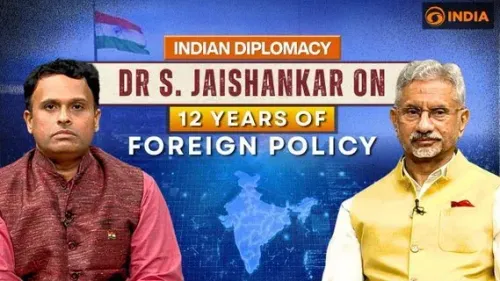
Union External Affairs Minister Dr. S. Jaishankar on Tuesday, June 9, 2026, marked 12 years of the Narendra Modi government by outlining a sweeping account of how India's foreign policy and consular services have been transformed since May 2014. Posting on X under the hashtag #12YearsOfSewa, Jaishankar credited the period with shifting Indian diplomacy from elite statecraft to a citizen-first, welfare-oriented model.
Context
Prime Minister Narendra Modi was first sworn in on May 26, 2014, and the Ministry of External Affairs (MEA) has since operated under a mandate that combines traditional geopolitical engagement with direct service delivery to ordinary Indians. Jaishankar's post catalogues ten specific achievements, ranging from passport and document services to crisis evacuations and cultural promotion. 'Indian diplomacy works 24/7 for the nation,' he wrote, adding that 'Indians travel abroad today with greater confidence and a stronger sense of pride.'
The minister's list spans consular infrastructure, digital grievance platforms, student welfare, export facilitation, and the opening of 44 new Embassies and Consulates. He also cited 21 mobility partnerships that have helped Indians access the global workforce — a figure that reflects the government's sustained push to formalise labour migration channels.
Policy Backdrop
The transformation Jaishankar describes has roots in several policy frameworks introduced after 2014. The 'Neighbourhood First' doctrine deepened engagement with immediate neighbours, while the 'Act East' policy — upgraded from the earlier 'Look East' approach — gave strategic and economic weight to India's engagement with Southeast and East Asia. Together, these frameworks repositioned India as a more assertive regional and global actor.
Crisis response became a defining feature of the period. Operation Ganga in 2022 evacuated thousands of Indian nationals from Ukraine during the Russia-Ukraine conflict. Rapid evacuations were also conducted from Afghanistan following the 2021 Taliban takeover, and from Israel and Sudan during subsequent crises. These operations were enabled by protocols institutionalised under the Vande Bharat Mission framework launched in 2020.
The Indian Community Welfare Fund (ICWF), deployed by Indian missions abroad, has served as the financial backbone for emergency assistance, repatriation, and legal aid to distressed overseas Indians. Its expanded use over the past decade reflects both the growing size of the diaspora and the government's commitment to consular outreach.
Stakeholders and Impact
The primary beneficiaries of these changes are the Indian diaspora, estimated at over 3.2 crore people worldwide, along with Indian students, migrant workers, and exporters seeking new markets. Digital platforms for grievance redressal have made it easier for citizens in remote locations to flag consular concerns without visiting a mission in person.
Indian businesses have also gained from the MEA's economic diplomacy arm, which has worked to secure market access and facilitate development projects that enable Indian products and services to enter new geographies. Cultural diplomacy — through the promotion of Indian heritage, traditions, and soft power — has run in parallel, reinforcing India's standing in regions with significant diaspora populations.
The opening of 44 Embassies and Consulates over twelve years has been particularly significant for underserved regions in Africa, Latin America, and the Pacific, where Indian communities previously had limited consular access.
What's Next
Jaishankar's post signals that the government views citizen-centric diplomacy as an ongoing, expanding project rather than a completed one. Further growth in mobility partnerships and additional mission openings in high-diaspora regions are among the areas to watch as the government enters its thirteenth year. The minister's framing — 'diplomacy works 24/7' — suggests welfare-oriented consular service will remain a political as well as a policy priority going forward.
Point of View
Citizen-visible deliverable rather than an abstract diplomatic achievement. By anchoring the list to Modi's oath anniversary, the MEA aligns foreign policy gains with the broader '12YearsOfSewa' narrative the ruling establishment is projecting across ministries. The emphasis on evacuations, passports, and worker mobility is telling: it signals that the government believes its strongest case on foreign policy is not geopolitical positioning but tangible service delivery to ordinary Indians. This welfare-first framing of diplomacy, if sustained, represents a durable shift in how Indian foreign policy is communicated and evaluated publicly.
NationPress
20 Sept 2026
Frequently Asked Questions
How many new embassies and consulates has India opened under Modi?
According to EAM Jaishankar, 44 new Embassies and Consulates have been opened during the 12 years of the Modi government to address the needs of Indians living and travelling abroad.
Which countries did India evacuate its citizens from under the Modi government?
India conducted evacuation operations from Ukraine (Operation Ganga, 2022), Afghanistan (2021 Taliban takeover), Israel , and Sudan , among the examples cited by EAM Jaishankar.
What is the Indian Community Welfare Fund?
The Indian Community Welfare Fund (ICWF) is a government fund operated through Indian missions abroad to provide emergency financial assistance, repatriation support and legal aid to distressed overseas Indians.
How many mobility partnerships has India signed for overseas workers?
EAM Jaishankar stated that India has signed 21 mobility partnerships to date, facilitating Indians in accessing the global workforce and international job markets.
What is India's 'Act East' policy?
The 'Act East' policy, introduced after 2014, upgraded India's earlier 'Look East' engagement into a strategic and economic priority, deepening ties with Southeast and East Asian nations.