India-China ties improving but border remains decisive: Jaishankar
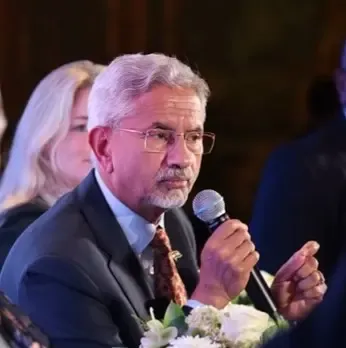
Synopsis
External Affairs Minister Jaishankar drew a sharp distinction in New York: India-China ties are recovering, but that is not the same as a structural reset. With the border as his metric — 'the state of the border determines the state of the relationship' — he signalled that Beijing still has ground to cover before full normalisation is on the table.
Key Takeaways
Jaishankar said on 29 September 2026 in New York that India-China ties are better than in 2025 , and better still than 2024 .
He described the improvement as a recovery from post- 2020 lows, not a structural change in the relationship.
Trade continued during the stand-off, but official exchanges, visas, and flights were all disrupted.
Jaishankar said 'the state of the border determines the state of the relationship' — framing the frontier as the decisive benchmark for normalisation.
He argued that a prolonged estrangement served neither India nor China, and that third parties could benefit from sustained bilateral tension.
India's approach, he said, is to pursue solutions on its own terms within a wider multi-partner balancing strategy.
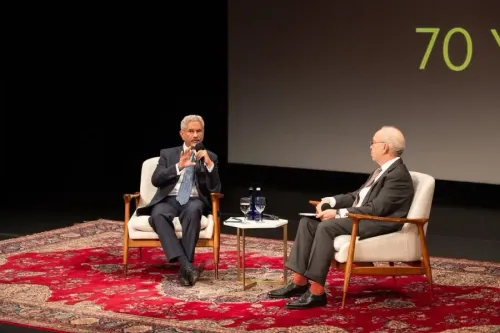
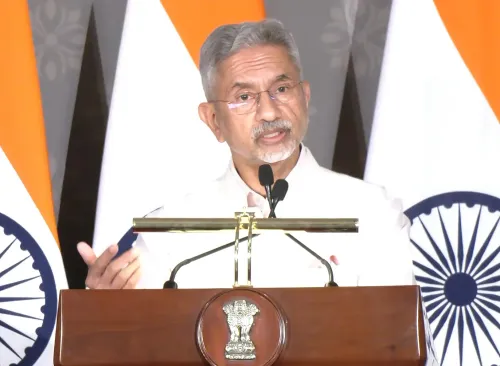
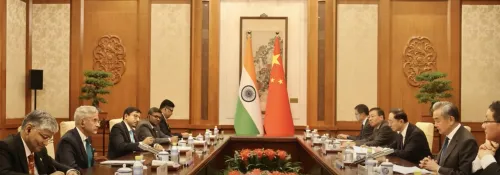
External Affairs Minister S. Jaishankar said on 29 September 2026 in New York that India's relationship with China has recovered from the lows of their protracted border stand-off, but cautioned that the state of the frontier will continue to set the ceiling on how far bilateral ties can normalise. His remarks came in response to questions about increased flights and official engagement between the two countries.
Recovery, Not Structural Change
Jaishankar was explicit that the improvement should not be misread as a reset. 'I don't think it's structural change so much as' a recovery from the depths to which ties had sunk, he said. He noted that the India-China relationship was better than it had been in 2025, and better still compared with 2024, but drew a clear line between restored contact and a durable shift in the bilateral dynamic.
After the events of 2020 and the prolonged border stand-off that followed, normal interaction between the two countries — official exchanges, visas, flights — had been severely disrupted, even as trade continued. The gradual easing of border tensions had allowed some of those channels to reopen, Jaishankar said, describing it as a natural consequence of stabilisation rather than evidence that underlying differences had been resolved.
The Logic Behind Engagement
The minister outlined the reasoning that had guided India's approach: a prolonged breakdown served neither side. 'A dip in our relationship actually doesn't help either of us,' he said, adding that third parties stood to gain from sustained India-China estrangement. He indicated it had taken time for Beijing to accept that logic.
India's goal, he said, was to avoid being locked into a dispute that worked to the advantage of others. Improved ties, he argued, also reinforced India's hand in its wider international relationships — though he was clear that any resolution would be sought on India's own terms. 'If I can find a solution that works for me, I would rather do that,' he said.
Border as the Defining Test
Jaishankar returned repeatedly to the frontier as the ultimate benchmark. 'The state of the border determines the state of the relationship,' he said. 'You can't have tension, if not worse, on the border and say the relationship should be normal.' As the border moves closer to normalcy, he said, the broader relationship can follow — but his remarks stopped short of suggesting that outstanding differences had been settled.
He also drew a distinction between two categories of normalisation: the restoration of contacts that had been interrupted by tension, which could follow a reduction in border friction, and a deeper, more durable improvement that required a more stable foundation.
India's Wider Balancing Act
Jaishankar placed the India-China dynamic within a broader foreign-policy frame. Countries are seeking balance across multiple major relationships while reducing over-dependence on any single partner, he said. For India, that means weighing its ties with China alongside those with the United States, Europe, Japan, Russia, and others.
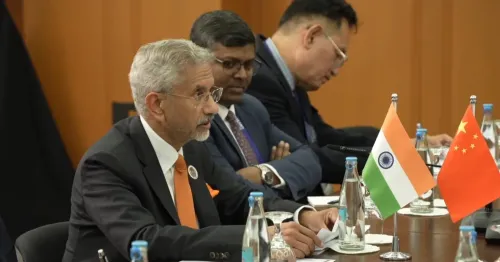
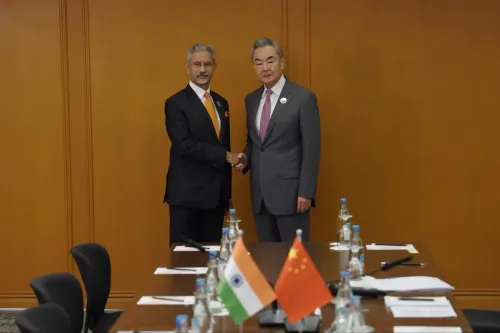
India and China share a long, disputed frontier. The Galwan Valley clash of 2020 brought their border tensions to international attention and triggered a sharp deterioration in bilateral ties. Despite political and security differences, trade between the two countries has continued throughout. India has consistently made clear that a fuller recovery in relations is contingent on peace and stability along the Line of Actual Control.
How quickly the two sides can move from tactical stabilisation to genuine normalisation will be the central test of the relationship in the months ahead.
Point of View
He preserves India's leverage and resists any Chinese narrative that the relationship has been normalised. The Galwan shadow is far from lifted — trade may have persisted, but the trust deficit and unresolved LAC sections mean that any genuine reset remains conditional. The real question is whether both sides can move from tactical stabilisation to something durable before the next friction point forces another reset. India's multi-partner balancing also signals that warming with Beijing is not a pivot away from Washington or Tokyo — it is calibrated coexistence, not realignment.
NationPress
29 Sept 2026
Frequently Asked Questions
What did EAM Jaishankar say about India-China relations in New York?
Jaishankar said India-China ties have improved compared to 2025 and 2024, but characterised this as a recovery from post-2020 lows rather than a fundamental structural change. He stressed that the condition of the border remains the decisive factor in how far the relationship can normalise.
Why does India link the border to the broader relationship with China?
India has consistently held that peace and stability along the Line of Actual Control is a precondition for a fuller bilateral relationship. Jaishankar articulated this directly: 'You can't have tension, if not worse, on the border and say the relationship should be normal.'
What was disrupted between India and China after the 2020 Galwan clash?
After the 2020 Galwan Valley clash and the prolonged border stand-off that followed, official exchanges, visas, and flights between India and China were severely disrupted. Trade continued, but diplomatic and people-to-people contact were significantly curtailed.
Is the improvement in India-China ties a structural reset?
Jaishankar explicitly said it is not. He described it as a natural consequence of border stabilisation — a restoration of contacts that had been interrupted — rather than proof that the underlying issues had been resolved or that the relationship had fundamentally changed.
How does India's China policy fit into its broader foreign policy?
Jaishankar framed India's engagement with China as part of a wider balancing strategy. India is weighing its ties with China alongside relationships with the United States, Europe, Japan, Russia, and others, aiming to reduce over-dependence on any single partner while pursuing solutions on its own terms.