Jaishankar calls for fair market access as India-China ties normalise
Synopsis
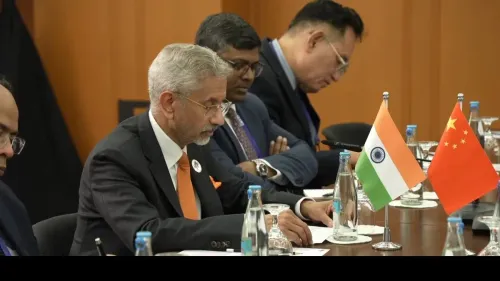
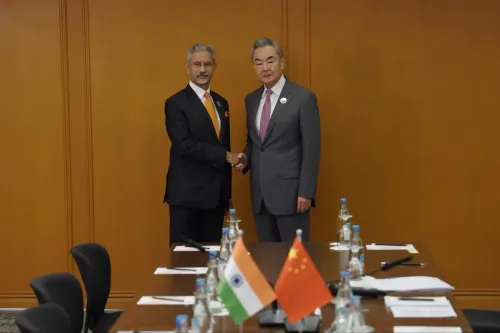
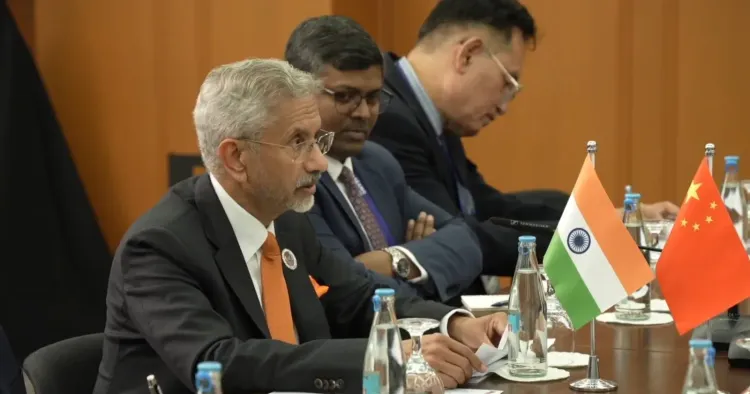
On the sidelines of ASEAN in Manila, Jaishankar told Wang Yi that India-China ties are normalising — but attached clear conditions: border peace is non-negotiable, and fair market access and trade balance must be addressed. The meeting is the second high-level bilateral since the Kazan reset, and the first on an ASEAN platform, signalling a carefully managed thaw with unresolved economic tensions still centre-stage.
Key Takeaways
Jaishankar met Chinese FM Wang Yi in Manila on 22 July on the sidelines of ASEAN engagements.
Jaishankar said India-China ties have been gradually normalising since the Modi-Xi Kazan meeting in 2024 , reaffirmed at Tianjin last August .
He described peace and tranquility in border areas as an “obvious prerequisite” for normal ties, with both sides engaged since October 2024 .
Key normalisation steps cited: resumption of direct flights , updated visa regime , restart of Kailash Mansarovar Yatra , and recommencement of border trade .
Jaishankar raised concerns over fair market access , trade balance , and supply chain predictability as outstanding issues.
India appreciated China’s support for BRICS activities under India’s presidency .
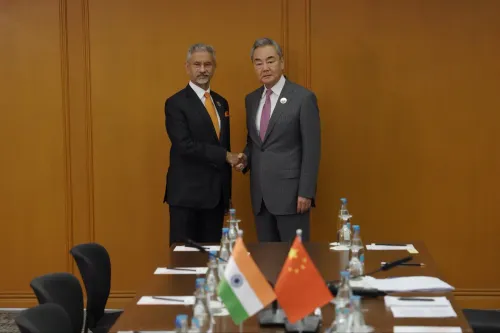
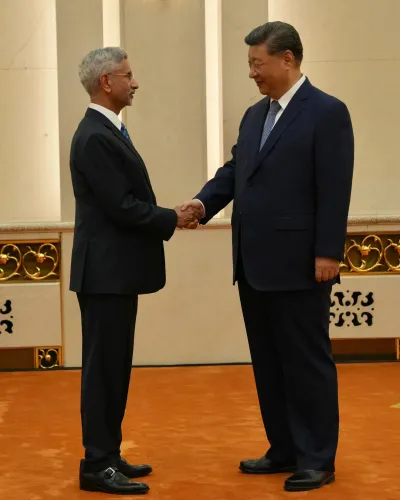
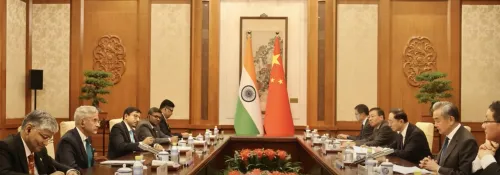
External Affairs Minister S. Jaishankar said on Wednesday, 22 July that relations between India and China have been on a path of gradual normalisation since the 2024 Kazan summit, where Prime Minister Narendra Modi and Chinese President Xi Jinping held a landmark bilateral meeting. Speaking at a meeting with his Chinese counterpart Wang Yi on the sidelines of ASEAN engagements in Manila, Philippines, Jaishankar stressed the need for fair market access and a rebalanced trade relationship.
Key Developments in Manila
Jaishankar's opening remarks framed the bilateral relationship around three pillars: mutual respect, mutual interest, and mutual sensitivity. He noted that the trajectory set at Kazan was reinforced when the two leaders met again in Tianjin last August. “Such a relationship can make a valuable contribution to a multi-polar ASEAN and a multi-polar world,” he said.
The minister also welcomed concrete steps taken in recent months to restore normalcy, including the resumption of direct flights, updates to the visa regime, the restarting of the Kailash Mansarovar Yatra, and the recommencement of border trade.
Border Peace as a Non-Negotiable Prerequisite
Jaishankar was unambiguous on the security dimension, describing peace and tranquility along the border areas as an “obvious prerequisite” for normal ties. He said both sides had been actively engaged on this objective since October 2024 and called for continued attention and full support to relevant bilateral mechanisms.
“It is the responsibility of diplomacy to properly manage” differences between the two nations, he said, echoing the formulation agreed upon by both leaders that “differences should not become disputes.”
Trade Imbalance and Supply Chain Concerns
Beyond the political and security dimensions, Jaishankar raised substantive economic concerns. Fair market access and trade balance featured prominently, alongside worries about the predictability of supply chains — a pointed reference to India’s deep dependence on Chinese imports across electronics, pharmaceuticals, and industrial components.
He also called for facilitating both official exchanges and people-to-people contacts, and urged agreement on meetings of various bilateral mechanisms in line with mutual priorities. Notably, Jaishankar expressed appreciation for China’s support for BRICS activities under India’s presidency, signalling that multilateral cooperation remains a functioning channel even as bilateral friction persists.
What This Signals
The Manila meeting marks one of the highest-level face-to-face engagements between Indian and Chinese foreign ministers in recent years, coming nearly nine months after the border disengagement process was formalised. This is the second confirmed ministerial-level bilateral interaction since the Kazan reset, and the first on the sidelines of an ASEAN platform — a forum where both nations have overlapping strategic interests in Southeast Asia.
The road ahead will likely hinge on whether economic grievances around market access and supply chain transparency can be addressed alongside the ongoing border management process.
Point of View
But Jaishankar’s language was carefully calibrated — welcoming normalisation while embedding non-negotiables on border peace and market access. The trade imbalance concern is not new; India’s deficit with China has consistently exceeded ₹1 lakh crore annually, and Beijing has shown little appetite for structural correction. The supply chain predictability point is the sharper edge: it signals that India is not willing to deepen economic integration without greater transparency and reciprocity. The real test of this thaw will come not in joint communiqués but in whether Chinese market access for Indian goods and services actually improves in the months ahead.
NationPress
21 Oct 2026
Frequently Asked Questions
What did EAM Jaishankar say about India-China relations in Manila?
Jaishankar said India-China ties have been gradually normalising since the 2024 Kazan meeting between PM Modi and President Xi Jinping, reaffirmed at their Tianjin meeting last August. He called for fair market access, trade balance, and described border peace as a prerequisite for normal ties.
Why is the Manila meeting between Jaishankar and Wang Yi significant?
It is one of the highest-level India-China foreign ministerial meetings in recent years and the first on an ASEAN platform since the Kazan reset. It signals continued diplomatic engagement even as economic and border issues remain unresolved.
What steps have India and China taken to normalise ties?
Normalisation measures include the resumption of direct flights, an updated visa regime, the restarting of the Kailash Mansarovar Yatra, and the recommencement of border trade — all cited by Jaishankar in his Manila remarks.
What economic concerns did Jaishankar raise with Wang Yi?
Jaishankar flagged fair market access, trade balance, and predictability of supply chains as key outstanding issues. He also called for greater facilitation of official and people-to-people exchanges between the two countries.
What is India’s position on the border situation with China?
India regards peace and tranquility in border areas as a non-negotiable prerequisite for normal bilateral relations. Jaishankar said both sides have been engaged on this objective since October 2024 and called for sustained attention and full support to relevant mechanisms.