Jaishankar: US now practising India's strategic autonomy playbook
Synopsis
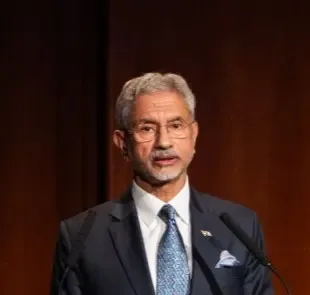
In a sharp and witty exchange in New York, EAM Jaishankar turned the tables on decades of Western criticism of India's multi-alignment — pointing out that the US under Trump is now doing exactly what India was long told not to do. His 'chewing gum' quip landed a serious geopolitical point: the multipolar world India anticipated has arrived, and Washington just joined the queue.
Key Takeaways
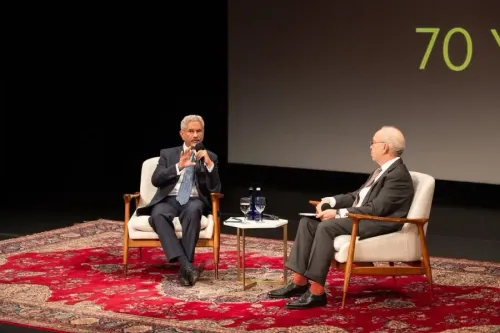
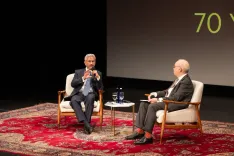
EAM S Jaishankar spoke at an event in New York on 29 September , in conversation with former US official Daniel Russel .
He argued that the US is now practising India's strategic autonomy by simultaneously managing ties with China , Russia , Ukraine , Asia , and Europe .
Jaishankar quipped that 'that piece of gum is in pretty big supply in Washington,' riffing on Russel's 'chewing gum and walking' metaphor.
He recalled past pressure on India to limit its options and focus exclusively on the US — a stance he said Washington itself never applied to itself. 'Today the pretence has dropped for everybody,' Jaishankar said, describing an era where every nation openly pursues its own best deal.
He concluded that this shift is driving the world toward a multipolar order .
External Affairs Minister S Jaishankar on Monday, 29 September told an audience in New York that the United States is today doing precisely what India has long practised — managing a wide web of relationships simultaneously through strategic autonomy. The remarks came at a high-profile event where Jaishankar was in conversation with Daniel Russel, a former US Assistant Secretary of State for East Asian and Pacific Affairs.
The Core Argument
'Pretty much what people used to say about us, Washington is today practising with a great deal of gusto,' Jaishankar said, drawing a pointed parallel between India's longstanding foreign policy doctrine and the current approach of the Trump administration.
He elaborated by listing the multiple, often competing, relationships Washington is now actively managing: China, Russia, Ukraine, other parts of Asia, and Europe. 'So actually, Washington was doing what India had practised,' he said.
The 'Chewing Gum' Exchange
The moment drew particular attention for its wit. Russel had used the colloquial American expression — 'chewing gum and walking at the same time' — to describe multi-directional diplomacy when posing a question about India's strategic autonomy. Jaishankar picked up the metaphor without missing a beat.
'I think that piece of gum is in pretty big supply in Washington,' he quipped, alluding to the range of sometimes contradictory relationships the US is simultaneously pursuing. He then extended the metaphor to a broader global observation: 'Everybody is going to be chewing it.'
A Shift in the Global Order
Jaishankar used the exchange to make a substantive geopolitical point about the emerging multipolar world. He recalled a time when India was told, in effect, not to keep too many options open — to concentrate its relationship on the US alone. 'There was a time when, I would say, the narrative was, "You know we don't like you having too many options because we want ... you to focus your relationship on us,"' he said.
He noted the double standard that existed even then: the US, as a global power, quietly retained its own options. 'Today the pretence has dropped for everybody,' he said. 'Everybody is openly dealing with everybody else.'
Jaishankar framed this shift as both inevitable and clarifying. 'And that is how we are heading towards a multipolar world,' he said, adding that every country would now seek 'the best deal that they can out of a given situation from a much more sharper definition of their interest.'
Why These Remarks Matter
The comments arrive at a moment when India's foreign policy posture — long criticised in Western capitals for its refusal to align exclusively with any bloc — is increasingly being validated by the behaviour of major powers themselves. Notably, the US under President Donald Trump has pursued simultaneous and sometimes contradictory engagements with rivals and allies alike, echoing the very 'multi-alignment' framework that New Delhi has championed for decades.
This is not the first time Jaishankar has made this argument, but the New York setting — and the interlocutor being a former senior US official — gave the remarks unusual diplomatic resonance. His assertion that Washington has effectively endorsed India's worldview by adopting it signals a quiet but significant shift in how Indian diplomacy is positioning itself on the global stage.
As the world moves deeper into a multipolar era, India's early adoption of strategic autonomy may yet prove to be its most durable foreign policy asset.
Point of View
New Delhi's multi-alignment was framed by Western commentators as fence-sitting or strategic ambiguity; it is now, arguably, the default operating mode of every major power including the US itself. What mainstream coverage misses is the accountability dimension: if Washington's own behaviour now validates India's doctrine, it also removes the last credible pressure point that Western capitals held over Indian foreign policy choices. The deeper question is whether India can convert this vindication into concrete leverage — in trade negotiations, technology access, and multilateral forums — or whether it remains a talking point rather than a bargaining chip.
NationPress
29 Sept 2026
Frequently Asked Questions
What did EAM Jaishankar say about US foreign policy in New York?
Jaishankar said the US is now practising what India has long called strategic autonomy — simultaneously managing relationships with China, Russia, Ukraine, Asia, and Europe. He made the remarks on 29 September at an event in New York, in conversation with former US official Daniel Russel.
What is India's strategic autonomy doctrine?
Strategic autonomy is India's longstanding foreign policy approach of maintaining independent relationships with multiple global powers rather than aligning exclusively with any single bloc. It allows India to engage with the US, Russia, China, and others based on its own national interest.
What was the 'chewing gum' joke about?
Daniel Russel used the American expression 'chewing gum and walking at the same time' to describe multi-directional diplomacy. Jaishankar responded by saying 'that piece of gum is in pretty big supply in Washington,' implying the US is now juggling just as many competing relationships as India once did.
Why are Jaishankar's remarks significant?
They signal that India views the US's own diplomatic behaviour under President Trump as a validation of the multi-alignment doctrine New Delhi has championed for decades — effectively turning a long-standing Western critique of Indian foreign policy on its head.
What did Jaishankar say about the emerging multipolar world?
Jaishankar said the old pressure on India to limit its options has faded because 'today the pretence has dropped for everybody.' He argued that every country is now openly pursuing its best deal, and that this dynamic is driving the world toward a multipolar order.