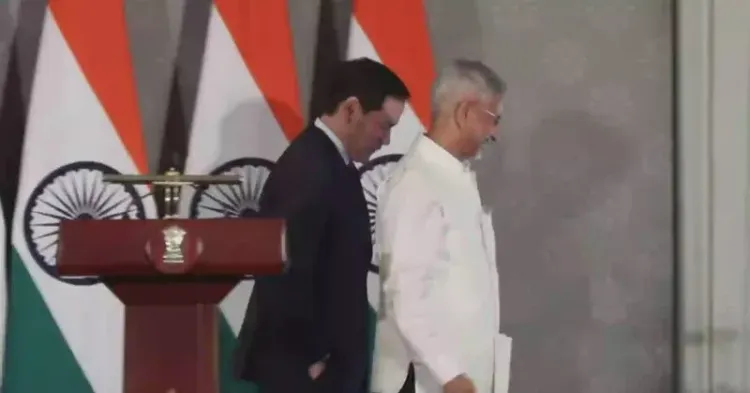
Jaishankar Addresses Media Alongside US Secy of State Rubio
Synopsis
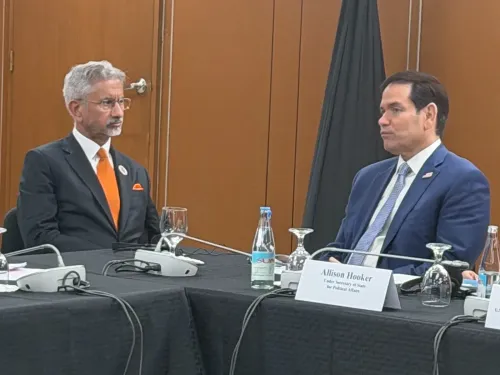
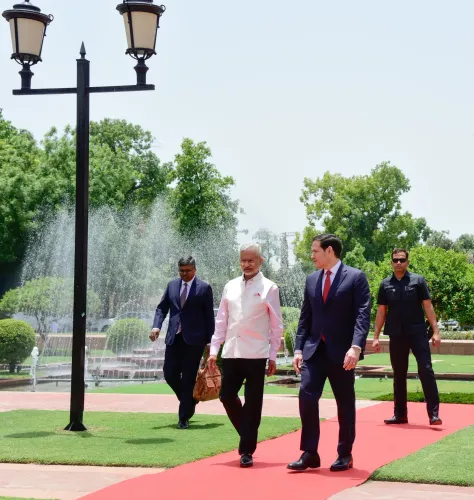
External Affairs Minister Dr. S. Jaishankar held a joint media interaction with US Secretary of State Marco Rubio on May 24, 2026, reinforcing the structured high-level diplomatic engagement between India and the United States across defence, technology and Indo-Pacific security.
Key Takeaways
Jaishankar , India's External Affairs Minister, held a joint media interaction with US Secretary of State Marco Rubio on May 24, 2026 .
The engagement was broadcast live, reflecting the public-facing transparency that now characterises high-level India-US diplomatic meetings.
India-US strategic ties date to the 2004 formal partnership, deepened by the 2008 civil nuclear agreement .
Jaishankar previously served as India's Ambassador to the United States , giving him direct institutional familiarity with Washington's foreign policy establishment.
Observers will watch for a joint statement and potential follow-on ministerial visits covering defence, technology and Indo-Pacific coordination.
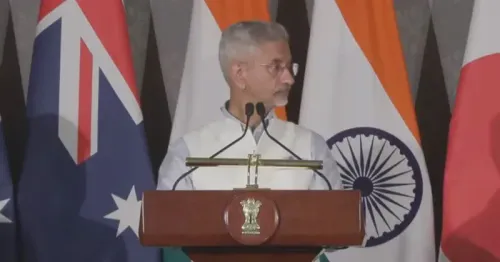
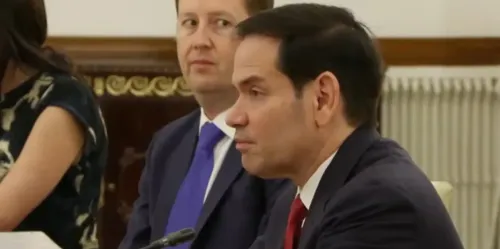
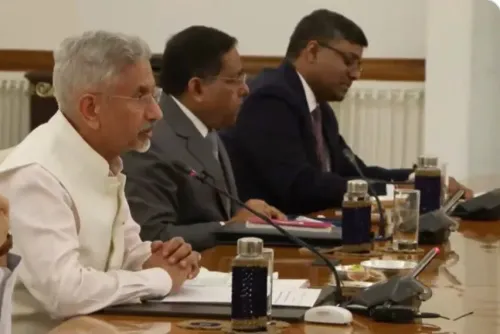
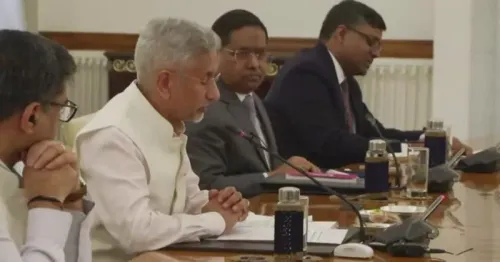
Union External Affairs Minister Dr. S. Jaishankar held a joint media interaction alongside United States Secretary of State Marco Rubio on Sunday, May 24, 2026, in a high-profile bilateral engagement underscoring the continued momentum in India-US diplomatic ties.
Context
Dr. Jaishankar posted on X confirming he was 'addressing the media alongside US Secretary Rubio,' accompanied by the Indian and American flags — a symbolic gesture reflecting the warmth and depth of the bilateral relationship. The post linked to a live broadcast of the joint press interaction, signalling the transparency and public outreach that has come to characterise high-level India-US engagements.
Joint press appearances between India's External Affairs Minister and the US Secretary of State are a structured feature of the bilateral diplomatic calendar, typically used to signal alignment on key issues and to communicate shared positions to both domestic and international audiences.
Policy Backdrop
India and the United States formalised their strategic partnership in 2004, a relationship that gained decisive momentum with the landmark civil nuclear agreement of 2008. Since then, successive governments on both sides have deepened cooperation across defence, technology, trade and Indo-Pacific security.
Dr. Jaishankar, who previously served as India's Ambassador to the United States and as Foreign Secretary, brings an unusually deep familiarity with the institutional architecture of the India-US partnership. His tenures in Washington and Beijing have made him one of India's most experienced interlocutors on great-power diplomacy. Marco Rubio, a long-serving figure in US foreign policy circles with a strong focus on China and national security, represents continuity in Washington's strategic outlook toward the Indo-Pacific.
Stakeholders and Impact
The joint media interaction is of direct relevance to diplomatic officials, defence establishments and strategic affairs communities in both countries. Statements emerging from such engagements often set the tone for subsequent working-level negotiations on defence procurement, technology transfer and multilateral coordination within frameworks such as the Quad.
For Indian industry and the broader business community, high-level diplomatic signals of this nature carry weight — particularly in sectors such as semiconductors, aerospace and critical minerals where India-US cooperation has been expanding. Civil society and think-tank communities in both countries also closely track such interactions as indicators of the bilateral relationship's temperature.
What's Next
Joint press interactions at the ministerial level typically precede or follow broader bilateral reviews, and observers will watch closely for any joint statement or communiqué that may emerge from this engagement. Follow-on visits by defence and commerce ministers from either side would be a natural next step if the discussions covered specific cooperation tracks.
The structured, public nature of the interaction — including a live broadcast — suggests both sides are keen to project a united front, likely with messaging directed at regional partners and strategic competitors alike. The direction of the India-US partnership under the current configuration of leadership in both capitals will be closely watched across the Indo-Pacific.
Point of View
Not merely manage it behind closed doors. For India, such engagements reinforce its positioning as an indispensable partner in Washington's strategic calculus, particularly as great-power competition intensifies. The interaction fits a broader pattern of structured, high-visibility diplomacy that the Jaishankar era has made a hallmark of Indian foreign policy.
NationPress
20 Sept 2026
Frequently Asked Questions
Why did Jaishankar meet US Secretary of State Rubio?
Dr. Jaishankar held a joint media interaction with US Secretary of State Marco Rubio as part of high-level India-US bilateral diplomatic engagement, a structured feature of the two countries' strategic partnership.
What is the India-US strategic partnership?
India and the United States formalised their strategic partnership in 2004, significantly deepened by the landmark civil nuclear agreement of 2008, and have since expanded cooperation in defence, technology and Indo-Pacific security.
What could come out of the Jaishankar-Rubio meeting?
Observers expect a possible joint statement and follow-on ministerial visits covering defence procurement, technology transfer and coordination within Indo-Pacific frameworks such as the Quad.
What is Dr. Jaishankar's background with the United States?
Dr. Jaishankar previously served as India's Ambassador to the United States before becoming Foreign Secretary and subsequently External Affairs Minister, giving him deep institutional familiarity with Washington's foreign policy establishment.