CM Chandrababu Writes to Piyush Goyal Over Colombo Port Chilli Hold
Synopsis
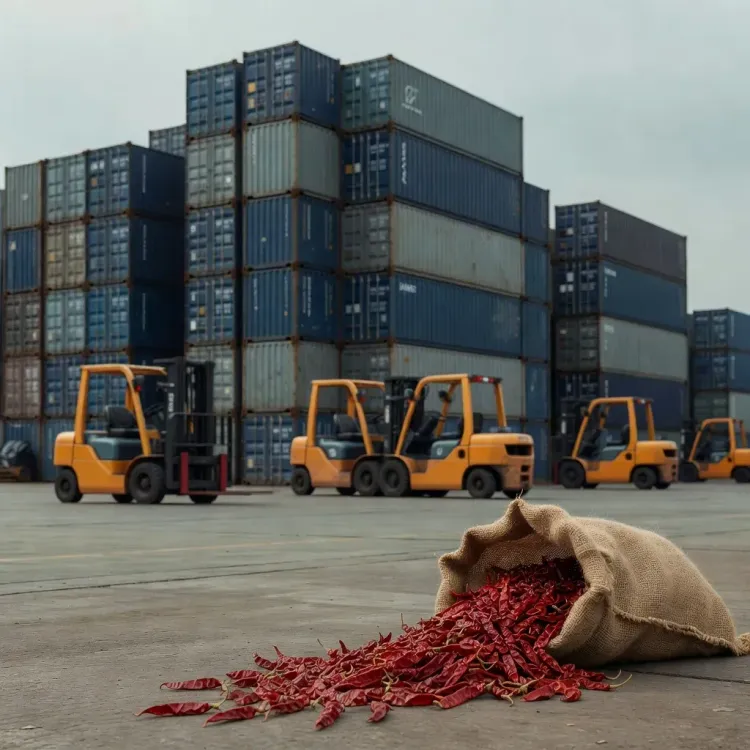
Andhra Pradesh CM Chandrababu Naidu has written to Union Commerce Minister Piyush Goyal urging diplomatic engagement with China, Bangladesh, Indonesia, Thailand and Singapore to release over 150 chilli containers worth ₹60 crore detained at Colombo Port over moisture-content concerns.
Key Takeaways
Over 150 chilli containers worth ₹60 crore are stranded at Colombo Port , detained over excess moisture-content concerns.
The consignments were bound for China, Bangladesh, Indonesia, Thailand, and Singapore .
CM Nara Chandrababu Naidu has formally written to Union Commerce Minister Piyush Goyal on 4 November 2026 seeking central intervention.
The detention is causing financial losses to Andhra Pradesh chilli farmers and exporters , who depend heavily on Asian markets.
Andhra Pradesh is India's leading red chilli producing state, with Guntur as the national spice trade hub.
Resolution requires coordination between New Delhi and diplomatic/trade channels in Sri Lanka and the five destination countries.
Over 150 chilli containers — worth roughly ₹60 crore — are stuck at Colombo Port, and Andhra Pradesh Chief Minister Nara Chandrababu Naidu is not waiting for the cargo to rot. On Wednesday, 4 November 2026, the Chief Minister's Office of Andhra Pradesh announced that Naidu has written a formal letter to Union Commerce Minister Piyush Goyal, urging the Centre to open diplomatic channels and clear the blocked shipments before farmers and exporters take irreversible losses.
What stopped 150 containers at Colombo
The consignments, loaded with dried red chillies bound for China, Bangladesh, Indonesia, Thailand, and Singapore, have been detained at the Sri Lankan transshipment hub over alleged excess moisture content. Port authorities flagged the shipments for breaching moisture-percentage limits — a recurring friction point for south Indian agricultural cargo routed through Colombo's container terminals.
The hold has effectively frozen ₹60 crore worth of produce at the docks, leaving exporters unable to fulfil contracts and farmers waiting on payments that were already committed against those consignments.
Why Guntur's chilli belt feels every day of delay
Andhra Pradesh is India's dominant red chilli producer, with the Guntur market functioning as the country's spice price-discovery hub. Any disruption to export pipelines translates almost immediately into distressed prices at the mandi level. The CM's letter underlines that the detention is 'causing losses to farmers and exporters' — the two ends of a supply chain that moves millions of tonnes of spice annually.
Colombo handles a large share of south Indian agricultural cargo in transit to Asian buyers, making it a bottleneck with outsized leverage over Indian spice trade. When containers pile up there, the ripple hits auction floors in Guntur within days.
What Chandrababu is asking New Delhi to do
The Chief Minister's letter specifically requests that Goyal's ministry engage with the destination countries — China, Bangladesh, Indonesia, Thailand, and Singapore — as well as Sri Lankan counterparts to facilitate the release and onward movement of the stranded consignments. This is a standard federal escalation: state governments manage farmers and domestic logistics, but cross-border diplomacy on export policy sits firmly with New Delhi.
APEDA — India's Agricultural and Processed Food Products Export Development Authority — has long run quality-certification and market-diversification programmes for chilli exporters, but moisture-related detentions at transshipment ports remain a stubborn, periodic hazard that individual exporters cannot resolve without sovereign-level coordination.
The clock is ticking on perishable cargo
Dried chillies can withstand longer holds than fresh produce, but extended port detention increases moisture absorption risk — the very problem cited for the initial stoppage. Every additional week the containers sit at Colombo compounds the quality argument against their release and raises storage costs that neither farmers nor small exporters can easily absorb.
The Commerce Ministry's response — and how quickly it can mobilise consular or trade-attaché channels in Colombo, Beijing, Dhaka, Jakarta, Bangkok, and Singapore — will determine whether this ₹60-crore freight finds its buyers or becomes a write-off. India's spice exporters, and the farmers behind them, are watching.
Point of View
But only the Centre can unlock it at a foreign port. The moisture-content angle is not incidental — it signals a persistent quality-certification gap that APEDA's export programmes have yet to fully close for smaller chilli exporters. If New Delhi moves quickly, it also sets a precedent for faster state-Centre coordination on agricultural export blockages, a category of problem that has quietly eroded farmer incomes for years. The ₹60-crore figure, modest in macro terms, is politically potent in a chilli-belt constituency where every rupee of mandi price matters.
NationPress
4 Nov 2026
Frequently Asked Questions
Why are chilli containers stuck at Colombo Port?
Port authorities at Colombo detained more than 150 Indian chilli containers citing excess moisture content in the cargo, which exceeds permissible limits under import standards of destination countries such as China, Bangladesh, Indonesia, Thailand and Singapore.
What has CM Chandrababu Naidu done about the Colombo Port chilli detention?
Chief Minister Nara Chandrababu Naidu has written a formal letter to Union Commerce Minister Piyush Goyal on 4 November 2026, urging him to initiate diplomatic consultations with the affected countries to secure the release and onward movement of the stranded shipments.
How much is the stranded chilli cargo worth?
The detained consignments are valued at approximately ₹60 crore and consist of over 150 containers of dried red chillies.
Which countries are the chilli containers destined for?
The consignments were bound for China, Bangladesh, Indonesia, Thailand, and Singapore — all major importers of Indian dried red chillies.
How does Colombo Port affect Indian agricultural exports?
Colombo is a major transshipment hub for south Indian cargo headed to Asian markets. Detentions there create a bottleneck that disrupts delivery timelines, raises costs, and depresses farmgate prices in producing regions like Andhra Pradesh's Guntur belt.