Chilli Prices Surge in Ramanathapuram Amid Crop Losses
Synopsis
In Ramanathapuram, Tamil Nadu, chilli prices have hit new highs due to significant crop losses caused by pest infestations and drought. Farmers are calling for government intervention to address their financial struggles.
Key Takeaways
Chilli prices in Ramanathapuram have soared due to reduced arrivals.
Current prices for Mundu and Samba varieties exceed Rs 20,000 per quintal.
Over 2,500 hectares of crops affected by pests and drought.
Farmers are calling for government intervention and support.
Chilli remains the largest horticultural crop in the district.
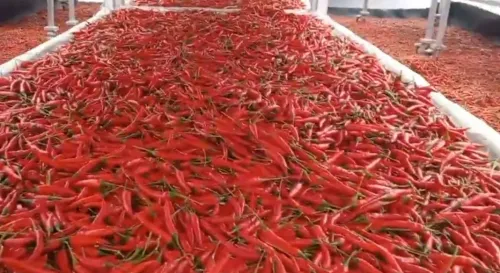
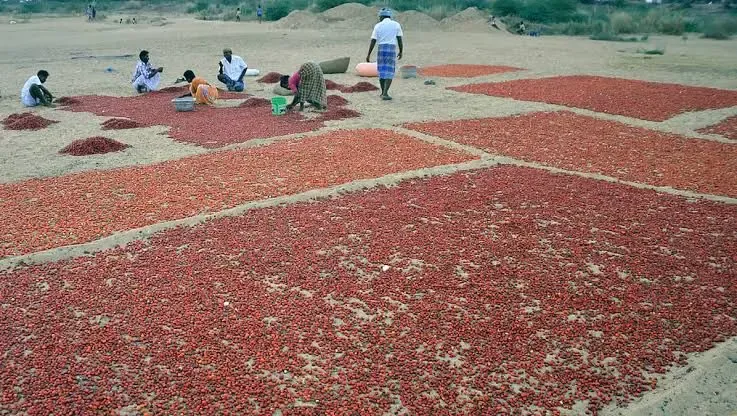
Ramanathapuram, March 1 (NationPress) An alarming drop in chilli arrivals has caused prices to skyrocket in Tamil Nadu's Ramanathapuram, with the Mundu and Samba varieties now exceeding Rs 20,000 per quintal in the market.
Officials cite several factors for this surge, including a reduction in planting area, widespread pest issues, and ongoing drought conditions. Farmers are now urging the Tamil Nadu government to implement drought relief measures to alleviate escalating crop losses.
Chilli is the most extensively cultivated horticultural crop in the district, with this year's cultivation area reported at approximately 13,500 hectares—a decline of over 1,500 hectares from last year’s 15,050 hectares.
According to horticulture department officials, this decline is primarily due to severe outbreaks of fungal diseases last season, which resulted in significant yield losses and deterred farmers from increasing their cultivation.
As the harvest season progresses, prices have nearly doubled from standard levels due to inadequate market arrivals.
M. Ramar, a seasoned chilli farmer and exporter from Ramanathapuram, shared that the price for Mundu chilli, which usually ranges from Rs 13,000 to Rs 20,000 per quintal, has surged to between Rs 25,000 and Rs 36,000 per quintal.
Similarly, Samba chilli prices have increased from the typical Rs 12,000 - Rs 15,000 range to between Rs 20,000 and Rs 25,000 per quintal. Data from the agriculture marketing department shows that regulatory market prices are also significantly elevated.
Samba chillies are currently priced around Rs 220 per kg, while Mundu varieties are nearing Rs 360 per kg—nearly double the average rates during regular harvest seasons.
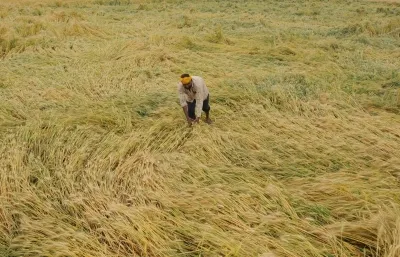
Farmers attribute this steep price increase to poor yields stemming from pest infestations, fruit rot disease, and extended dry spells.
Senior horticulture officials have confirmed that preliminary evaluations indicate over 2,500 hectares of chilli crops have been impacted by pest problems, with drought conditions exacerbating the situation. “Only those with reliable irrigation systems or the means to purchase water via tankers managed to keep their crops viable,” said Ayyapan, a local chilli farmer. “Others have suffered considerable losses.”
With uncertainty surrounding overall production for this season, farmers are appealing to the state government for drought compensation and enhanced pest management support to stabilize future production.
Frequently Asked Questions
Why have chilli prices increased in Ramanathapuram?
Chilli prices have increased due to a decline in crop arrivals caused by pest infestations and drought conditions.
What are the current prices for Mundu and Samba chillies?
Mundu chillies are currently priced between Rs 25,000 and Rs 36,000 per quintal, while Samba chillies range from Rs 20,000 to Rs 25,000 per quintal.
How much area was cultivated for chilli this year?
Approximately 13,500 hectares were cultivated for chilli this year, down from 15,050 hectares last year.
What are farmers asking the government for?
Farmers are urging the Tamil Nadu government to provide drought relief and enhance pest management support.
What impacts have pests had on chilli production?
Pests have caused significant yield losses, leading to a drop in crop production and soaring prices.