Tomato Price Collapse Forces Tamil Nadu Farmers to Cease Harvesting
Synopsis
Tomato farmers in Tamil Nadu are grappling with a severe crisis as plummeting market prices lead them to stop harvesting their crops. This situation is pushing many producers deeper into financial distress, highlighting the urgent need for systemic changes in the agricultural supply chain.
Key Takeaways
Farmers in Tamil Nadu are halting tomato harvests due to falling prices.
Current market rates do not cover basic operational costs.
Experts call for systemic changes in agricultural support.
Price recovery signs are uncertain and market volatility persists.
Rising labor costs complicate the financial landscape for farmers.
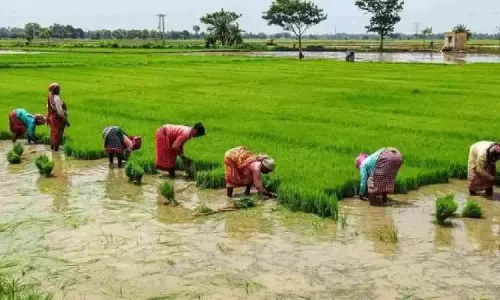
Chennai, March 22 (NationPress) Tomato producers in various districts of Tamil Nadu are currently experiencing a significant crisis as market prices have plummeted drastically, making it impossible for them to cover even basic farming costs.
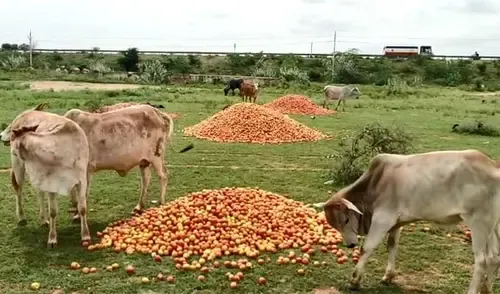
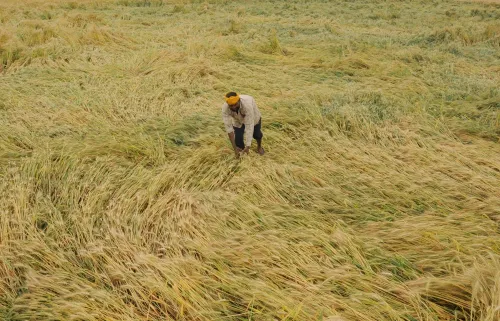
In several regions, farmers have halted harvesting entirely, opting to leave their fully matured crops in the fields due to unprofitable pricing.
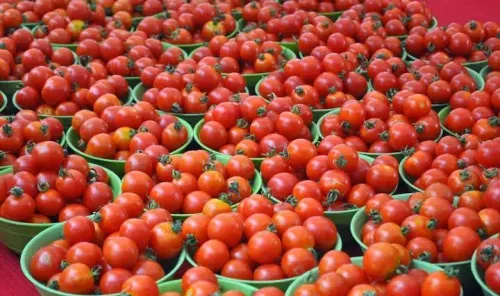
The abrupt price decline is linked to a notable surge in arrivals from diverse growing areas, leading to an oversupply in wholesale markets. Consequently, prices have sharply fallen within a brief period, catching farmers off guard and disrupting their anticipated earnings during the peak harvest season.
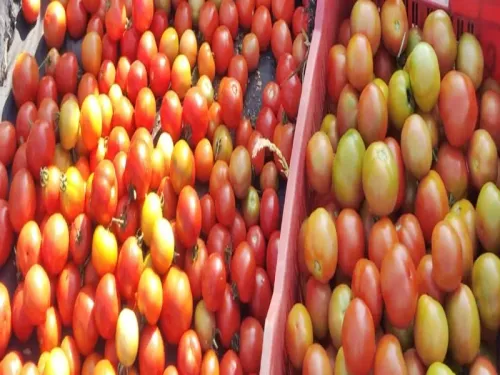
In critical production zones like Dindigul, the price of tomatoes has dropped to single-digit figures per kilogram, with traders offering rates considerably lower than those seen in previous weeks.
Farmers who heavily invested in their crops are now struggling to manage their operational expenses, as the market is unable to absorb the surplus. Additionally, rising labor costs have exacerbated the situation.
With harvesting and transportation expenses remaining elevated, farmers express that current prices fail to justify the costs of plucking and moving their produce. This has led to an increasing trend of suspending harvest activities to limit further losses.
In Dindigul, farmers report that the price for a standard 14-kg box of tomatoes has fallen to between Rs 100 and Rs 150, a dramatic drop from Rs 400 to Rs 600 just a few weeks prior. Meanwhile, labor costs remain high, with daily wages for workers around Rs 400. The combination of decreasing prices and increasing input costs has compelled many farmers to stop plucking altogether to prevent additional losses.
Many growers who expanded their cultivation in anticipation of stable market conditions are now under significant financial strain.
With harvesting costs estimated at roughly Rs 80 per box, the prevailing market prices do not even cover basic expenses, pushing farmers further into debt.
In the Dharmapuri district, there are early signs of a slight price recovery, with rates rising to Rs 13 to Rs 15 per kilogram following a reduction in arrivals due to recent rainfall. However, farmers indicate that the market remains volatile and unpredictable, offering little assurance for sustained recovery.
A similar scenario is unfolding in parts of the Tiruchy district, especially in the Marungapuri block, where farmers have also ceased harvesting.
With costs for plucking and transportation nearing Rs 3,000 per acre, the returns from current market prices are inadequate to justify ongoing operations.
Experts highlight the necessity for long-term interventions such as improved supply chain management, cold storage solutions, and minimum support systems to protect farmers from recurrent price crashes and ensure more stable returns.
Point of View
It is crucial to recognize the profound impact of fluctuating market prices on farmers' livelihoods. The current tomato price crisis in Tamil Nadu underscores the vulnerabilities within our agricultural supply chain and calls for immediate attention to ensure farmers receive fair compensation.
NationPress
24 Sept 2026
Frequently Asked Questions
Why are Tamil Nadu tomato farmers halting their harvest?
Farmers are ceasing harvesting due to a drastic drop in market prices, making it unprofitable to continue operations.
What has caused the drop in tomato prices?
The price decline is primarily due to an oversupply in wholesale markets from increased arrivals from various growing regions.
What financial challenges are farmers facing?
Farmers are struggling to cover operational costs, with high labor charges compounding their financial distress.
Is there any indication of price recovery?
There are early signs of marginal price recovery in Dharmapuri, but the market remains volatile and unpredictable.
What solutions are experts proposing?
Experts suggest the need for improved supply chain management, cold storage facilities, and minimum support mechanisms to stabilize farmers' incomes.