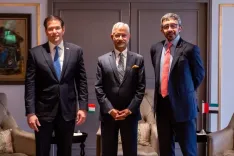
Jaishankar Meets SecRubio in Manila, Reviews India-US Strategic Ties
Synopsis
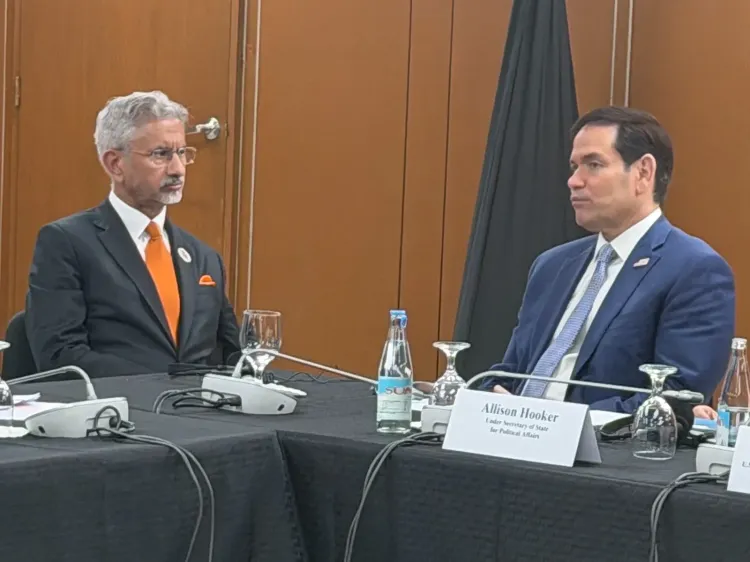
External Affairs Minister Dr. S. Jaishankar met US Secretary of State Rubio in Manila on 22 July 2026, reviewing trade, energy, defence, critical minerals and AI priorities under the India-US Comprehensive Global Strategic Partnership, and exchanging views on regional and multilateral issues.
Key Takeaways
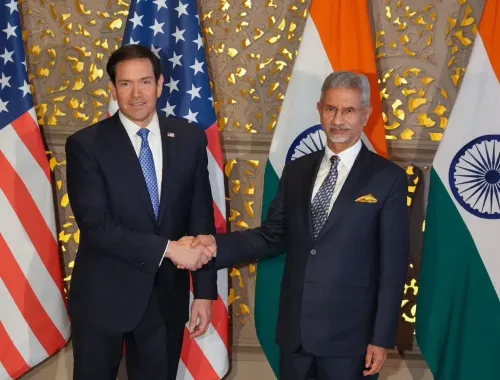
Jaishankar and US Secretary of State Rubio held a bilateral meeting in Manila on 22 July 2026 .
Talks covered trade and tariffs, energy, defence and security, critical minerals, and artificial intelligence — all priority areas under the India-US partnership.
The two sides also exchanged perspectives on regional, global and multilateral issues of mutual interest.
The meeting builds on the Comprehensive Global Strategic Partnership framework formalised at the 2023 Modi-Biden summit in Washington DC.
The iCET initiative , launched in January 2023, underpins cooperation on AI, semiconductors and critical minerals discussed at the meeting.
Manila has emerged as a regular venue for India-US bilateral engagement on the margins of ASEAN and East Asia Summit-related diplomacy.
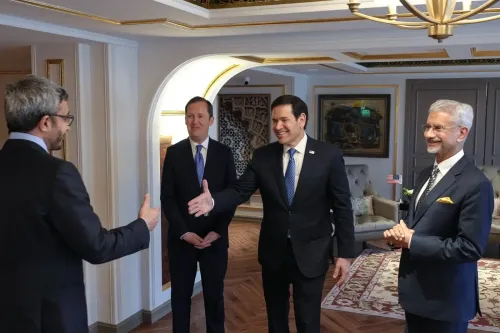
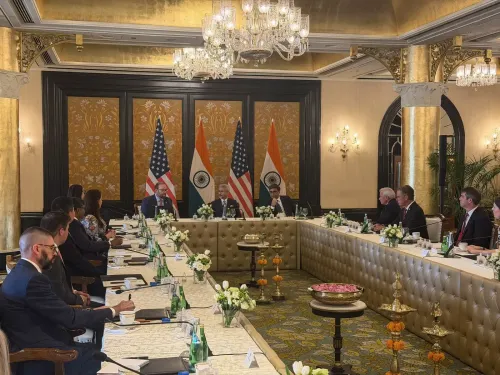
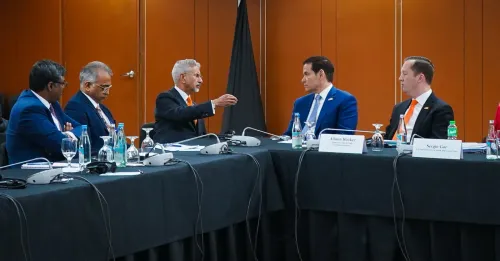
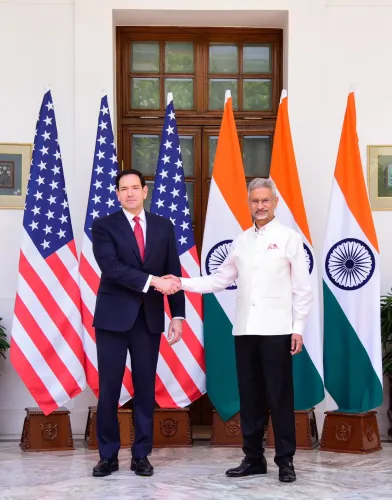
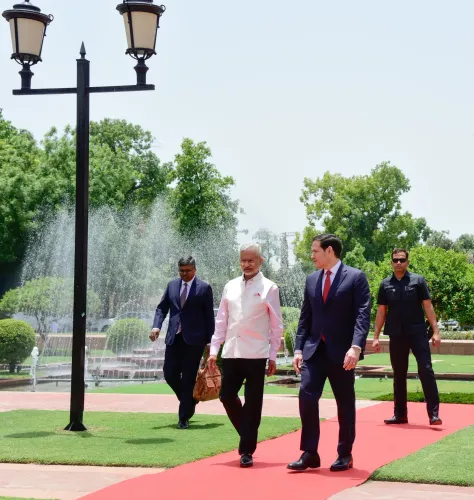
Union External Affairs Minister Dr. S. Jaishankar held a bilateral meeting with US Secretary of State Marco Rubio in Manila on Wednesday, 22 July 2026, on the sidelines of regional diplomatic engagements in the Philippine capital. The two ministers reviewed priority areas under the India-US Comprehensive Global Strategic Partnership, spanning trade and tariffs, energy, defence and security, critical minerals, and artificial intelligence.
Context
Dr. Jaishankar confirmed the meeting on X, writing: 'Pleased to meet Secretary Rubio of the USA here in Manila. Our meeting focused on areas which are priority for the India-US Comprehensive Global Strategic Partnership, including trade and tariffs, energy, defence and security, critical minerals and artificial intelligence.' He added that the two sides also 'exchanged quick perspectives on regional, global and multilateral issues of mutual interest.'
Manila has become a regular venue for high-level diplomatic exchanges, particularly on the margins of ASEAN and East Asia Summit-related gatherings. The meeting underscores the growing practice of India and the United States using regional forums to advance their bilateral agenda without waiting for dedicated bilateral summits.
Policy Backdrop
The Comprehensive Global Strategic Partnership was formalised at the 2023 Modi-Biden summit in Washington DC, elevating a relationship that had already deepened through the US-India Civil Nuclear Agreement of 2008 and the signing of the last of the four foundational defence pacts — BECA — in 2020.
The Initiative on Critical and Emerging Technology (iCET), launched in January 2023, has since anchored cooperation on artificial intelligence, semiconductors, and critical minerals — three of the domains explicitly named in Wednesday's meeting. Trade and tariff discussions have grown more prominent as both governments navigate complex economic interdependencies and supply-chain priorities.
India and the United States have also expanded their annual 2+2 Ministerial Dialogue, which brings together foreign and defence ministers from both sides, as a key institutional mechanism for reviewing the full breadth of the partnership.
Stakeholders and Impact
The agenda items touch directly on India's defence forces, which have deepened interoperability with US counterparts through joint exercises and growing defence trade. The technology and energy sectors in both countries stand to benefit from any forward movement on critical minerals sourcing and AI standards under the iCET framework.
Indian industry, particularly in semiconductors and clean energy, is closely watching for signals on market access and tariff relief that could emerge from ministerial-level engagements such as this one. Indo-Pacific maritime security — a shared priority — is also likely to have featured in the 'regional and multilateral issues' the two ministers discussed.
What's Next
Attention will now turn to the next India-US 2+2 Ministerial and any follow-up announcements under the iCET framework on AI governance or critical minerals supply-chain agreements. Progress on the trade and tariff front discussed in Manila may be reflected in upcoming bilateral trade policy reviews or dedicated ministerial visits to New Delhi or Washington DC.
The Manila meeting signals that both governments intend to keep the pace of high-level engagement steady, using every available diplomatic window — including regional multilateral forums — to advance their comprehensive strategic agenda.
Point of View
Not just through scheduled 2+2 dialogues but opportunistically at every multilateral gathering. The explicit mention of trade and tariffs alongside defence and critical minerals reflects a maturing relationship where economic friction and strategic convergence are being handled in the same breath. For India, securing US engagement on critical minerals and AI standards under iCET is central to its technology sovereignty agenda, while Washington values New Delhi as a counterweight in Indo-Pacific supply chains. The choice of Manila as the venue is itself telling — both countries are deepening their presence in Southeast Asia as a shared geopolitical priority.
NationPress
20 Oct 2026
Frequently Asked Questions
Why did Jaishankar meet Rubio in Manila?
EAM Dr. S. Jaishankar met US Secretary of State Rubio in Manila on 22 July 2026 on the sidelines of regional diplomatic engagements, to review priorities under the India-US Comprehensive Global Strategic Partnership including trade, energy, defence, critical minerals and AI.
What is the India-US Comprehensive Global Strategic Partnership?
The Comprehensive Global Strategic Partnership is the elevated framework governing India-US relations, formalised at the 2023 Modi-Biden summit in Washington DC. It covers strategic, economic, technological and defence cooperation between the two countries.
What is iCET and how does it relate to this meeting?
The Initiative on Critical and Emerging Technology (iCET) was launched in January 2023 to advance India-US cooperation on artificial intelligence, semiconductors and critical minerals — three areas explicitly discussed by Jaishankar and Rubio in Manila.
What trade and tariff issues did Jaishankar and Rubio discuss?
While the specific details were not disclosed, the ministers confirmed that trade and tariffs featured as a priority area in their talks, reflecting ongoing negotiations over market access and economic interdependencies between India and the United States.
What are the four foundational defence pacts between India and the US?
India and the US signed four foundational defence agreements enabling deeper military cooperation: GSOMIA, LEMOA, COMCASA and BECA, with the last — BECA — concluded in 2020, enabling sharing of advanced geospatial intelligence.