India, UAE, US trilateral in Mumbai: Jaishankar, Rubio, Sheikh Abdullah discuss energy and connectivity
Synopsis
Three of the world's most consequential diplomatic voices — India's Jaishankar, America's Rubio, and the UAE's Sheikh Abdullah — met face-to-face in Mumbai on Tuesday. The trilateral on energy, connectivity, and regional developments signals that India is increasingly the hub around which US-Gulf strategic coordination revolves, not merely a participant.
Key Takeaways
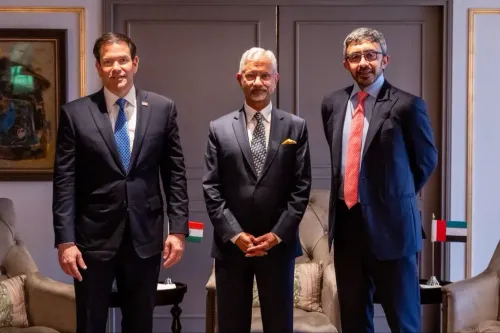
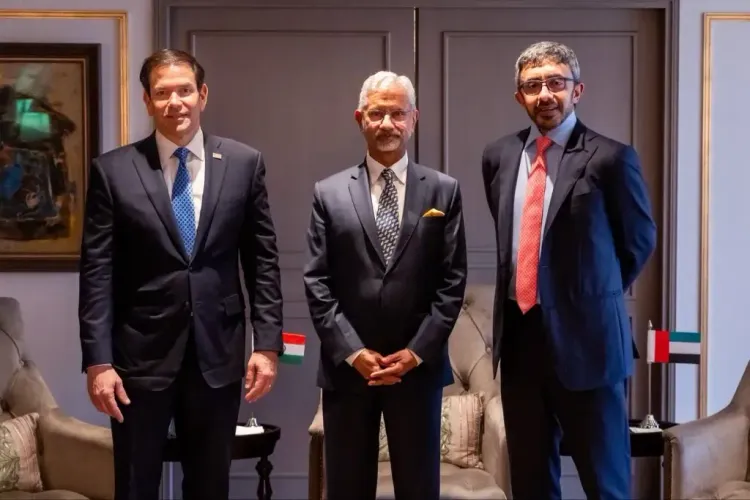
EAM S Jaishankar , US Secretary of State Marco Rubio , and UAE FM Sheikh Abdullah bin Zayed Al Nahyan held a trilateral meeting in Mumbai on 20 October 2026 .
Talks covered energy security , regional connectivity , and contemporary geopolitical developments .
A separate US-India bilateral between Jaishankar and Rubio focused on trade, energy, technology, defence , and people-to-people ties .
Foreign Secretary Vikram Misri and US Ambassador Sergio Gor were among officials present at the bilateral.
Ambassador Gor called the meeting an opportunity to turn 'close ties into concrete results' across energy, trade, and technology.
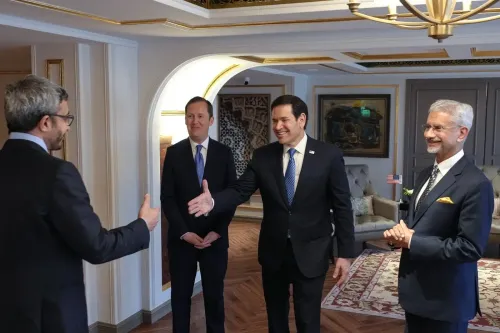
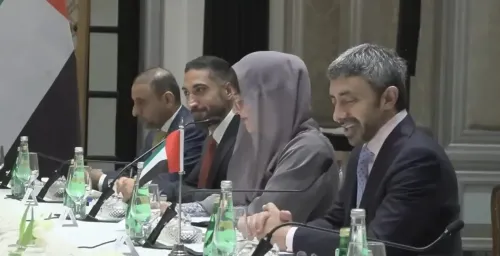
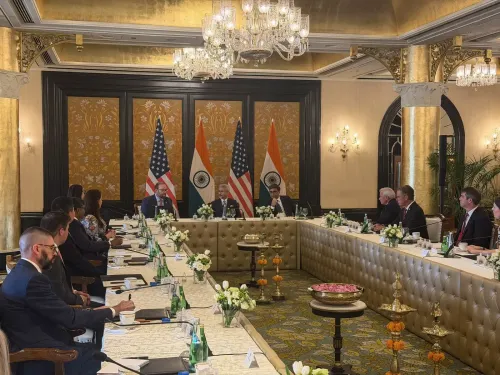
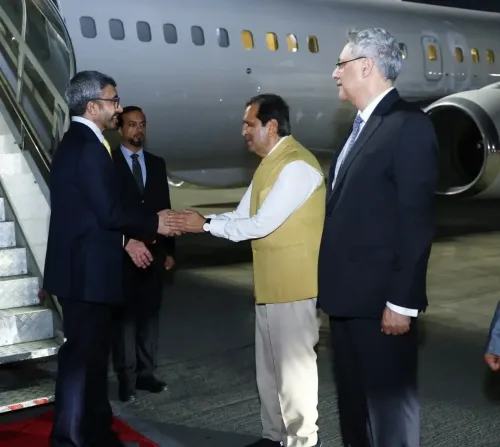
External Affairs Minister S Jaishankar, UAE Deputy Prime Minister and Foreign Minister Sheikh Abdullah bin Zayed Al Nahyan, and US Secretary of State Marco Rubio convened a trilateral meeting in Mumbai on Tuesday, 20 October 2026, exchanging views on energy, connectivity, and contemporary regional developments. The high-level gathering marks a notable convergence of three strategically aligned nations on Indian soil.
What Was Discussed
The three-way meeting centred on shared priorities including energy security, regional connectivity, and broader geopolitical developments. According to posts on X by both Jaishankar and Rubio following the meeting, the discussions were substantive and forward-looking. 'A useful exchange of perspectives on energy, connectivity and contemporary developments,' Jaishankar wrote on X after the meeting.
Rubio, for his part, called it a productive engagement. 'It was great to meet with Indian External Affairs Minister S Jaishankar and UAE Foreign Minister Sheikh Abdullah bin Zayed Al Nahyan to discuss regional energy security and advance our shared economic priorities,' the US Secretary of State posted on X.
US-India Bilateral: Trade, Defence and Technology
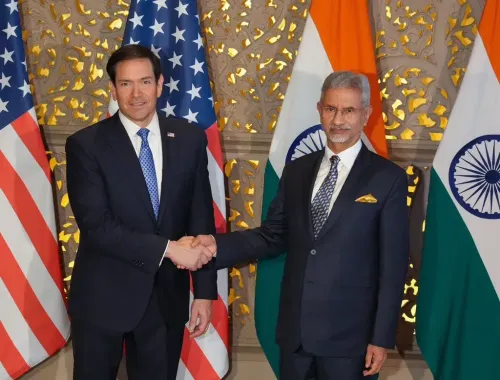
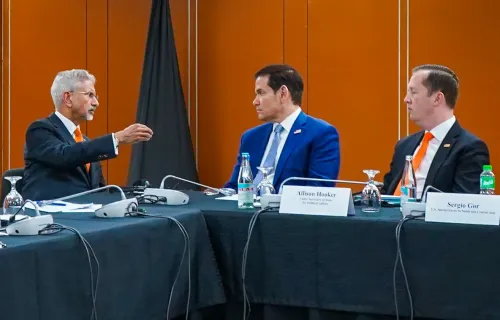
On the sidelines of the trilateral, Jaishankar held a separate bilateral meeting with Rubio in Mumbai. Foreign Secretary Vikram Misri, US Ambassador to India Sergio Gor, and other senior officials were also present. The bilateral focused on deepening the US-India strategic partnership, with both sides covering trade, energy, technology, defence, and people-to-people ties.
'Pleased to meet US [Secretary of State] Marco Rubio in Mumbai today. We shared views on further advancement of our ties, focusing on trade, energy, technology, defence and people-to-people ties. Also exchanged views on regional developments,' Jaishankar stated on X. Rubio confirmed the substance, posting: 'In Mumbai, Indian External Affairs Minister S Jaishankar and I discussed energy security and defence cooperation while reaffirming the importance of advancing the U.S.-India strategic partnership.'
UAE's Role and US Ambassador's Remarks
The UAE's participation underscores Abu Dhabi's growing role as a key node in the India-US connectivity and energy architecture. US Ambassador to India Sergio Gor framed the gathering as an opportunity to translate diplomatic goodwill into tangible outcomes. 'The US, India, and UAE have real opportunities to advance cooperation on energy, trade, technology, and regional connectivity... for a discussion on turning our close ties into concrete results!' Gor posted on X.
This comes amid a broader push by India to anchor itself at the centre of emerging energy corridors and digital connectivity frameworks, including discussions around the India-Middle East-Europe Economic Corridor (IMEC).
Significance and What Comes Next
The Mumbai trilateral is the latest in a series of high-level diplomatic engagements that have seen India, the US, and Gulf nations align more closely on strategic infrastructure, energy supply chains, and regional stability. Notably, all three nations have deepening stakes in the evolving geopolitics of West Asia and the Indo-Pacific. Concrete outcomes from Tuesday's meeting are yet to be announced, but the convergence of three foreign ministers — or their equivalents — on these specific themes signals that follow-up mechanisms are likely in the pipeline.
Point of View
Technology, and people-to-people ties suggests both sides are serious about converting strategic alignment into binding deliverables. The UAE's presence adds a Gulf dimension that directly touches India-Middle East-Europe connectivity ambitions — a project that has moved slowly since its G20 unveiling. The real question is whether this trilateral produces a structured follow-up or remains another high-visibility meeting without a roadmap.
NationPress
20 Oct 2026
Frequently Asked Questions
What was the India-UAE-US trilateral meeting in Mumbai about?
The trilateral meeting held in Mumbai on 20 October 2026 brought together EAM S Jaishankar, US Secretary of State Marco Rubio, and UAE FM Sheikh Abdullah bin Zayed Al Nahyan to exchange views on energy security, regional connectivity, and contemporary geopolitical developments. It is one of the most significant three-way diplomatic engagements on Indian soil in recent times.
What did Jaishankar and Rubio discuss in their bilateral meeting?
In a separate bilateral on the sidelines of the trilateral, Jaishankar and Rubio focused on advancing the US-India strategic partnership, covering trade, energy, technology, defence, and people-to-people ties. Both sides also exchanged views on regional developments, with Foreign Secretary Vikram Misri and US Ambassador Sergio Gor present.
Why is the UAE part of this India-US diplomatic engagement?
The UAE's inclusion reflects its growing role as a strategic node in energy supply chains and regional connectivity frameworks that link South Asia, the Gulf, and the West. The three nations share overlapping interests in energy security, infrastructure corridors, and regional stability.
What did US Ambassador Sergio Gor say about the trilateral?
Ambassador Gor said the three nations have 'real opportunities to advance cooperation on energy, trade, technology, and regional connectivity,' describing the Mumbai meeting as focused on turning close ties into concrete results.
What are the expected outcomes of the Mumbai trilateral?
No formal joint statement or specific deliverables have been announced yet. However, the convergence on energy, connectivity, and defence themes suggests follow-up working-level engagements are likely, particularly around the India-Middle East-Europe Economic Corridor and bilateral US-India defence and technology frameworks.