Jaishankar at G20 Atlanta: Energy Crisis Is One of Disruption, Not Supply
Synopsis
At the G20 Atlanta plenary, EAM Dr. S. Jaishankar argued that the global energy crisis is driven by deliberate attacks, sanctions, and market distortions — not supply shortages — and called on the G20 to protect low-income nations, secure LPG access, and advance critical minerals governance.
Key Takeaways
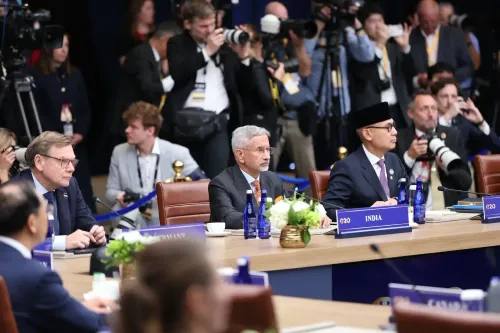
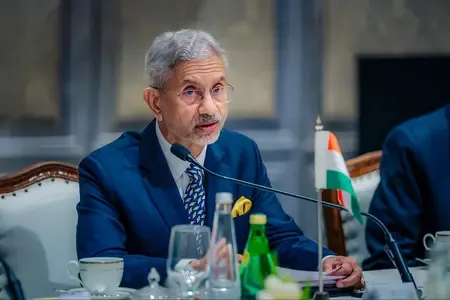
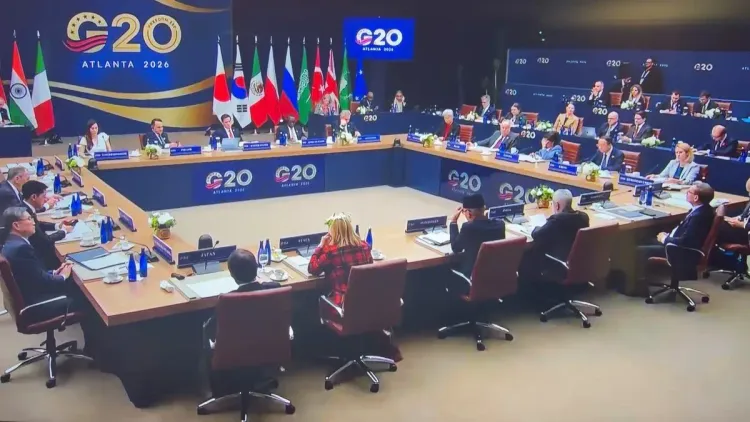
Jaishankar addressed the 2nd Plenary of the G20 in Atlanta on 31 October 2026 , framing the energy crisis as one of unpredictability and disruption, not production.
He described deliberate attacks on energy infrastructure as a 'calculated strategy to hold energy prices hostage.' He criticised 'convenient distinctions between oil and gas,' calling selective carveouts politically motivated.
India reaffirmed its need for reliable, predictable LPG supplies for clean cooking — a direct household-energy priority for hundreds of millions of citizens.
India's National Mission on Critical Minerals — covering exploration to recycling — was reiterated, alongside a formal proposal for a G20 Critical Minerals Circularity Initiative .
Jaishankar called on the G20 to advance finance access and specific technologies: storage, small modular reactors, green hydrogen, and biofuels .
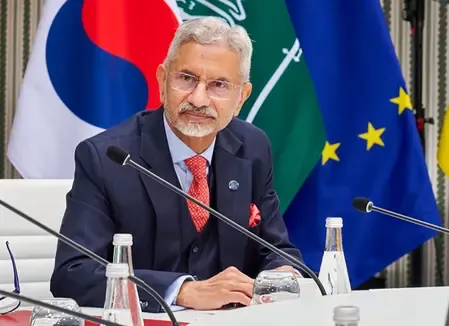
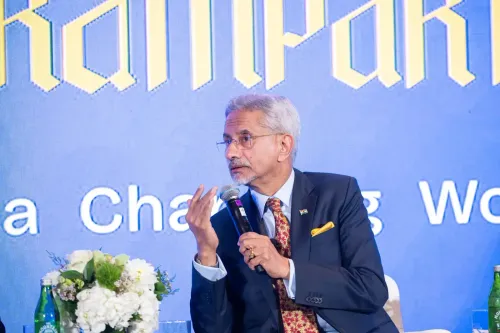
The world does not lack energy — it lacks certainty. That was the blunt message Union External Affairs Minister Dr. S. Jaishankar delivered at the 2nd Plenary of the G20 in Atlanta on Saturday, 31 October 2026, naming deliberate attacks on energy infrastructure, market-distorting sanctions, and the quiet abandonment of low-income nations as the real fault lines of the global energy crisis.
Attacks on Infrastructure, Not Scarcity, Are Driving the Crisis
Dr. Jaishankar drew a sharp distinction at the outset: the crisis the world faces is not one of production capacity but of 'unpredictability and disruption, unaffordable costs, and challenges of access.' In a room of the world's largest economies, that reframing carried weight. He argued that 'deliberate attacks on energy trade and energy infrastructure' are not collateral damage — they are, in his words, 'a calculated strategy to hold energy prices hostage.'
He went further, describing 'continuous distortions of energy markets through obstacles, sanctions and chokepoints' as events happening with 'increasing frequency, greater complexity and wider impact.' The pattern, he suggested, is no accident. It is policy — and it is escalating.
The Selective Carveouts India Will Not Stay Silent On
One of the sharpest moments came when Dr. Jaishankar turned to what he called 'convenient distinctions being drawn between oil and gas.' The phrase 'selective carveouts speak for themselves' was pointed and deliberate — a signal that India sees differential treatment of fuel types in sanctions and trade regimes as political rather than principled. It is the kind of language that lands differently in a multilateral room than in a bilateral corridor.
He also underscored what is too easily overlooked in high-income G20 debate rooms: low-income countries are bearing the brunt, and 'there appears little regard for their predicament.' The knock-on effects of market distortions in an interconnected global economy, he stressed, should not be underestimated by those insulated from them.
India's LPG Demand and the Critical Minerals Circularity Play
Dr. Jaishankar anchored India's immediate national interest clearly: the country needs 'reliable and predictable LPG supplies for its clean cooking needs.' LPG remains a lifeline for hundreds of millions of Indian households, and supply unpredictability is not an abstraction — it is a kitchen-table reality.
On the longer strategic horizon, he reiterated India's National Mission on Critical Minerals, which spans the full value chain from exploration to recycling. India has also formally proposed a G20 Critical Minerals Circularity Initiative — a move that positions New Delhi not just as a consumer of the green-technology supply chain but as an architect of its governance. During India's own G20 presidency in 2023, critical minerals and energy security were placed front and centre on the multilateral agenda; this Atlanta address is a continuation of that diplomatic investment.
What the G20 Must Now Deliver
Dr. Jaishankar closed his address with a direct call to action. The G20, he said, 'must display both understanding and leadership to keep energy markets open and predictable.' It must 'widen access to finance' and actively advance technologies that can move the transition forward — naming storage, small modular reactors (SMRs), green hydrogen and biofuels specifically. These are not aspirational bullet points; they are a checklist for a body that risks being remembered for its communiqués rather than its commitments.
When India's top diplomat names both LPG for rural kitchens and SMRs for the grid in the same G20 address, the message is unmistakable: the energy transition cannot be a privilege for the wealthy. The world's most consequential forum has been put on notice.
Point of View
Chokepoints, and 'selective carveouts' signals that India is no longer content to frame energy security in neutral technocratic language; it is calling out what it regards as weaponisation of energy markets by major powers. The pairing of LPG access with critical minerals governance is strategically deliberate: it anchors India's position simultaneously in the language of developing-country solidarity and long-term supply chain statecraft. Watch for whether the proposed Critical Minerals Circularity Initiative gains traction at the next ministerial meeting — that will be the real test of whether Atlanta was a speech or a turning point.
NationPress
31 Oct 2026
Frequently Asked Questions
What did Jaishankar say at the G20 Atlanta plenary?
Dr. Jaishankar argued that the global energy crisis is caused by deliberate disruption, sanctions, and attacks on infrastructure — not a shortage of production — and called on the G20 to keep energy markets open, protect low-income countries, and advance technologies like SMRs and green hydrogen.
What is India's G20 Critical Minerals Circularity Initiative?
India has proposed a G20 Critical Minerals Circularity Initiative that covers the full value chain of critical minerals from exploration to recycling, building on India's National Mission on Critical Minerals and positioning New Delhi as a governance leader in the green-technology supply chain.
Why did Jaishankar mention LPG at the G20?
India needs reliable and predictable LPG supplies for its clean cooking programmes, which serve hundreds of millions of households. Dr. Jaishankar raised this at Atlanta to highlight that energy security for developing nations is an immediate household necessity, not only a long-term policy ambition.
What are 'selective carveouts' that Jaishankar criticised?
'Selective carveouts' refer to what Dr. Jaishankar described as convenient distinctions drawn between oil and gas in sanctions regimes and trade rules — differential treatment that India views as politically motivated rather than principled.
What technologies did Jaishankar push the G20 to support?
Dr. Jaishankar called on the G20 to widen access to finance and advance energy storage, small modular reactors (SMRs), green hydrogen, and biofuels as part of a credible and inclusive global energy transition.