Jaishankar at Ghana FSI: India, Africa and the Global South
Synopsis
EAM Dr. S. Jaishankar addressed Ghana's Foreign Service Institute on October 7, 2026, outlining a ten-point vision for India-Africa engagement centred on strategic autonomy, supply-chain resilience, digital democratisation, and the Global South's right to industrialise.
Key Takeaways
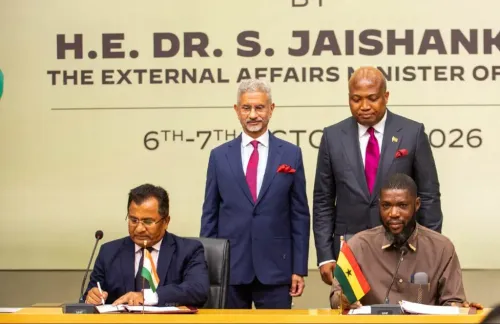
Jaishankar addressed the Foreign Service Institute of Ghana on October 7, 2026 , outlining India's comprehensive approach to Africa and the Global South.
Jaishankar defined Indian diplomacy's core challenge: 'manage competition without allowing it to become confrontation.' He identified fuel, food, fertilizer and finance as four critical supply-chain vulnerabilities facing the Global South.
India's strategic autonomy doctrine was foregrounded: partnerships must 'expand our options, not restrict them.' The inclusion of the African Union in the G20 during India's 2023 presidency was cited as the landmark proof of India's commitment to Global South representation.
Jaishankar offered India's digital ecosystem, scientific capabilities and cost-effective technology as models Africa can adopt and adapt.
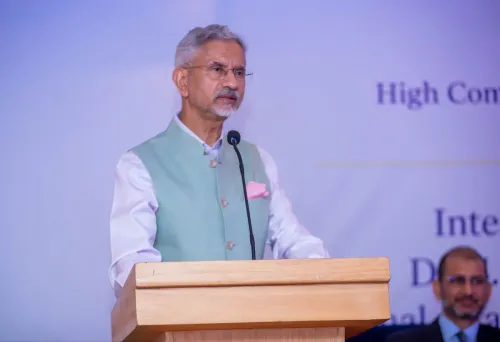
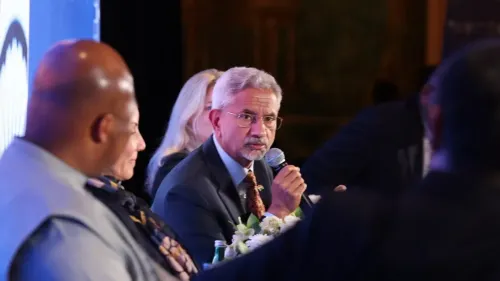
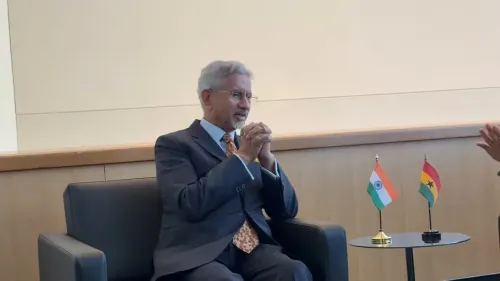
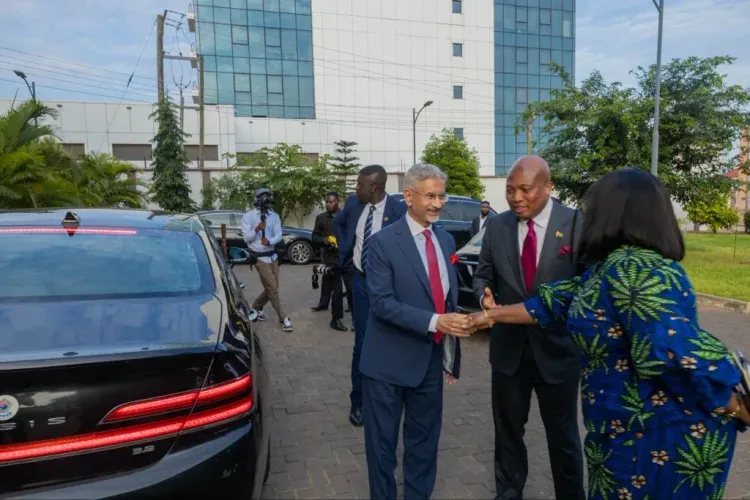
At the Foreign Service Institute of Ghana, Union External Affairs Minister Dr. S. Jaishankar delivered what amounted to a full-spectrum articulation of India's worldview — not a diplomatic courtesy call, but a ten-point doctrine for the era of multi-polarity. The address, delivered on Wednesday, October 7, 2026, spanned everything from supply chain security to the democratising power of digital infrastructure, with Africa squarely at the centre of India's Global South ambitions.
Managing competition, refusing confrontation
Jaishankar opened with a candid framing of the moment: 'In today's turbulent times, the challenge before diplomacy is to manage competition without allowing it to become confrontation, and to promote cooperation even when interests diverge.' It is a line that doubles as a rebuke to bloc-thinking — and a signal that India intends to stay on its own terms in a world increasingly pressured toward binary alignments.
The minister placed strategic autonomy at the philosophical heart of Indian foreign policy. 'We believe that partnerships should expand our options, not restrict them,' he said — a formulation that speaks directly to African nations navigating their own great-power pressures from multiple directions.
The 'India story' as a development template for Africa
Jaishankar pitched India's domestic transformation — across economy, infrastructure, digital public goods, manufacturing and entrepreneurship — not as a trophy but as a transferable model. The subtext was pointed: India's cost-effective, open-architecture approach to technology, from UPI-style digital ecosystems to affordable space programmes, offers African nations a credible alternative to more expensive or conditional partnerships.
He underscored the shared demographic dividend. Both India and Africa carry enormous youthful populations; the imperative, he argued, is 'to convert our youthful population into productive, skilled and empowered citizens.' That framing resets youth from a liability — the 'demographic time-bomb' narrative — into the defining asset of the Global South's century.
Four Fs and the right to industrialise
On supply chains, Jaishankar named the four vulnerabilities bluntly: fuel, food, fertilizer and finance. The minister linked national security directly to supply-chain resilience and technological self-sufficiency — a lesson India absorbed during the COVID-19 pandemic and has since institutionalised as policy. Critically, he extended this logic to the African continent, asserting the Global South's 'right to industrialise' — a phrase carrying significant political weight at a time when climate-finance conditionalities are reshaping development choices.
African Union in G20: a landmark Jaishankar revisited
The minister revisited one of India's signature diplomatic achievements: the inclusion of the African Union as a permanent member of the G20 during India's presidency in 2023. It was, he argued, evidence of India's commitment to amplifying the Global South's voice in institutions that govern the world economy — not just rhetoric but a structural shift hard-won at the table.
What Ghana heard — and why it matters beyond Accra
The choice of Ghana's Foreign Service Institute as venue is itself a signal: this is how diplomats are trained, how narratives are seeded across a generation of African foreign-policy professionals. Jaishankar closed with a line that framed the relationship in generational terms: 'We carry Africa in our hearts and will build a partnership not just for today but for generations to come.'
India's partnership with Africa spans trade, infrastructure, capacity development, humanitarian assistance and disaster relief (HADR), agriculture, health and clean energy — a breadth that makes the relationship difficult to reduce to a single headline. That, arguably, is the point.
Point of View
He is positioning India as a principled counterweight to both Western conditionality and Chinese debt-leverage in Africa. The strategic autonomy framing is equally a message to African diplomats in training: align with India and you gain options, not obligations. If this doctrine lands, it could meaningfully reshape how the next generation of African foreign-policy professionals conceptualise non-Western partnerships.
NationPress
7 Oct 2026
Frequently Asked Questions
What did Jaishankar say at Ghana's Foreign Service Institute?
EAM Dr. S. Jaishankar outlined India's vision for India-Africa and Global South partnership, covering strategic autonomy, digital democratisation, supply-chain resilience across fuel, food, fertilizer and finance, and the Global South's right to industrialise.
What is India's strategic autonomy foreign policy doctrine?
India's strategic autonomy doctrine holds that foreign partnerships should expand India's options rather than restrict them, allowing New Delhi to engage with multiple powers without joining any exclusive bloc or alliance.
When was the African Union included in the G20?
The African Union was granted permanent G20 membership during India's G20 presidency in 2023, a milestone Jaishankar cited as evidence of India's commitment to amplifying the Global South's voice.
What are the 'four Fs' Jaishankar mentioned in his Ghana speech?
Jaishankar identified fuel, food, fertilizer and finance as the four critical supply-chain areas where resilience is essential for the Global South's security and development.
Why is India engaging with Africa through diplomatic training institutes?
Addressing foreign-service trainees allows India to shape how future African diplomats frame partnerships, seeding long-term strategic alignment at the level of policy doctrine rather than just government-to-government deals.