Mandaviya Touts EPFO SWP for Regular Post-Retirement Income
Synopsis
Union Labour Minister Mansukh Mandaviya has promoted a new EPFO Systematic Withdrawal Plan (SWP) that promises crores of formal-sector workers a regular income stream after retirement, framing it as a flagship welfare move under PM Modi's leadership.
Key Takeaways
Mansukh Mandaviya announced on 21 November 2026 that EPFO is introducing a Systematic Withdrawal Plan (SWP) for its subscribers.
The SWP is designed to provide regular post-retirement income from accumulated provident fund balances, going beyond the existing lump-sum withdrawal option.
EPFO manages retirement savings for over six crore formal-sector workers in India.
The existing Employees' Pension Scheme (EPS, 1995) requires at least 10 years of service and pays a monthly pension; the SWP would supplement this.
Specific operational details — eligibility, withdrawal frequency, investment options — have not yet been officially notified and are expected via EPFO circulars.
The move continues a reform trajectory that began with the Universal Account Number (UAN) launch in 2014 .
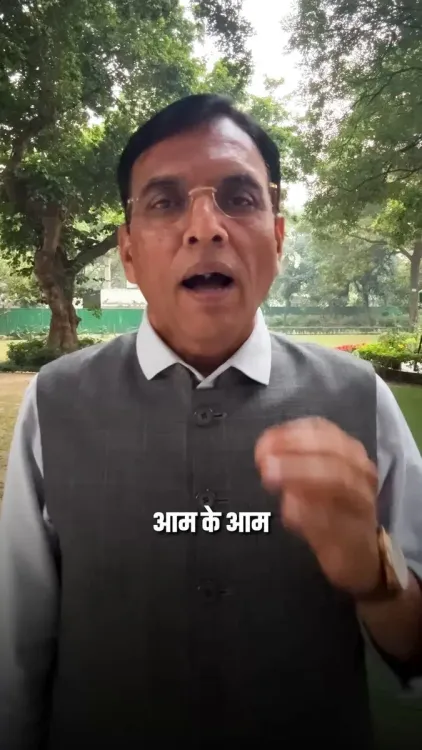
Tens of millions of formal-sector workers may soon have a new tool to secure steady income after they stop working — and Union Minister of Labour and Employment Mansukh Mandaviya wants every EPFO member to know about it. On Saturday, 21 November 2026, Mandaviya posted on X to highlight a new Systematic Withdrawal Plan (SWP) being offered to Employees' Provident Fund Organisation (EPFO) subscribers, framing it as a landmark gift to crore of workers under the leadership of Prime Minister Narendra Modi.
Posting in Hindi, Mandaviya wrote: 'पीएम मोदी जी के नेतृत्व में EPFO की करोड़ों श्रमिकों को सौगात!' — 'A gift to crores of workers from EPFO under the leadership of PM Modi!' — and asked followers to learn how the SWP would 'ensure your regular income even after retirement.'What SWP Means for EPFO's Six Crore Subscribers
EPFO is the statutory body that manages retirement savings and social security for over six crore formal-sector employees across India. For decades, a retiring worker's primary recourse was a lump-sum provident fund withdrawal or the monthly pension provided under the Employees' Pension Scheme (EPS), introduced in 1995 — which requires at least 10 years of service and pays a pension whose quantum has long been a subject of worker grievance.
A Systematic Withdrawal Plan, as a concept, allows a corpus holder to draw fixed or flexible periodic amounts from an accumulated fund rather than withdrawing everything at once. Applied to EPFO, it would give retirees the ability to convert their provident fund balance into a structured, regular income stream — bridging the gap between the lump sum and the often modest EPS pension. The minister's post positions the SWP as precisely that bridge.
EPFO's Digital Reform Trajectory Under Modi Governments
The SWP announcement fits a pattern of incremental modernisation at EPFO that has accelerated since 2014, when the Universal Account Number (UAN) was introduced, making provident fund accounts portable and manageable online across job changes. Successive reforms have expanded digital claim settlement, reduced processing timelines, and broadened coverage to bring more of India's organised workforce into the formal social-security net.
The overarching legal framework remains the Employees' Provident Funds and Miscellaneous Provisions Act, 1952 — a seven-decade-old statute that has been stretched, amended, and supplemented to accommodate the realities of a modern, mobile workforce. The SWP, if operationalised, would represent one of the more significant product-level additions to the EPFO toolkit in recent years.
Details Still to Come — What to Watch
The minister's post is promotional and directional rather than a formal policy notification. Specific details — eligibility criteria, minimum corpus thresholds, withdrawal frequency options, and the investment instruments backing the plan — have not yet been publicly detailed in EPFO circulars or parliamentary communications as of the date of the post. Subscribers and employers should watch for official EPFO notifications and any related amendments that may be tabled during the winter session of Parliament.
For India's retirees, the promise is simple and powerful: your savings should not run out before you do. Whether the SWP delivers on that promise will depend entirely on the fine print still to be written.
Point of View
Given that formal-sector workers are a key BJP constituency. By attaching PM Modi's name to the rollout, the Labour Ministry is clearly positioning this as a flagship welfare deliverable rather than a routine administrative update. However, with operational details still absent, the announcement sits closer to political communication than policy implementation — and the credibility test will come when EPFO releases the actual circular. The broader arc is clear: the government wants EPFO to do for organised workers what PM-KISAN does for farmers — put periodic cash in hand, not just a distant lump sum.
NationPress
21 Nov 2026
Frequently Asked Questions
What is the EPFO SWP and how does it work?
The EPFO Systematic Withdrawal Plan (SWP) is a proposed facility that would allow EPFO members to withdraw fixed or flexible periodic amounts from their accumulated provident fund corpus after retirement, providing a regular income stream rather than a single lump-sum payout. Detailed operational guidelines have not yet been officially notified.
Who is eligible for the EPFO SWP?
Eligibility criteria for the EPFO SWP have not yet been officially published. The plan is intended for EPFO subscribers — formal-sector employees contributing to the Employees' Provident Fund. Watch for official EPFO circulars for specific eligibility conditions.
How is the EPFO SWP different from the Employees' Pension Scheme (EPS)?
The EPS, introduced in 1995, pays a fixed monthly pension to members who have completed at least 10 years of service, funded by employer contributions. The SWP, by contrast, would allow members to draw periodic amounts from their own accumulated provident fund balance, giving them more flexibility and potentially a higher regular income.
How many workers does EPFO cover in India?
EPFO manages retirement savings and social security for over six crore (60 million) formal-sector employees across India, making it one of the world's largest provident fund organisations.
When will the EPFO SWP be launched?
No official launch date has been announced. Union Minister Mansukh Mandaviya's post on 21 November 2026 promoted the concept, but detailed EPFO circulars and any related parliamentary notifications are still awaited.