Dr. Jitendra Singh launches PMGSY road on Mongi-Ajjal stretch in J&K
Synopsis
Union Minister Dr. Jitendra Singh inaugurated PMGSY road construction on the Mongi-Ajjal stretch in Jammu and Kashmir, framing it as part of the Modi government's sustained drive to deliver all-weather connectivity to the Union Territory's remote and hilly regions.
Key Takeaways
Jitendra Singh launched PMGSY road construction work on the Mongi to Ajjal route in Jammu and Kashmir on 21 November 2026 .
PMGSY (Pradhan Mantri Gram Sadak Yojana) was launched in 2000 to connect unlinked rural habitations with all-weather roads across India.
Post- 2019 reorganisation of J&K, central infrastructure schemes including PMGSY received enhanced funding and fast-track approvals in the Union Territory.
The minister described the welcome from local residents as 'overwhelming,' underscoring the acute demand for reliable road access in the region's hilly districts.
Improved road connectivity in J&K is treated by the Centre as both a developmental and a strategic objective in the post-Article 370 framework.
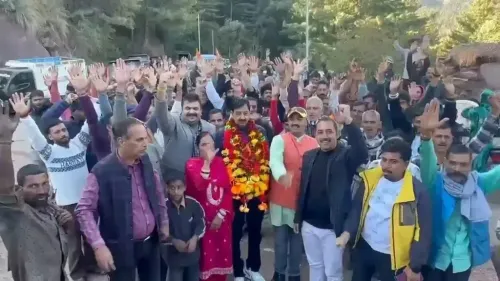
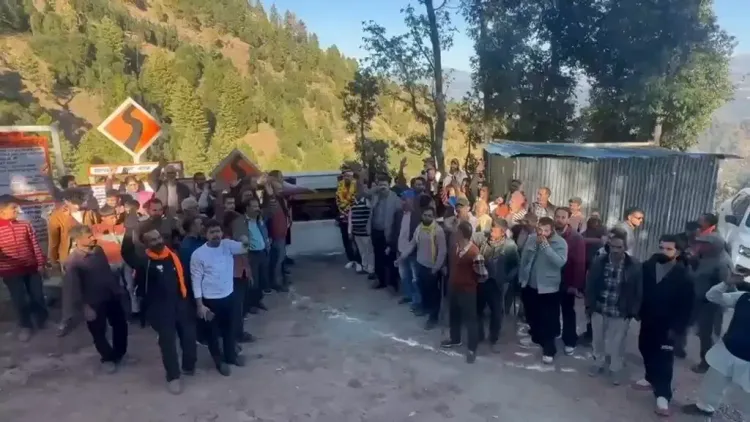
A stretch of road through the hills of Jammu and Kashmir just got its foundation laid — and for the villages along the Mongi to Ajjal route, that moment carries real weight. Union Science and Technology Minister Dr. Jitendra Singh on Saturday, 21 November 2026, inaugurated the road construction work under the Pradhan Mantri Gram Sadak Yojana (PMGSY), calling it a significant developmental step for the region and describing the welcome from local residents as 'overwhelming and deeply moving.'
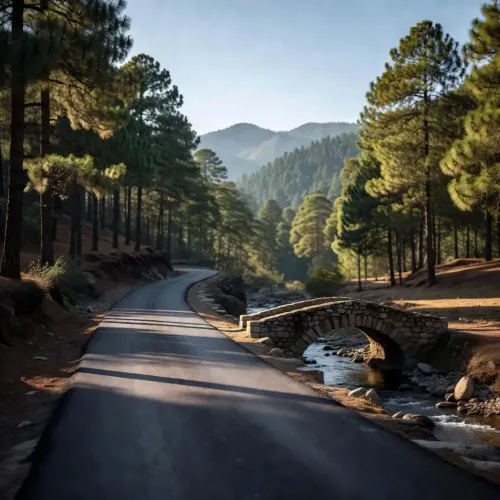
What the Mongi-Ajjal road means for remote J&K villages
In his post, Dr. Singh wrote — 'Behtar sadak sampark se kshetravaasiyon ko aavaagaman mein suvidha milegi aur sthaaniya vikas ko nayi gati prapt hogi' — ('Better road connectivity will ease movement for residents and give fresh momentum to local development'). For communities in J&K's hilly and border districts, an all-weather road is not a convenience. It is access to markets, hospitals, and schools that the terrain otherwise puts hours away.
PMGSY, launched in 2000, was designed precisely for this gap — connecting unlinked rural habitations to the national road network with all-weather surfaces. In Jammu and Kashmir, the scheme gained sharper focus and enhanced central funding after the 2019 reorganisation of the erstwhile state into a Union Territory, when multiple infrastructure programmes were fast-tracked under direct central oversight.
Delhi's connectivity push in J&K's hinterland
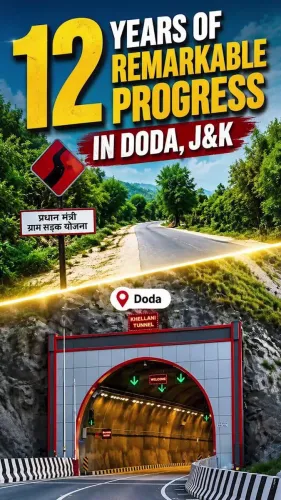
Dr. Singh credited Prime Minister Narendra Modi's leadership for the sustained push to bring development and better connectivity to J&K's remotest corners — a framing that has become a consistent motif in the Centre's communication around the Union Territory. Roads, tunnels, and broadband projects have been repeatedly cited as proof that the post-Article 370 reorganisation is delivering tangible change on the ground.
The broader pattern is deliberate: improved road access in J&K is treated simultaneously as a development objective and a strategic one, opening terrain that was previously difficult to service — economically or administratively. Each PMGSY inauguration in the region is, in that sense, part of a larger architecture of integration.
The enthusiasm of local residents at the Mongi-Ajjal inauguration — which Dr. Singh described as 'abhibhoot karne waala' ('overwhelming') — points to how acutely these communities feel the absence of reliable road links, and how concretely they register their arrival.
Watch for physical completion timelines on this stretch and broader PMGSY phase targets across J&K's hilly districts — that is where the promise of inauguration day either holds or frays.
Point of View
The BJP is building a constituency-level narrative in a Union Territory that still lacks elected statehood. Road connectivity in border and hilly districts also carries a strategic logic that goes beyond development optics — it underpins administrative reach and economic integration. The real test, as always, will be in completion rates and all-weather durability, not ribbon-cutting moments.
NationPress
21 Nov 2026
Frequently Asked Questions
What is PMGSY and how does it work in Jammu and Kashmir?
PMGSY, or Pradhan Mantri Gram Sadak Yojana, is a central government scheme launched in 2000 to provide all-weather road connectivity to unconnected rural habitations. In Jammu and Kashmir, the scheme received enhanced funding and faster approvals after the 2019 reorganisation of the region into a Union Territory.
Where is the Mongi to Ajjal road being built?
The Mongi to Ajjal road is located in Jammu and Kashmir. The exact district details were not specified in the minister's post, but the route falls within the Union Territory's hilly terrain targeted by PMGSY.
Who inaugurated the Mongi-Ajjal PMGSY road construction?
Union Minister Dr. Jitendra Singh inaugurated the PMGSY road construction work on the Mongi to Ajjal stretch on 21 November 2026.
Why is road connectivity important in remote J&K regions?
All-weather roads in J&K's hilly and border districts give communities access to markets, healthcare, and schools that the difficult terrain otherwise makes hours away. The Centre also views improved connectivity as a strategic objective linked to administrative reach and regional integration.
What happened to J&K infrastructure projects after 2019?
After the 2019 reorganisation of Jammu and Kashmir into a Union Territory, multiple central infrastructure schemes including PMGSY received enhanced funding and fast-track approvals, with the Centre directly overseeing their implementation.