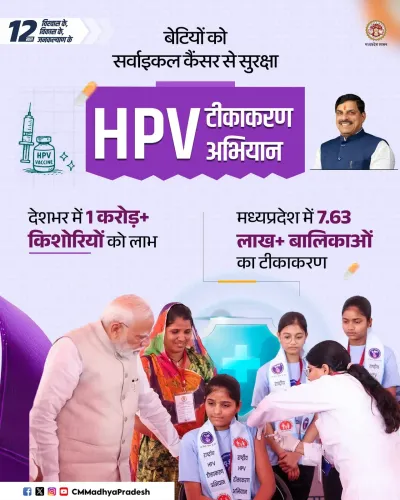
India's HPV vaccine campaign crosses 1 crore doses in 9 months, 87% coverage
Synopsis
India's HPV vaccination drive has hit 1 crore doses in just nine months — an 87% coverage rate across a target cohort of 1.2 crore girls. Six states, including UP and Bihar, have achieved 100% coverage, and the U-WIN platform is tracking every dose in real time. For a country where cervical cancer kills tens of thousands of women annually, this is one of the most consequential public health milestones in recent years.
Key Takeaways
India's National HPV Vaccination Campaign crossed 1 crore doses within nine months of its launch.
Coverage stands at nearly 87 per cent of the annual target cohort of approximately 1.2 crore girls aged 14 .
Six states — Gujarat, Uttar Pradesh, Andhra Pradesh, Mizoram, Madhya Pradesh, and Bihar — have achieved 100 per cent coverage .
Uttar Pradesh leads in absolute numbers with over 29.33 lakh girls vaccinated.
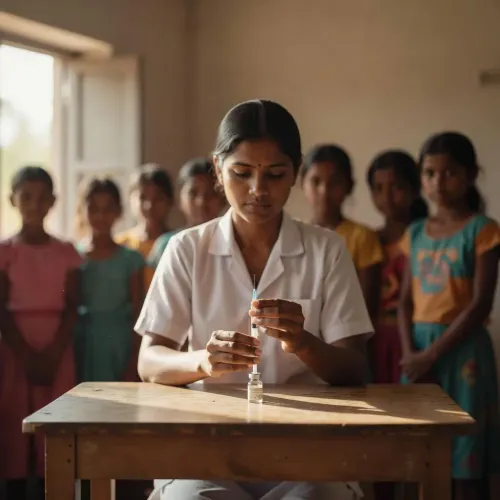
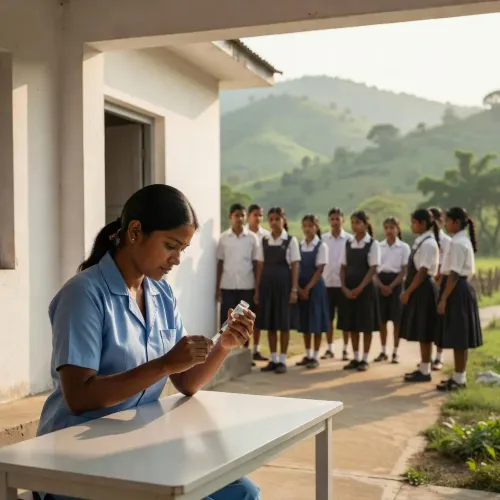
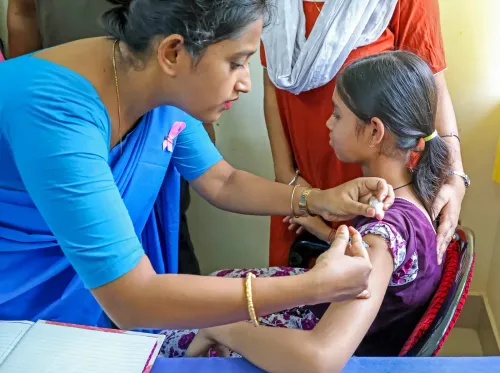
The campaign, launched by PM Narendra Modi in February 2026 , offers a free, single-dose vaccine to 14-year-olds at government facilities.
The U-WIN platform supports real-time tracking, slot booking, and digital certificate downloads.
India's National Human Papillomavirus (HPV) Vaccination Campaign has crossed 1 crore doses within just nine months of its launch, achieving nearly 87 per cent coverage of its annual target cohort — approximately 1.2 crore girls aged 14 — based on the 2021 population estimate, according to an official statement released on Saturday, 21 November. The milestone underscores what the Ministry of Health and Family Welfare described as growing public confidence and robust Centre-state coordination.
States Leading the Coverage Drive
Six states have achieved 100 per cent coverage of their identified target populations: Gujarat, Uttar Pradesh, Andhra Pradesh, Mizoram, Madhya Pradesh, and Bihar. Assam recorded 95.63 per cent coverage, followed by Telangana at 95.28 per cent, Karnataka at 93.16 per cent, and Uttarakhand at 90.17 per cent.
Chhattisgarh (86.21 per cent) and Rajasthan (85.23 per cent) have crossed the 80 per cent mark, while Kerala (77.02 per cent), Tamil Nadu (76.12 per cent), Odisha (74.90 per cent), and the Union Territory of Dadra and Nagar Haveli and Daman and Diu (72.99 per cent) have surpassed the 70 per cent threshold.
Absolute Numbers: UP, Bihar, Gujarat Lead
In absolute terms, Uttar Pradesh leads the country with more than 29.33 lakh girls vaccinated, followed by Bihar with over 13.70 lakh and Gujarat with over 7.75 lakh. The breadth of these numbers — spanning states with vastly different infrastructure, literacy levels, and socioeconomic conditions — points to a campaign that has managed to adapt locally rather than rely on a single top-down model.
How the Campaign Works
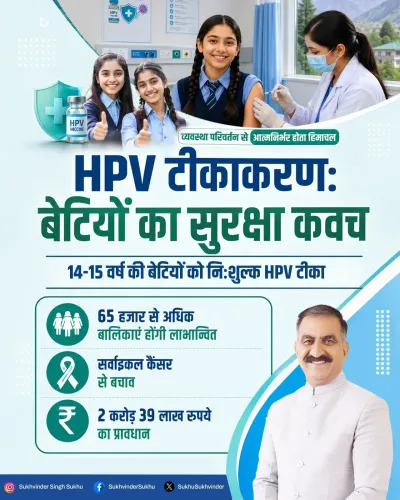
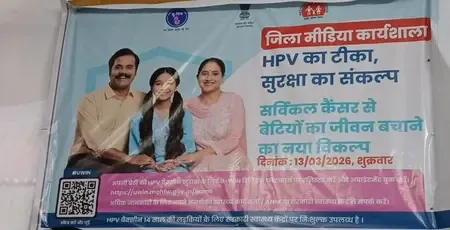
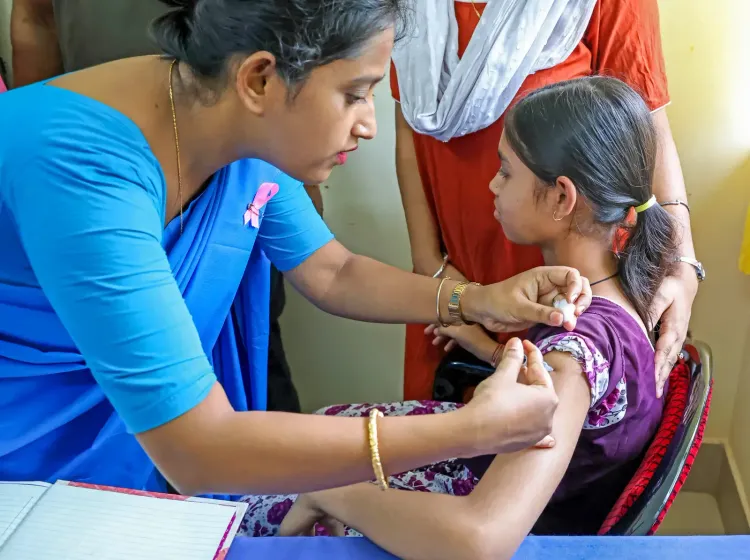
The campaign was launched by Prime Minister Narendra Modi in February 2026, offering a free, voluntary, single-dose HPV vaccine to 14-year-old girls at government health facilities, subject to parental consent. Healthcare professionals — including paediatricians, gynaecologists, and specialists from premier institutions such as AIIMS — have played a key role in building awareness and countering vaccine hesitancy. Frontline workers including Accredited Social Health Activists (ASHAs), Auxiliary Nurse Midwives (ANMs), and school teachers have worked directly with families to encourage informed participation.
Digital Infrastructure Powering the Drive
The U-WIN digital health platform has been central to the campaign's operational backbone, enabling real-time monitoring, beneficiary tracking, and the issuance of digital vaccination certificates. Programme managers are using the platform to identify coverage gaps at the district level and allocate resources more effectively. Parents can also use U-WIN to book vaccination slots for their daughters and download certificates — a feature the ministry says has made the process more accessible and transparent.
Notably, this is the first time India has run a nationwide, government-funded HPV vaccination programme at this scale. Cervical cancer — largely preventable through HPV vaccination — remains one of the leading causes of cancer-related deaths among women in India, making the campaign's reach a significant public health development. How states with sub-70 per cent coverage close the gap in the months ahead will be the next critical measure of the programme's success.
Point of View
Particularly for adolescent girls outside school systems. But the 87 per cent headline obscures a meaningful tail: several large states remain below 80 per cent, and sub-70 per cent coverage in Kerala and Tamil Nadu — states with strong health infrastructure — suggests hesitancy is not purely a function of access. The real test of this campaign's durability will be whether it can sustain momentum beyond the initial government push, and whether the U-WIN platform's data is used to drive targeted outreach rather than just track aggregate numbers.
NationPress
21 Nov 2026
Frequently Asked Questions
What is India's National HPV Vaccination Campaign?
It is a government-funded programme launched by Prime Minister Narendra Modi in February 2026 that provides a free, voluntary, single-dose HPV vaccine to 14-year-old girls at government health facilities, with parental consent. The campaign aims to prevent cervical cancer, which is largely caused by the Human Papillomavirus.
How many doses have been administered under the HPV campaign?
India has administered over 1 crore doses within nine months of the campaign's launch, achieving nearly 87 per cent coverage of the annual target cohort of approximately 1.2 crore girls aged 14, according to the Ministry of Health and Family Welfare.
Which states have achieved 100 per cent HPV vaccine coverage?
Six states have achieved 100 per cent coverage of their identified target populations: Gujarat, Uttar Pradesh, Andhra Pradesh, Mizoram, Madhya Pradesh, and Bihar. Assam and Telangana follow closely with over 95 per cent coverage each.
What is the U-WIN platform and how does it support the campaign?
U-WIN is India's digital health platform used to monitor HPV vaccination progress in real time, track beneficiaries, and issue digital vaccination certificates. It also allows parents to book vaccination slots for their daughters and download certificates, improving accessibility and transparency.
Why does the HPV vaccine matter for India?
Cervical cancer, largely preventable through HPV vaccination, remains one of the leading causes of cancer-related deaths among women in India. A nationwide vaccination programme targeting adolescent girls before potential exposure is considered one of the most cost-effective public health interventions available.