CM Yogi's MP Office: 7.63 Lakh Girls Vaccinated Against Cervical Cancer
Synopsis
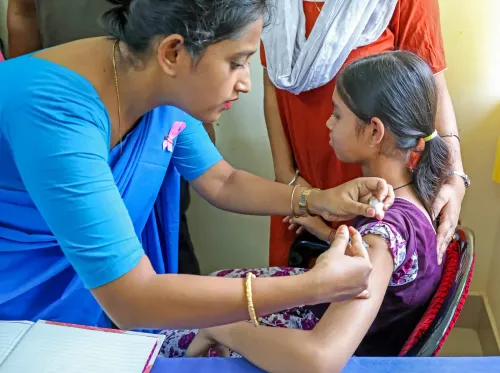
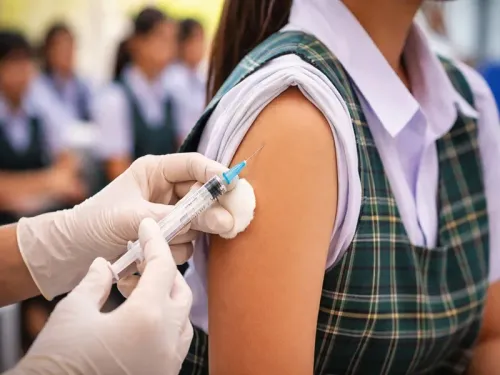
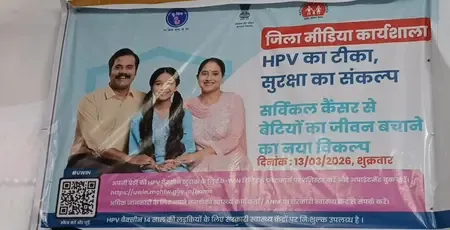
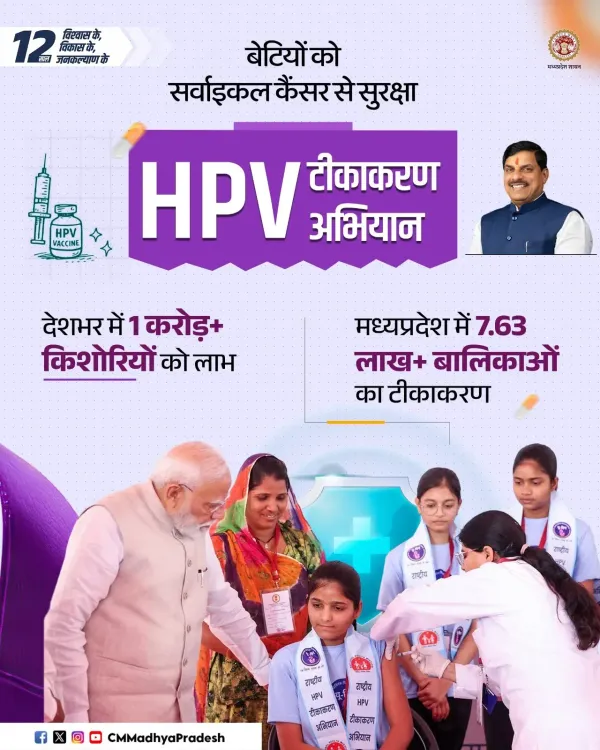
The Chief Minister's Office of Madhya Pradesh announced that over 7.63 lakh adolescent girls in the state have been vaccinated against cervical cancer under the national HPV campaign, which has reached more than 1 crore girls across India.
Key Takeaways
The HPV Vaccination Campaign has covered over 1 crore adolescent girls nationally against cervical cancer.
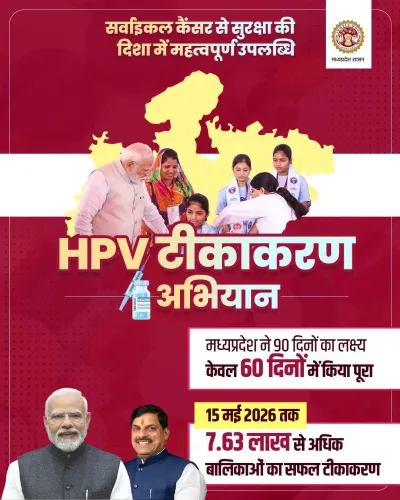
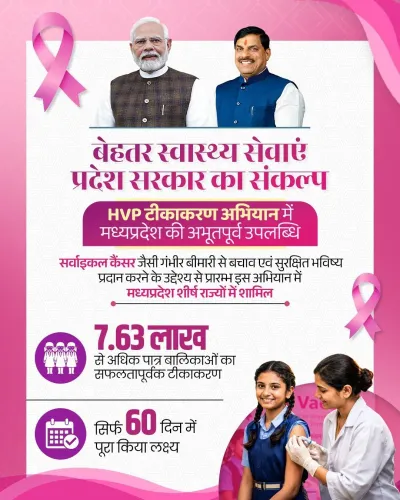
Madhya Pradesh alone has vaccinated more than 7.63 lakh girls under the same drive.
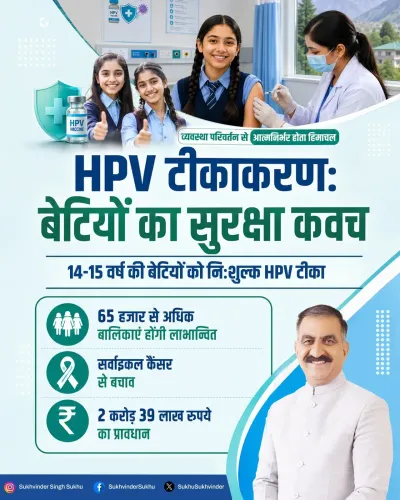
The campaign targets girls aged 9 to 14 years under India's Universal Immunization Programme .
The announcement was made by the Chief Minister's Office of Madhya Pradesh on June 12, 2026 .
The initiative is framed under the #12YearsOfGaribKalyann welfare branding, linking it to a broader governance milestone.
Cervical cancer is a leading cause of cancer deaths among Indian women, making HPV vaccination a critical public health priority.
The Chief Minister's Office of Madhya Pradesh announced on Friday, June 12, 2026, that the state's HPV vaccination campaign has provided cervical cancer protection to over 7.63 lakh adolescent girls in Madhya Pradesh, as part of a national drive that has reached more than 1 crore girls across India.
Context
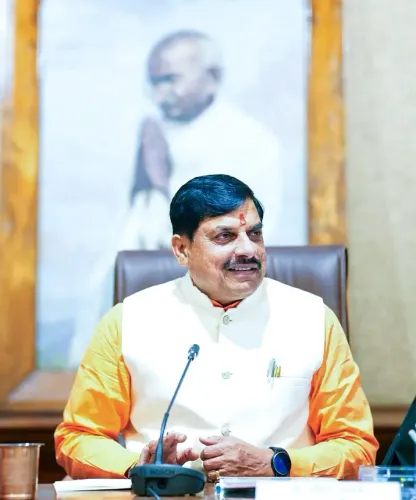
The post, shared by the official handle of the Chief Minister's Office, states: 'Betiyon ki swasthya suraksha ka sankalp' ('A resolve for the health protection of daughters'). It highlights the reach of the HPV Vaccination Campaign, crediting it with shielding girls from one of the most preventable yet deadly cancers affecting Indian women. The announcement was tagged to Chief Minister Dr. Mohan Yadav, the Prime Minister's Office, and the Union Ministry of Health and Family Welfare, signalling a joint Centre-state effort.
The post was also linked to the hashtags #12YearsOfGaribKalyann and #12YearsOfSeva, framing the vaccination milestone within the ruling dispensation's broader welfare narrative marking over a decade of governance.
Policy Backdrop
Cervical cancer is caused primarily by persistent infection with the Human Papillomavirus (HPV), and India carries one of the highest burdens of the disease globally, making it a leading cause of cancer deaths among Indian women. The World Health Organisation has long recommended HPV vaccination as the most effective primary prevention tool, particularly when administered to girls aged 9 to 14 years before potential exposure.
India's path to a national rollout was gradual. Early pilot programmes were introduced in states such as Sikkim (around 2018) and later expanded to Punjab and other regions. The vaccine was subsequently incorporated into the Universal Immunization Programme (UIP) under the National Health Mission, targeting girls in the 9-14 age group as a standard adolescent immunisation intervention. Madhya Pradesh, a state with historically high cervical cancer incidence, has been an active participant in this scale-up.
The Union Ministry of Health and Family Welfare coordinates national immunisation policy, vaccine supply, and state-level implementation under the UIP framework. The programme's integration with school health initiatives has been a key delivery mechanism for reaching adolescent girls at scale.
Stakeholders and Impact
The primary beneficiaries are adolescent girls between 9 and 14 years of age across India, with the 7.63 lakh+ figure representing those vaccinated in Madhya Pradesh alone. State health departments, frontline health workers, and school administrations have been central to executing the outreach, particularly in rural and semi-urban areas where health infrastructure is thinner.
For families, the vaccine represents a cost-free, government-backed shield against a cancer that often goes undetected until advanced stages. For public health planners, the numbers signal meaningful progress in adolescent immunisation coverage, a metric that has historically lagged behind infant immunisation rates in India.
What's Next
Health officials and policy watchers will track state-wise coverage data as the campaign continues, particularly whether the national figure of 1 crore+ vaccinations translates into measurable reductions in HPV prevalence over the coming years. Integration with school health programmes and sustained vaccine supply chains will be critical to maintaining momentum.
Parliamentary updates on adverse event monitoring and any expansion of the target age group could further shape the programme's trajectory. As India works toward the WHO's 90-70-90 cervical cancer elimination targets, the HPV vaccination drive in states like Madhya Pradesh will be a key indicator of whether the country is on track to dramatically reduce one of its most preventable cancer burdens.
Point of View
A deliberate framing that positions immunisation numbers as governance achievements ahead of any electoral cycle. The 7.63 lakh figure for a single state, set against a national count of over 1 crore, suggests that large states are now driving the bulk of HPV coverage under the Universal Immunization Programme. However, the real test lies not in first-dose counts but in full-course completion rates and sustained supply chains, metrics that rarely make it into official social media posts. As India eyes WHO cervical cancer elimination benchmarks, the gap between announced figures and verified epidemiological outcomes will define whether this campaign becomes a genuine public health turning point or a well-packaged statistic.
NationPress
19 Sept 2026
Frequently Asked Questions
What is the HPV vaccination campaign in India?
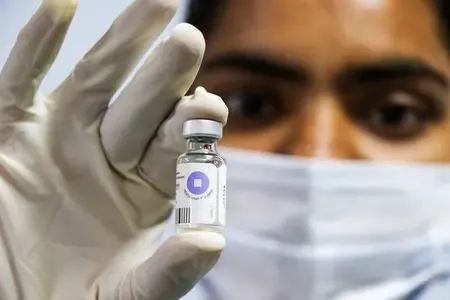
India's HPV vaccination campaign is a government-run drive under the Universal Immunization Programme that offers free HPV vaccines to girls aged 9 to 14 years to protect them from cervical cancer, coordinated by the Union Ministry of Health and Family Welfare.
How many girls have been vaccinated against cervical cancer in Madhya Pradesh?
According to the Chief Minister's Office of Madhya Pradesh, over 7.63 lakh adolescent girls in the state have received the HPV vaccine against cervical cancer as part of the national campaign.
What is the national HPV vaccination figure in India?
The Chief Minister's Office of Madhya Pradesh stated that more than 1 crore adolescent girls across India have been covered under the HPV vaccination campaign.
Who is the Chief Minister of Madhya Pradesh overseeing this health drive?
Dr. Mohan Yadav has been the Chief Minister of Madhya Pradesh since late 2023 and is associated with the state's implementation of central health schemes including the HPV vaccination drive.
Why is HPV vaccination important for girls in India?
Cervical cancer, caused primarily by the Human Papillomavirus, is one of the leading causes of cancer deaths among Indian women. Vaccinating girls before potential exposure is the most effective primary prevention method recommended by the World Health Organisation.