MP Completes HPV Vaccination Target 30 Days Ahead of Schedule
Synopsis
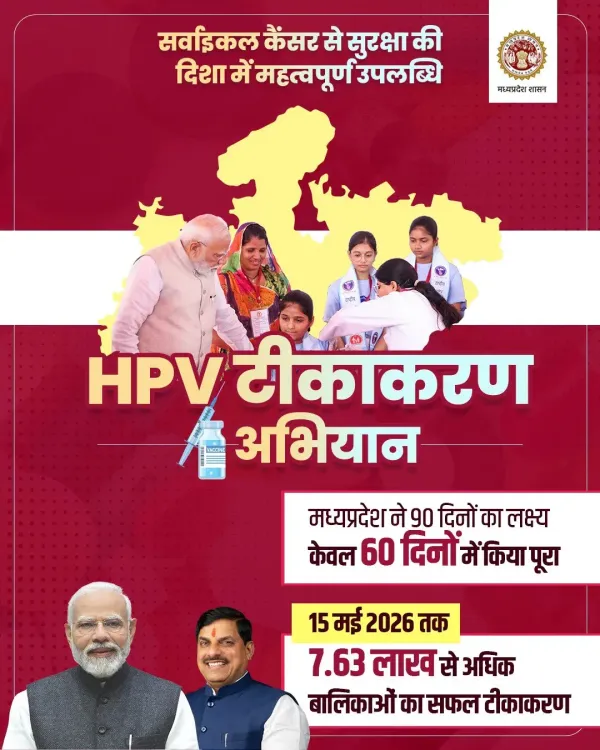
Madhya Pradesh completed its HPV vaccination campaign target 30 days ahead of schedule, the Chief Minister's Office announced on 27 June 2026, framing healthy adolescent girls as the foundation of an empowered future and marking a notable public health achievement for the state.
Key Takeaways
Madhya Pradesh completed its HPV vaccination campaign target in 60 days against a set goal of 90 days .
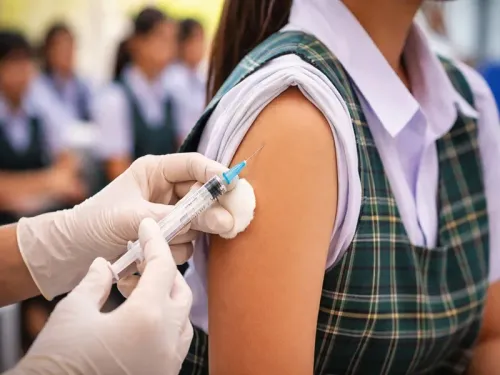
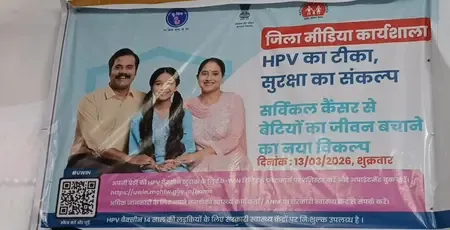
The campaign targets adolescent girls, primarily in the 9–14 age group , to prevent cervical cancer caused by the Human Papillomavirus.
The announcement was made by the Chief Minister's Office of Madhya Pradesh on 27 June 2026 , tagging CM Dr.
India's NTAGI recommended the HPV vaccine for girls in 2018 ; pilot programmes in MP began around 2022–23 .
The drive aligns with national health frameworks including Ayushman Bharat and the Universal Immunization Programme .
Future scrutiny will focus on rural and tribal coverage quality and possible statewide programme expansion.
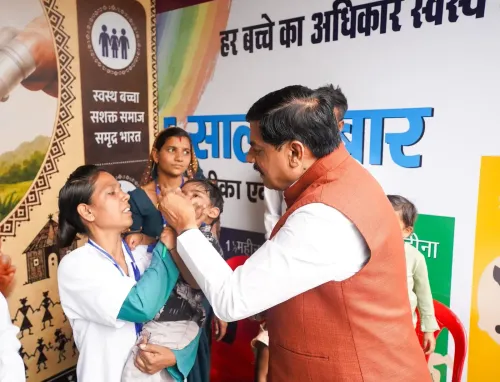
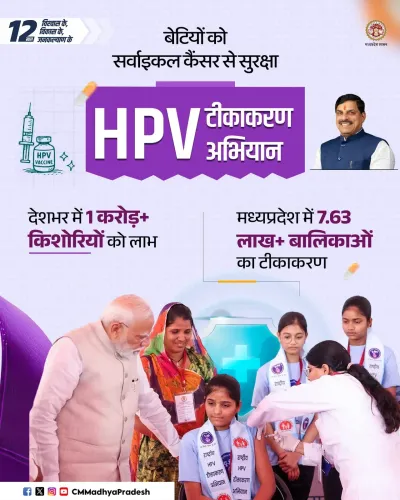
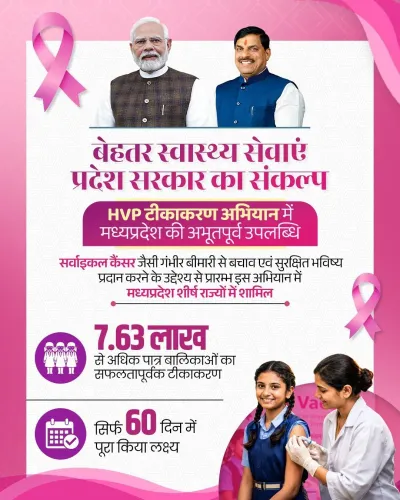
The Chief Minister's Office of Madhya Pradesh announced on Saturday, 27 June 2026 that the state has completed its HPV vaccination campaign target in just 60 days — a full 30 days ahead of the designated 90-day deadline — marking a significant milestone in the state's drive to protect adolescent girls from cervical cancer.
Context
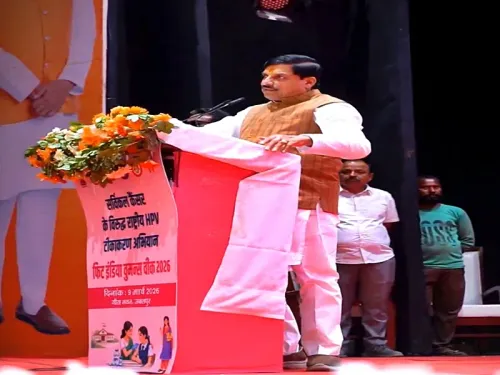
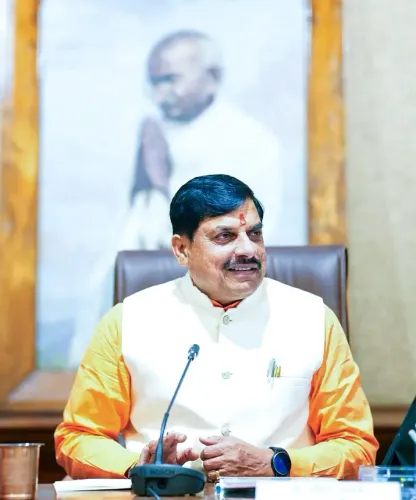
The official post from @CMMadhyaPradesh, tagging Chief Minister Dr. Mohan Yadav and the Madhya Pradesh Health Department, declared: 'स्वस्थ बेटियां ही सशक्त भविष्य की आधारशिला हैं' ('Healthy daughters are the foundation of an empowered future'). The announcement frames the early completion as a fulfilment of the state's resolve to protect girls from cervical cancer through the HPV (Human Papillomavirus) vaccine.
Cervical cancer is one of the leading causes of cancer-related mortality among women in India. HPV vaccination of adolescent girls — typically in the 9–14 age group — is widely recognised as the most effective preventive measure against the disease.
Policy Backdrop
India's National Technical Advisory Group on Immunization (NTAGI) recommended the HPV vaccine for adolescent girls as far back as 2018. Pilot vaccination programmes were subsequently rolled out in select states, including Madhya Pradesh, around 2022–23 under the expanded Universal Immunization Programme (UIP).
The current campaign aligns with the broader national framework under Ayushman Bharat and state-level health missions that prioritise preventive care for girls. Madhya Pradesh's accelerated completion places it among states demonstrating strong implementation capacity on women's health targets.
Stakeholders and Impact
The primary beneficiaries of this campaign are adolescent girls across Madhya Pradesh, who now receive protection against the strains of HPV most commonly linked to cervical cancer. Women's health workers, auxiliary nurse midwives (ANMs), and ASHA workers at the grassroots level were central to achieving the accelerated rollout.
The early completion also signals stronger administrative coordination between the Chief Minister's Office and the state health machinery — a dynamic that public health advocates have long argued is essential for immunization success in large, geographically diverse states like Madhya Pradesh.
What's Next
Attention will now shift to coverage quality — specifically, whether the vaccination drive reached girls in rural, tribal, and underserved districts of the state with the same effectiveness as urban centres. Data from future rounds of the National Family Health Survey (NFHS) will offer an independent measure of the campaign's actual reach.
Health officials and policy observers will also watch for announcements on a statewide expansion of the programme, potential booster phases, and whether Madhya Pradesh's model is adopted as a template by other states pursuing HPV vaccination under the national immunization schedule.
Point of View
Demonstrating administrative efficiency on a women's health issue that carries both public health and electoral salience. The framing — 'healthy daughters as the foundation of an empowered future' — deliberately connects routine immunization to the broader 'Beti Bachao, Beti Padhao' cultural discourse that has defined BJP governance in central India. However, the real test lies in coverage equity: accelerated timelines in large states have historically masked gaps in tribal belts and remote districts. Independent survey data will determine whether speed translated into genuine reach.
NationPress
25 Sept 2026
Frequently Asked Questions
What is the HPV vaccination campaign in Madhya Pradesh?
The HPV vaccination campaign in Madhya Pradesh is a public health drive to immunise adolescent girls, typically aged 9–14, against the Human Papillomavirus — the primary cause of cervical cancer. The state set a 90-day target for the campaign and completed it in 60 days, according to the Chief Minister's Office.
Why is the HPV vaccine important for girls in India?
Cervical cancer is one of the leading causes of cancer deaths among women in India, and the HPV vaccine provides protection against the virus strains most responsible for the disease. Vaccinating girls before they are exposed to the virus — ideally between ages 9 and 14 — is the most effective preventive strategy.
When did India start the HPV vaccination programme?
India's National Technical Advisory Group on Immunization (NTAGI) recommended the HPV vaccine for adolescent girls in 2018. Pilot programmes were launched in select states, including Madhya Pradesh, around 2022–23 under the expanded Universal Immunization Programme.
What did the Madhya Pradesh CM's Office announce about HPV vaccination?
On 27 June 2026, the Chief Minister's Office of Madhya Pradesh announced that the state had completed its HPV vaccination campaign target in just 60 days — 30 days ahead of the designated 90-day schedule — calling it a 'remarkable achievement' in the effort to protect girls from cervical cancer.
How does Madhya Pradesh's HPV campaign relate to Ayushman Bharat?
The HPV vaccination drive in Madhya Pradesh aligns with the national Ayushman Bharat framework, which emphasises preventive healthcare. The campaign is part of the Universal Immunization Programme's expanded mandate to integrate HPV vaccination into routine immunization for adolescent girls across India.