CM Mohan Yadav: MP vaccinates 7.63 lakh girls in 60 days
Synopsis
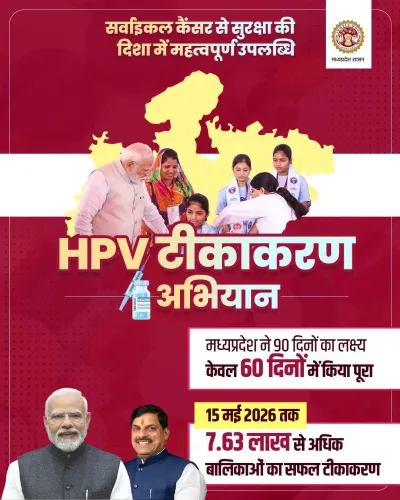
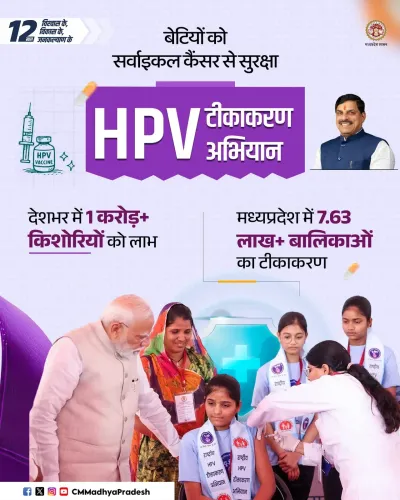
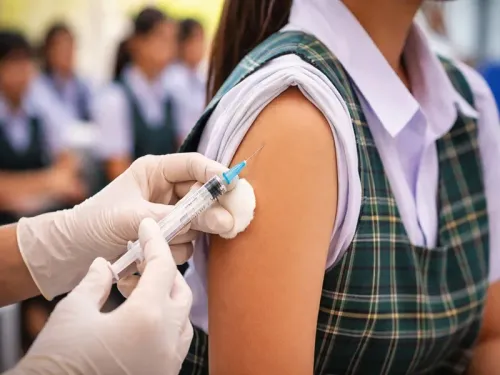
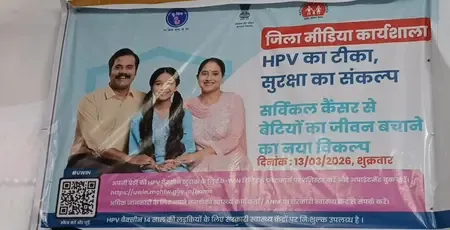
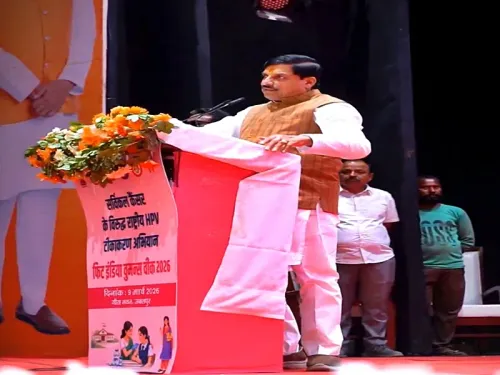
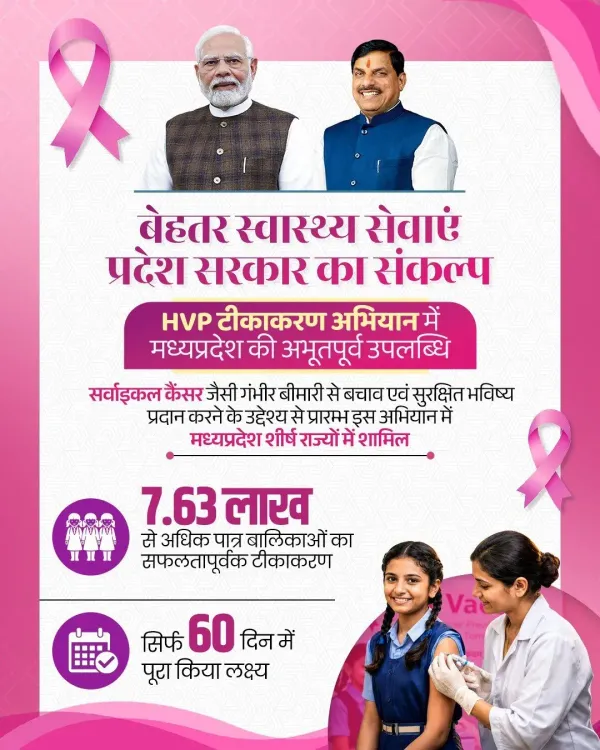
Madhya Pradesh Chief Minister Dr. Mohan Yadav announced that the state vaccinated over 7.63 lakh eligible girls against cervical cancer through its HPV campaign in just 60 days, claiming an unprecedented national achievement under the Universal Immunisation Programme rollout.
Key Takeaways
7.63 lakh eligible girls in Madhya Pradesh were vaccinated against cervical cancer through the HPV campaign within 60 days .
Mohan Yadav called the achievement 'unprecedented' at the national level.
The drive targets adolescent girls aged 9 to 14 years under India's Universal Immunisation Programme , which included the HPV vaccine from 2022 .
Cervical cancer caused by human papillomavirus (HPV) is one of India's leading preventable cancer burdens among women.
The campaign aligns with the National Health Policy 2017 priority of non-communicable disease prevention.
State-level performance data is expected to feature in upcoming National Health Mission coverage reports.
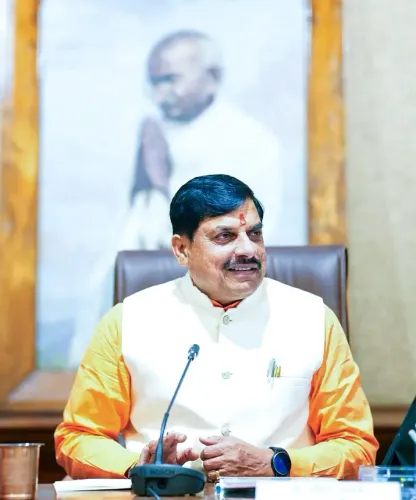
Madhya Pradesh Chief Minister Dr. Mohan Yadav announced on Wednesday, 10 June 2026 that the state has achieved a landmark milestone in its HPV vaccination campaign against cervical cancer, inoculating more than 7.63 lakh eligible girls in just 60 days — a feat he described as unprecedented at the national level.
Context
Posting on X, Dr. Yadav wrote: 'बेहतर स्वास्थ्य सेवाओं के लिए संकल्पित मध्यप्रदेश सरकार' ['Madhya Pradesh government committed to better health services'], adding that the state had achieved an 'unprecedented achievement across the country' in the HPV vaccination campaign launched to protect against the deadly disease of cervical cancer. The post was tagged #ViksitMadhyaPradesh, the state government's development branding.
Cervical cancer, caused by the human papillomavirus (HPV), represents one of India's most significant public health burdens. The disease is largely preventable through vaccination administered before the onset of sexual activity, making adolescent girls the primary target group for immunisation drives.
Policy Backdrop
India's push to mainstream HPV vaccination gained decisive momentum in 2022, when the Government of India announced the inclusion of the HPV vaccine in the Universal Immunisation Programme (UIP) for girls aged 9 to 14 years. This followed earlier pilot programmes run between 2016 and 2018 in states including Punjab, Delhi, and Sikkim.
The National Health Policy 2017 had already identified prevention of cervical cancer as a priority under the country's non-communicable disease control framework, laying the groundwork for the eventual national rollout. Madhya Pradesh's campaign is part of this broader, decentralised push under the UIP, with state health departments driving on-ground implementation through public health workers.
Stakeholders and Impact
The direct beneficiaries of the campaign are adolescent girls across Madhya Pradesh, with the state government reporting that more than 7.63 lakh eligible girls received the vaccine within the campaign's first 60 days. Frontline health workers — including ASHA workers, ANMs, and district health officials — have been central to mobilising families and administering doses at scale.
For public health advocates, the reported pace of coverage is significant in a large, geographically diverse state like Madhya Pradesh, which has historically faced challenges in reaching rural and tribal populations with preventive health interventions. A rapid rollout of this scale, if sustained, could meaningfully reduce the state's long-term cervical cancer incidence.
What's Next
Attention will now turn to whether Madhya Pradesh can sustain this momentum to achieve full coverage across all eligible age cohorts, and how the state's numbers compare in forthcoming National Health Mission data releases on state-wise HPV vaccination coverage. Any expansion of the eligible age bracket under the Universal Immunisation Programme at the central level would further widen the campaign's scope. The state's performance may also serve as a benchmark for other states calibrating their own HPV drives under the national framework.
Point of View
A politically salient move that allows a BJP-governed state to claim a concrete, measurable public health win. The 60-day figure is designed to project administrative efficiency — a recurring theme in the ruling party's governance narrative ahead of future electoral cycles. Cervical cancer prevention, once a niche public health issue, has become a visible policy arena since the 2022 UIP inclusion, giving state governments a ready platform to demonstrate delivery. Independent verification of the coverage numbers through National Health Mission audits will be key to assessing the claim's full weight.
NationPress
16 Sept 2026
Frequently Asked Questions
What is the HPV vaccination campaign in Madhya Pradesh?
The HPV vaccination campaign in Madhya Pradesh is a public health drive targeting eligible adolescent girls aged 9 to 14 to protect them against human papillomavirus, the primary cause of cervical cancer, under India's Universal Immunisation Programme.
How many girls were vaccinated in Madhya Pradesh's HPV drive?
According to Chief Minister Dr. Mohan Yadav, more than 7.63 lakh eligible girls were vaccinated in Madhya Pradesh's HPV campaign within just 60 days.
When did India include HPV vaccine in its national immunisation programme?
The Government of India announced the inclusion of the HPV vaccine in the Universal Immunisation Programme in 2022, targeting girls aged 9 to 14 years.
Why is cervical cancer vaccination important in India?
India bears one of the world's highest cervical cancer burdens. Since the disease is largely preventable through HPV vaccination before sexual debut, vaccinating adolescent girls is considered one of the most effective public health interventions available.
What is Viksit Madhya Pradesh?
'Viksit Madhya Pradesh' is the Madhya Pradesh state government's development branding and campaign hashtag, used to highlight achievements in infrastructure, health, education, and governance under the current administration.