India crosses 80 lakh HPV vaccinations in push to eliminate cervical cancer
Synopsis
India has administered over 80 lakh HPV doses since PM Modi launched the campaign from Ajmer in February — a scale that oncologist Dr Dattatreyudu Nori says gives India 'an upper hand' to eliminate cervical cancer within a few years. With roughly 200 women dying from the disease every day, the stakes behind this milestone could not be higher.
Key Takeaways
India crossed 80 lakh HPV vaccinations , the Union Ministry of Health announced on 11 September 2026 .
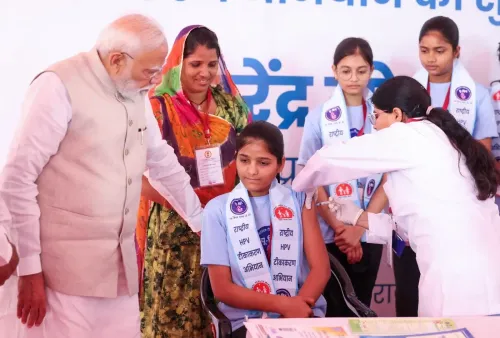
The nationwide HPV vaccination drive for girls aged 14 years and above was launched by PM Narendra Modi from Ajmer, Rajasthan in February 2026 .
The programme targets eradication of cervical cancer among women in India.
Approximately 200 women die of cervical cancer every day in India, according to Dr Dattatreyudu Nori , a 2026 Padma Bhushan awardee.
Dr Nori said HPV vaccination gives India 'an upper hand' to eliminate cervical cancer 'in few years.' The National Cancer Institute and expanded cancer treatment facilities are among the broader healthcare investments cited alongside the campaign.
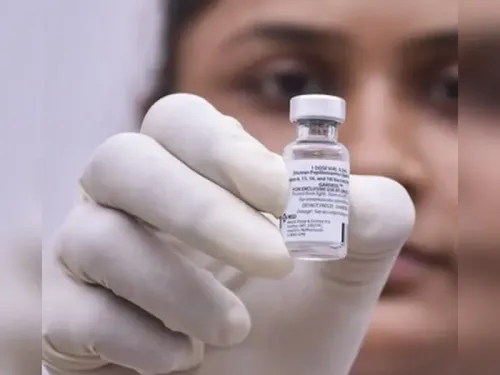
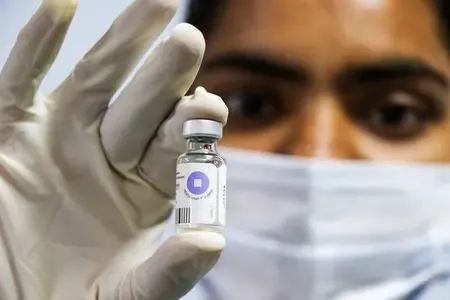
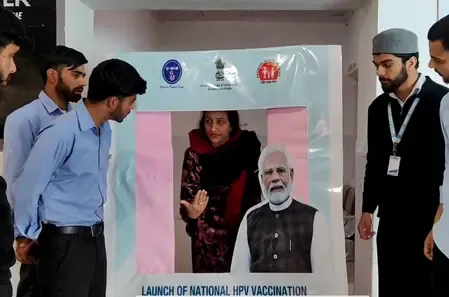
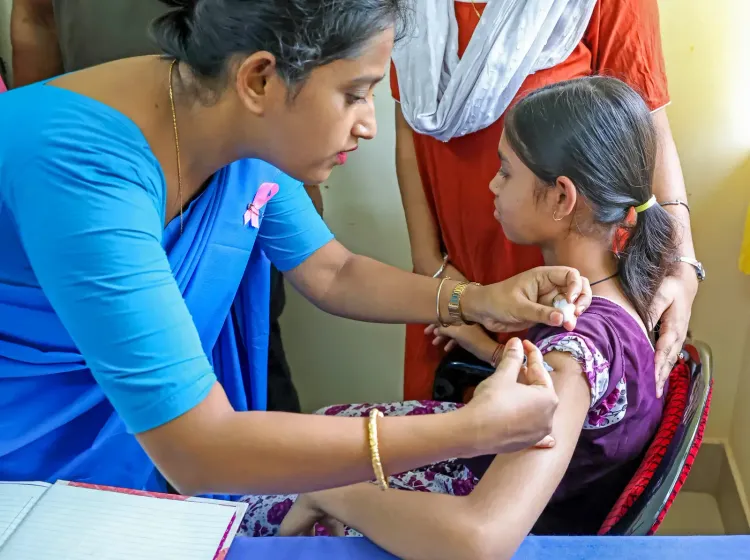
India has crossed 80 lakh Human Papillomavirus (HPV) vaccinations, the Union Ministry of Health announced on Friday, 11 September, calling it an 'important milestone' in the country's effort to combat HPV infection and HPV-associated cancers. The figure underscores rapid momentum since the nationwide campaign was rolled out earlier this year.
Campaign Background and Launch
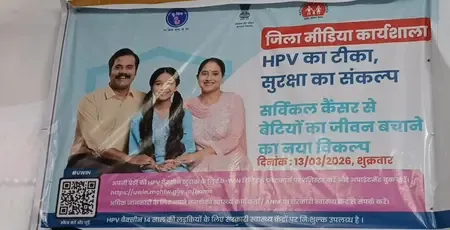
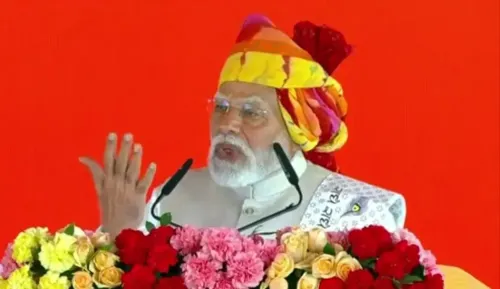
The nationwide HPV vaccination drive for girls aged 14 years and above was launched by Prime Minister Narendra Modi from Ajmer, Rajasthan, in February 2026. The initiative is specifically aimed at eradicating cervical cancer among women across India. By expanding access to the vaccine at scale, the programme is expected to protect millions of girls from developing life-threatening cancers in the future.
What the Ministry Said
Sharing the milestone on social media platform X, the Health Ministry stated: 'India has crossed 80 lakh HPV vaccinations, marking another important milestone in strengthening preventive healthcare and advancing protection against HPV infection and HPV-associated cancers.' The ministry added: 'With every vaccination, India takes another step towards a healthier, cancer-free future for its daughters.'
Expert Voices: A Decisive Advantage
Indian-American radiation oncologist Dr Dattatreyudu Nori, a 2026 Padma Bhushan awardee, has described the HPV vaccination drive as a turning point in India's battle against cervical cancer. 'Now, with the HPV vaccination, we have an upper hand, and in few years, we'll be able to eliminate cancer of the cervix from India,' Dr Nori said in a recent interview. He stressed that cervical cancer is 'preventable, detectable and curable,' making continued deaths from the disease particularly distressing for oncologists. According to Dr Nori, approximately 200 women die of cervical cancer every day in India — a toll he believes mass HPV vaccination can substantially reduce.
Broader Healthcare Progress
Dr Nori also highlighted what he described as significant positive changes in India's healthcare landscape over the past 12 years, citing the establishment of the National Cancer Institute and the expansion of cancer treatment facilities as notable steps. He welcomed the introduction of free HPV vaccination for girls as a policy that could substantially strengthen prevention efforts at the population level. Notably, cervical cancer remains one of the most common cancers among Indian women, and the scale of the current campaign places India among the more ambitious low- and middle-income country programmes globally.
What Comes Next
With 80 lakh doses administered, public health observers will watch whether coverage can be sustained and deepened — particularly in rural and hard-to-reach districts. The programme's long-term success will depend on maintaining vaccine supply chains, community awareness, and consistent follow-through for the eligible age group. If current momentum holds, India's goal of meaningfully reducing cervical cancer incidence within the next decade appears increasingly credible.
Point of View
But the harder question is whether the campaign is reaching the girls most at risk — those in low-income, rural, and tribal households where cervical cancer mortality is disproportionately concentrated. India's immunisation programmes have historically shown wide urban-rural coverage gaps. The 200-deaths-a-day figure Dr Nori cites is a reminder that speed matters: every year of delay in full coverage means tens of thousands of preventable deaths in the pipeline. Sustaining momentum beyond the initial push — and independently verifying coverage equity — will be the real measure of this milestone's worth.
NationPress
13 Sept 2026
Frequently Asked Questions
How many HPV vaccinations has India administered so far?
India has crossed 80 lakh HPV vaccinations as of 11 September 2026 , according to the Union Ministry of Health, which described the figure as 'an important milestone' in protecting girls and women from HPV-associated cancers.
Who launched India's HPV vaccination campaign and when?
The nationwide HPV vaccination campaign for girls aged 14 years and above was launched by Prime Minister Narendra Modi from Ajmer, Rajasthan in February 2026 . The drive aims to eradicate cervical cancer among women in India.
What did oncologist Dr Dattatreyudu Nori say about HPV vaccination in India?
Dr Dattatreyudu Nori , a 2026 Padma Bhushan awardee and Indian-American radiation oncologist, said HPV vaccination gives India 'an upper hand' and that cervical cancer could be eliminated 'in few years.' He noted that approximately 200 women die from cervical cancer every day in India, underscoring the urgency of the programme.
Why is the HPV vaccine critical for India?
Cervical cancer is one of the most common and deadly cancers among Indian women. Dr Nori describes it as 'preventable, detectable and curable,' making each death avoidable with timely vaccination and screening. The free HPV vaccine programme is designed to intercept the disease at the population level before infection can progress.
What are the next steps for India's HPV vaccination drive?
Public health experts expect the focus to shift to sustaining and deepening coverage, especially in rural and hard-to-reach districts. Supply chain management, community awareness, and consistent follow-through for the eligible age group will be critical to achieving the programme's long-term goal of significantly reducing cervical cancer incidence.