Assam nears 93% HPV vaccination coverage, 3 lakh girls inoculated
Synopsis
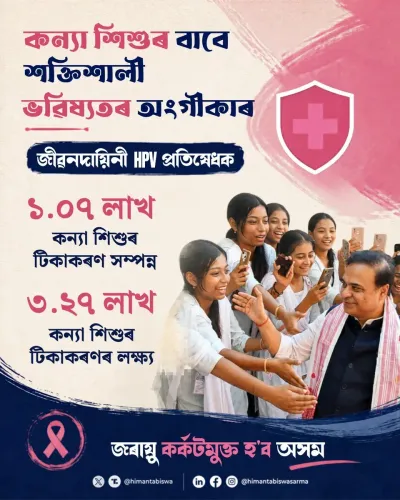
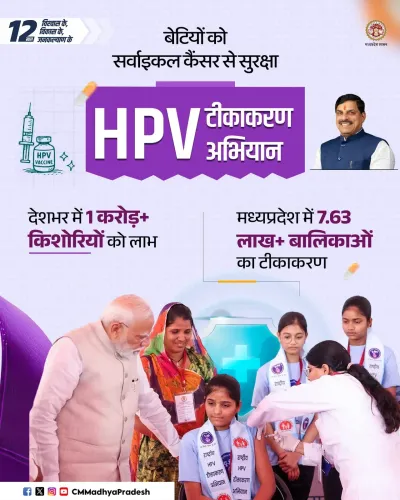
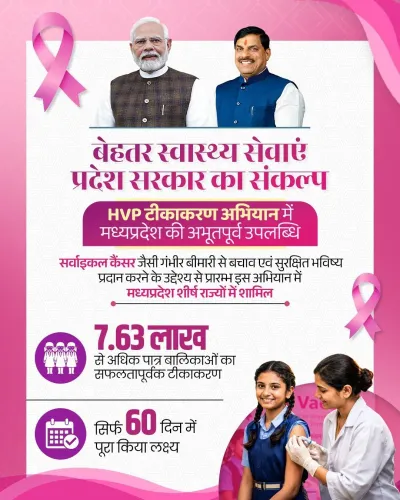
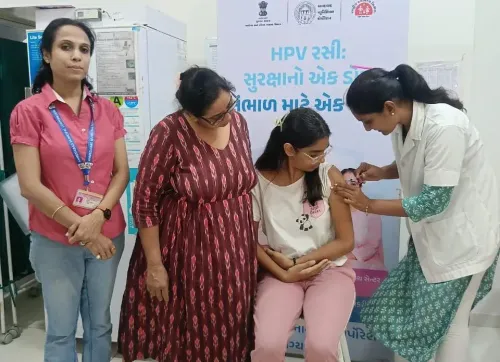
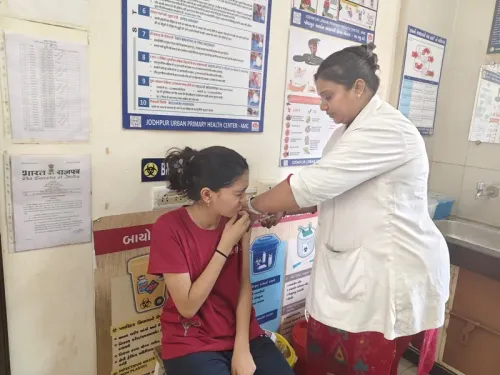
Assam has inoculated 3 lakh girls against HPV, reaching nearly 93% vaccination coverage. The milestone, announced by the Chief Minister's Office, reflects the state's progress under India's Universal Immunization Programme and marks a significant step in preventing cervical cancer among adolescent women.
Key Takeaways
3 lakh girls in Assam have been vaccinated against the human papillomavirus (HPV).
Assam has reached approximately 93% HPV vaccination coverage among the target age group.
The HPV vaccine was added to India's Universal Immunization Programme in 2023 , targeting girls aged 9–14 .
HPV is the primary cause of cervical cancer, one of the leading cancer-related causes of death among Indian women.
Assam's coverage rate places it among the better-performing states in the national HPV rollout.
Reaching the final percentage points — covering remote and border communities — remains the programme's next challenge.
Assam has vaccinated 3 lakh girls against the human papillomavirus, pushing the state to nearly 93% HPV vaccination coverage — a milestone the Chief Minister's Office of Assam flagged on Wednesday, September 30, 2026, as a decisive stride toward a healthier future for the state's adolescent women.
What 93% coverage actually means for Assam's girls
HPV — the human papillomavirus — is the primary cause of cervical cancer, which remains one of the leading cancer killers among Indian women. Vaccinating girls aged 9 to 14 before potential exposure is the single most effective tool medicine has to prevent it. When Assam says it has reached near-93% coverage, it means the overwhelming majority of the target cohort has received a shield against that threat. Three lakh girls. That is not an abstraction — that is three hundred thousand futures with a reduced cancer risk already banked.
Assam's rollout inside India's national HPV push
The backdrop matters. In 2023, India's Ministry of Health and Family Welfare formally included the HPV vaccine in the Universal Immunization Programme (UIP), extending coverage to girls aged 9–14 at no cost through government channels. It was a landmark move — India is home to a disproportionate share of the world's cervical cancer burden, and bringing HPV vaccination into the national schedule was years in the making.
Since then, states have been executing the rollout at varying speeds. Assam's near-complete coverage positions it among the frontrunners in this national drive, demonstrating that even in a geographically complex, partly rural northeastern state, a well-executed immunization campaign can achieve near-universal reach.
Why the finish line is still worth watching
At 93%, Assam is close — but the remaining percentage points are often the hardest to close. Remote villages, border districts, and communities with lower institutional health access are typically underrepresented in late-stage coverage data. Whether the state can push toward full saturation, and how quickly, will be the real test of programme depth. Public health departments will also be watching longer-term data: the true measure of this drive will emerge in cervical cancer incidence figures a decade from now.
For now, Assam has posted a number that a large number of Indian states have not yet matched — and 3 lakh girls are already better protected for it.
Point of View
Even across challenging terrain. The milestone reinforces the 2023 Union decision to mainstream HPV vaccination into the UIP as a cost-effective cervical cancer prevention strategy. Politically, health delivery in frontier states carries added weight: robust coverage metrics give the state government a tangible, apolitical win to project. The harder policy question now is equity — whether the last 7% will be reached or quietly left as a coverage gap that widens over time.
NationPress
30 Sept 2026
Frequently Asked Questions
What is HPV vaccination and why is it important for girls in India?
HPV vaccination protects girls against the human papillomavirus, which causes the majority of cervical cancer cases. India has a high cervical cancer burden, making the vaccine — given ideally to girls aged 9–14 before exposure — a critical preventive tool.
How many girls have been vaccinated against HPV in Assam?
According to the Chief Minister's Office of Assam, 3 lakh (300,000) girls have been vaccinated, bringing the state to nearly 93% coverage of the target cohort.
Is the HPV vaccine free under the government programme in India?
Yes. Since 2023 , India's Ministry of Health and Family Welfare included the HPV vaccine in the Universal Immunization Programme , making it available free of cost for girls aged 9–14 through government health channels.
Which states in India are leading in HPV vaccination coverage?
Assam, with near- 93% coverage , is among the frontrunners following the national rollout. Comprehensive state-by-state comparative data is tracked by the Ministry of Health as part of routine UIP monitoring.
Can HPV vaccination eliminate cervical cancer in Assam?
High vaccination coverage significantly reduces cervical cancer risk but must be combined with regular screening programmes for maximum impact. Near- 93% coverage in Assam is a strong foundation; the full benefit will appear in incidence data over the coming decade.