CM Himanta: Assam vaccinates 3 lakh+ girls against HPV
Synopsis
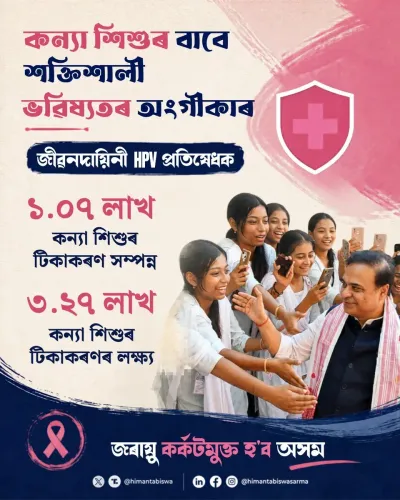
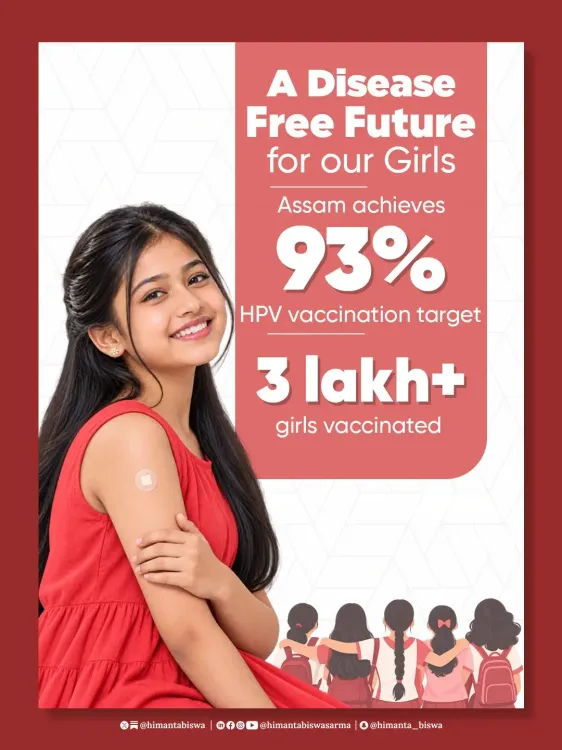
Assam Chief Minister Himanta Biswa Sarma announced that over 3 lakh girls have been vaccinated against HPV in Assam, surpassing 97% of the state's target — a major step toward reducing cervical cancer risk for the next generation.
Key Takeaways
Assam has vaccinated over 3 lakh girls against the Human Papillomavirus (HPV).
The state has covered more than 97% of its targeted population for the HPV vaccination drive.
HPV can cause cervical cancer , the second most common cancer among Indian women, making early vaccination critical.
CM Himanta Biswa Sarma framed the drive as a long-term health guarantee for Assam's daughters.
High coverage rates in vaccination drives reduce community-level transmission, protecting even unvaccinated individuals.
Assam's campaign positions the state as a strong mover on HPV immunisation among North-Eastern states.
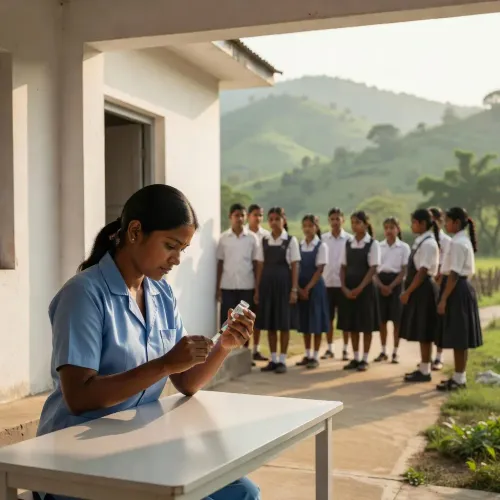
A disease that can quietly take root in adolescence and surface as cervical cancer decades later is now meeting a determined shield in Assam. Assam Chief Minister Himanta Biswa Sarma announced on Thursday, October 8, 2026, that the state has vaccinated over 3 lakh girls against the Human Papillomavirus (HPV), achieving more than 97% of its targeted coverage — a public-health milestone the Chief Minister framed as a generational investment.
What HPV silence costs — and why early vaccination breaks the cycle
HPV is among the most common sexually transmitted infections globally, and crucially, most people who carry it never know. Left unaddressed, certain strains of the virus can cause cervical cancer — the second most common cancer among Indian women. The danger is slow and cumulative: infection in youth, if unvaccinated, can translate into a life-altering diagnosis years or even decades later. Vaccination before exposure, ideally in early adolescence, is recognised by health authorities as the most effective preventive tool available.
CM Sarma's post underscored precisely this logic — 'protecting our girls early can help change that future' — casting the drive not merely as a health intervention but as a long-term guarantee for the daughters of Assam.
97% coverage: what the numbers mean on the ground
Crossing the 3 lakh mark while covering over 97% of the state's stated target places Assam among the more aggressive movers on HPV immunisation at the state level in India. High coverage rates matter disproportionately in vaccination programmes: the closer a drive gets to universal reach, the more it chips away at community-level transmission — protecting even those who could not be directly vaccinated. For a state with large rural and semi-urban populations spread across diverse terrain, hitting 97% is a logistical achievement as much as a medical one.
Assam's push within India's broader cervical cancer fight
India bears one of the world's heaviest cervical cancer burdens, with rural and under-served communities facing the sharpest risk — precisely the demographics that preventive vaccination is designed to reach. State-level HPV drives have been gaining momentum as a complement to national immunisation policy, and Assam's scale and coverage figures position this campaign as a reference point for similar efforts across the North-East and beyond.
For Chief Minister Sarma, health has increasingly become a visible plank of governance messaging, and a drive that directly benefits women and girls carries clear resonance both on public-health and political terms — though the numbers themselves do the talking here.
Three lakh vaccinations at 97% coverage is not a bureaucratic statistic. It is, in the most literal sense, three lakh futures made measurably safer.
Point of View
Metric-driven health interventions to complement national immunisation policy — particularly on diseases with a long latency period where prevention is vastly cheaper than treatment. Crossing 97% coverage is politically significant too: it signals administrative reach into rural and remote populations, a persistent challenge in North-East India. For CM Sarma, anchoring a high-visibility health milestone around women's well-being reinforces a governance narrative that extends beyond law-and-order politics. The question going forward is whether the drive will be institutionalised into routine adolescent immunisation or remain a one-time campaign.
NationPress
8 Oct 2026
Frequently Asked Questions
How many girls have been vaccinated against HPV in Assam?
Over 3 lakh girls have been vaccinated against HPV in Assam, covering more than 97% of the state's target, according to Chief Minister Himanta Biswa Sarma.
Why is the HPV vaccine important for girls?
HPV (Human Papillomavirus) can cause cervical cancer if left unaddressed. Vaccinating girls early — before potential exposure — is the most effective way to prevent this cancer, which is the second most common cancer among Indian women.
What is Assam's HPV vaccination target and how much has been achieved?
Assam set a specific target for HPV vaccination among eligible girls and has achieved over 97% of that target, with more than 3 lakh girls vaccinated as of October 2026.
Who announced Assam's HPV vaccination milestone?
Assam Chief Minister Himanta Biswa Sarma announced the milestone on his official X (formerly Twitter) account on October 8, 2026.
Is HPV vaccination part of India's national immunisation programme?
HPV vaccination has been gaining traction in India's public health policy, with states like Assam running state-level drives to expand coverage among adolescent girls as part of broader cervical cancer prevention efforts.