CM Himanta Flags 1.07 Lakh Girls Vaccinated Under Assam HPV Drive
Synopsis
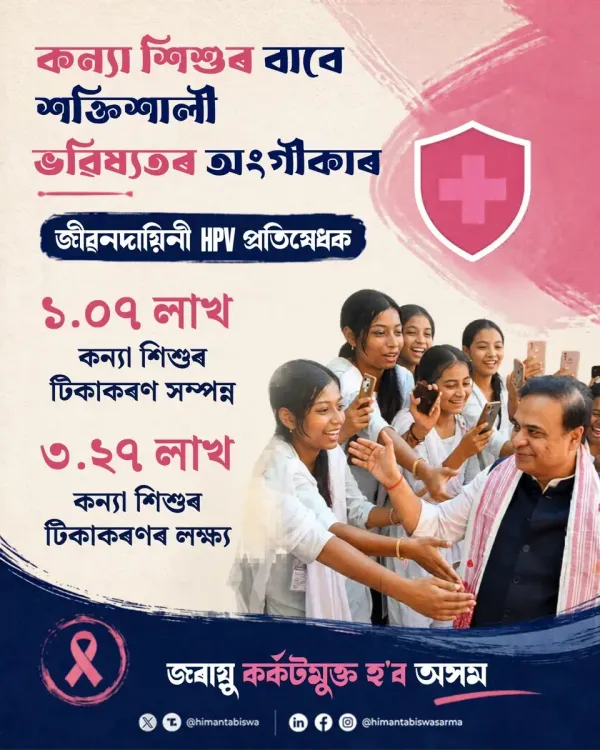
Assam Chief Minister Himanta Biswa Sarma announced on 12 June 2026 that over 1.07 lakh girls have been vaccinated under the state's HPV Vaccination Programme, pledging a cervical cancer-free future for the state's daughters.
Key Takeaways
Assam CM Himanta Biswa Sarma confirmed on 12 June 2026 that over 1.07 lakh girls have received the HPV vaccine under the state programme.
The drive aims to prevent cervical cancer , one of the leading causes of cancer deaths among Indian women.
The campaign aligns with the WHO's 2020 elimination strategy targeting 90 per cent HPV vaccination coverage of girls by age 15.
The Union Ministry of Health included the HPV vaccine in the Universal Immunisation Programme for select states and districts in 2022–23 .
Sikkim was the first Indian state to launch routine HPV vaccination for girls aged 9–14 , in 2019 , paving the way for north-eastern states.
Expansion to remaining Assam districts and school-based camps will determine whether the state meets its 'cervical cancer-free' goal.
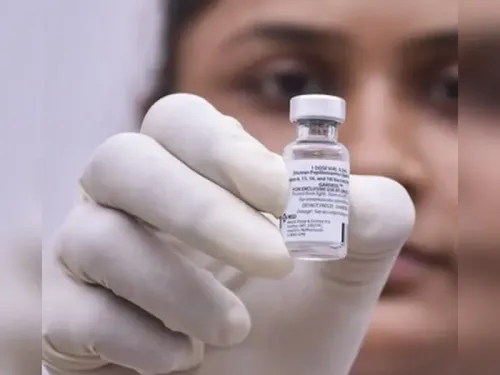
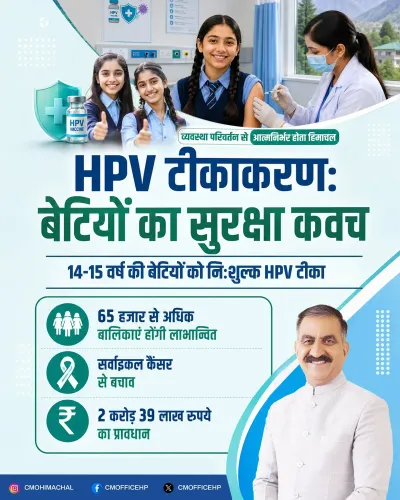
Assam Chief Minister Himanta Biswa Sarma on Friday, 12 June 2026, announced that more than 1.07 lakh girls have been vaccinated under the state's HPV Vaccination Programme, reaffirming the government's commitment to eliminating cervical cancer among the state's adolescent female population.
Context
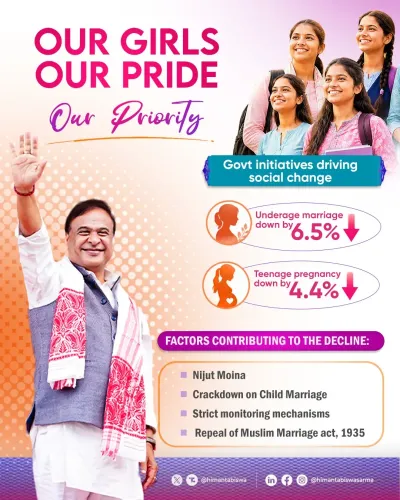
Posting on X, CM Sarma wrote that 'the daughters of Assam deserve to pursue their dreams without barriers, including preventable diseases,' framing the vaccination drive as an equity and empowerment initiative, not merely a public-health measure. The statement underlines the state government's positioning of the campaign as central to its broader welfare agenda for girls and women in Assam.
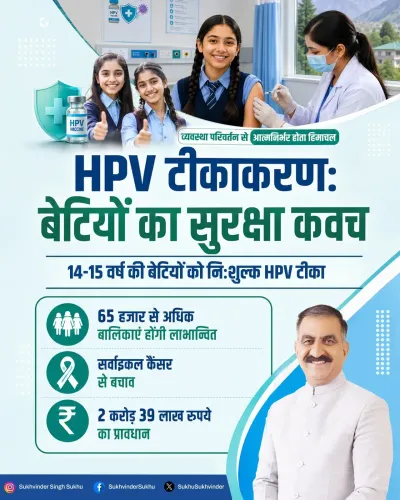
Cervical cancer remains one of the leading causes of cancer-related deaths among Indian women. It is caused primarily by persistent infection with high-risk strains of the Human Papillomavirus (HPV), making vaccination of adolescent girls before sexual debut one of the most effective preventive tools available.
Policy Backdrop
Sikkim became the first Indian state to introduce HPV vaccination for girls aged 9–14 under its routine immunisation programme back in 2019, setting a precedent for other states in the north-east. Several north-eastern and southern states subsequently rolled out phased pilots, broadly aligning with India's National Programme for Prevention and Control of Cancer, Diabetes, Cardiovascular Diseases and Stroke (NPCDCS).
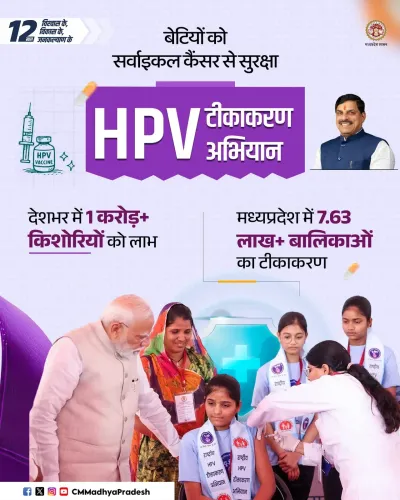
At the national level, the Union Ministry of Health announced the inclusion of the HPV vaccine in the Universal Immunisation Programme (UIP) for selected states and districts in 2022–23, providing a policy framework within which state-level campaigns like Assam's now operate. The move also mirrors the World Health Organisation's 2020 cervical-cancer elimination strategy, which targets 90 per cent vaccination coverage of girls by age 15 globally.
Stakeholders and Impact
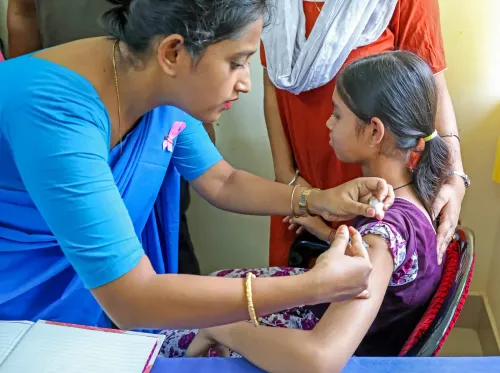
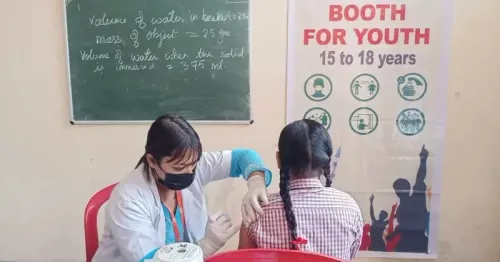
The primary beneficiaries are Assam's school-age adolescent girls, who receive the vaccine through state health department camps, many of them conducted in or near school premises to maximise reach. Reaching 1.07 lakh beneficiaries marks a measurable early milestone, though the state's total target population of eligible girls runs into several lakh across all districts.
The Assam state health department is the implementing agency, coordinating logistics with district administrations and the school education department. Community trust, parental consent, and cold-chain infrastructure in remote and hilly districts remain the principal operational challenges for any large-scale adolescent vaccination drive in the north-east.
What's Next
The government's stated goal is a 'cervical cancer-free future' for the state's girls, implying sustained multi-year coverage campaigns rather than a one-time drive. Attention will now turn to how swiftly the programme expands to districts not yet covered, and whether Assam will set explicit coverage benchmarks — such as the WHO's 90 per cent threshold — as formal policy targets.
Broader national momentum, including potential parliamentary health committee scrutiny and UIP budget allocations, could accelerate or constrain the pace of scale-up. If Assam sustains and expands this trajectory, it could emerge as a model for other north-eastern states still in early planning stages of their own HPV immunisation drives.
Point of View
While meaningful, still represents an early share of the state's total eligible population, meaning the harder logistical work lies ahead. Assam's push also fits a broader north-eastern pattern of states using targeted health programmes to signal developmental governance, competing for visibility within the BJP's wider welfare narrative. Whether the programme translates into measurable reduction in cervical cancer incidence will ultimately determine its legacy beyond the political moment.
NationPress
23 Sept 2026
Frequently Asked Questions
What is Assam's HPV Vaccination Programme?
It is a state government campaign to administer the Human Papillomavirus (HPV) vaccine to school-age adolescent girls in Assam, aimed at preventing cervical cancer. As of June 2026, over 1.07 lakh girls have been vaccinated under the programme.
Why is HPV vaccination important for girls in India?
HPV infection is the primary cause of cervical cancer, which is one of the leading causes of cancer deaths among Indian women. Vaccinating girls before exposure to the virus significantly reduces their risk of developing the disease later in life.
Is HPV vaccine part of India's national immunisation programme?
Yes, the Union Ministry of Health announced the inclusion of the HPV vaccine in the Universal Immunisation Programme for selected states and districts in 2022–23, complementing state-level drives like Assam's.
Which was the first Indian state to introduce HPV vaccination?
Sikkim was the first Indian state to introduce HPV vaccination for girls aged 9–14 under its routine immunisation programme, doing so in 2019.
What is the WHO target for HPV vaccination coverage?
The World Health Organisation's 2020 cervical-cancer elimination strategy targets 90 per cent vaccination coverage of girls by age 15 globally, a benchmark that Indian states including Assam are working towards.