CM Himanta takes cancer screening to rural Assam villages
Synopsis
Assam CM Himanta Biswa Sarma spotlights CareAssam's expansion of cancer screening into remote rural villages, linking early detection to the state's advanced treatment centres under the Assam Cancer Care Foundation model rooted in a 2017 Tata Trusts partnership.
Key Takeaways
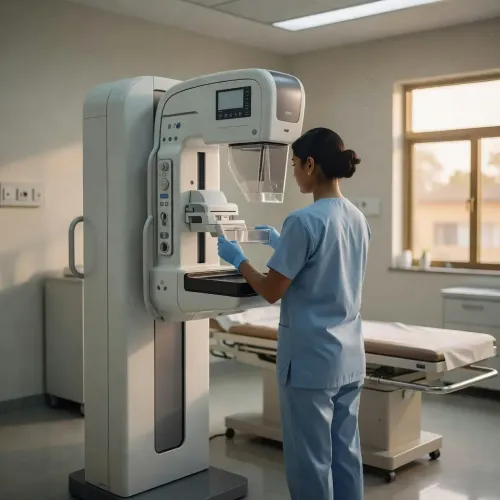
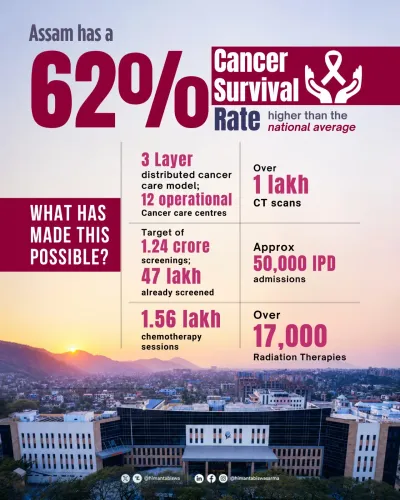
CareAssam is actively deploying cancer screening outreach into remote villages across Assam .
The programme channels early-detected patients toward the state's advanced cancer care centres for timely treatment.
The infrastructure traces back to a 2017 MoU between the Assam government and Tata Trusts under the Assam Cancer Care Foundation model.
Assam has among the highest cancer incidence rates in India, with rural districts disproportionately affected by late-stage diagnoses.
CM Himanta Biswa Sarma framed the drive around a decentralised care philosophy: bringing services to people, not the reverse.
Potential integration with Ayushman Bharat PM-JAY oncology packages could expand financial coverage for referred patients.
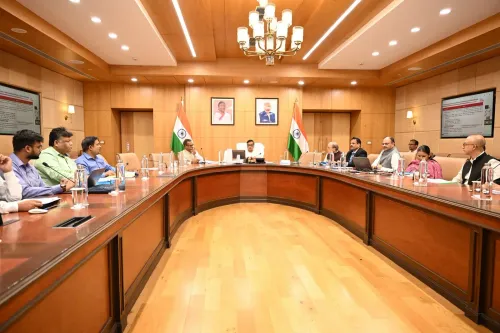
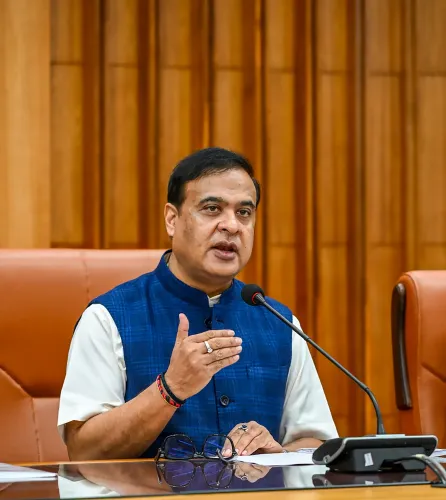
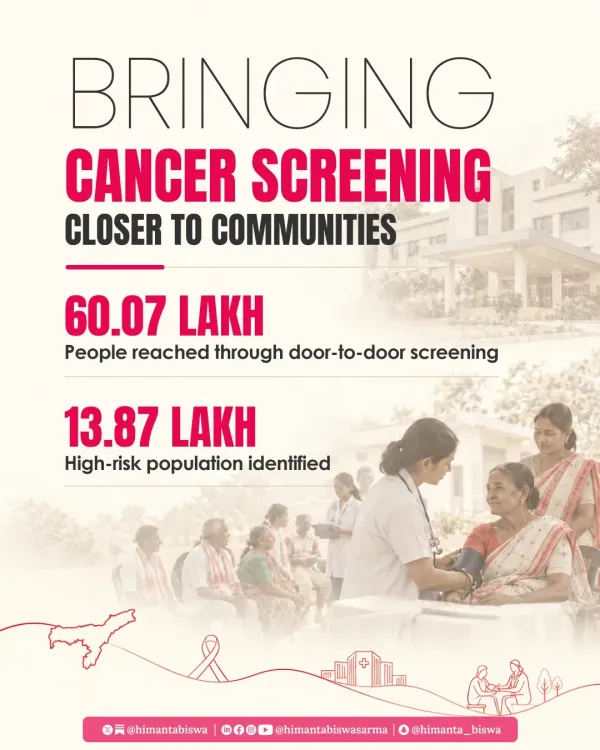
A state health drive is quietly reaching the corners of Assam that clinics never could. Assam Chief Minister Himanta Biswa Sarma on Tuesday, 13 October 2026, highlighted the expanding rural outreach of CareAssam — the state-backed cancer screening programme pushing early detection into remote villages and channelling patients toward advanced treatment centres.
Why Assam has a particular cancer burden
Assam carries one of the highest cancer incidence rates in India, with rural districts bearing a disproportionate share — driven in significant part by widespread tobacco use and late-stage presentations that arrive long after treatment windows narrow. The state has historically struggled with centralised oncology infrastructure that demanded patients travel hours to city hospitals, only to discover their condition was already advanced. Early detection, done locally, changes that calculus entirely.The foundation behind CareAssam's outreach
The architecture for this push was laid in 2017, when the Assam government signed a landmark MoU with Tata Trusts to establish the Assam Cancer Care Foundation — a decentralised oncology model designed to bring screening and treatment closer to people rather than expecting people to travel to treatment. CareAssam operates within that framework, deploying outreach directly into villages so that a rural resident does not have to weigh bus fare against a cancer check. Chief Minister Sarma's post captures the programme's governing philosophy in a single line: 'Because care must reach where people are.' It is a design principle, not just a slogan — one that represents a structural shift away from centralised tertiary care toward community-level interception of disease.What early detection means for outcomes
For cancers common in the Northeast — oral, cervical, and breast cancers among them — stage-of-detection is the single biggest determinant of survival. A programme that catches a tumour at stage one instead of stage four is not a welfare gesture; it is a life-or-death logistical intervention. By routing screened patients toward the state's advanced cancer care centres, CareAssam attempts to close the loop between detection and treatment — the gap where patients in resource-constrained settings most often fall through. What to watch next is whether the programme's village-level reach scales with additional mobile screening units and whether it integrates formally with national insurance coverage under Ayushman Bharat PM-JAY — a linkage that could absorb treatment costs for the rural poor who are screened and referred. For a state where distance has long been the most lethal comorbidity, getting the test to the village may matter more than anything else inside the clinic.Point of View
Delivery-oriented administration on non-communicable diseases — a politically valuable contrast in a state where health infrastructure gaps have long been a source of grievance. The 2017 Tata Trusts partnership gave the programme credibility and reach that a purely government-run scheme might have lacked; highlighting it now signals continuity of that architecture. The broader Northeast pattern of early-detection prioritisation reflects a regional acknowledgment that simply building more tertiary hospitals cannot outrun incidence rates driven by entrenched tobacco habits. If CareAssam achieves meaningful PM-JAY integration, it could become a replicable model that other northeastern states — and the Centre — look to adopt.
NationPress
13 Oct 2026
Frequently Asked Questions
Why does Assam have high cancer rates?
Assam records some of the highest cancer incidence rates in India, particularly in rural districts, driven significantly by widespread tobacco use and historically late-stage diagnoses because patients in remote areas lack easy access to screening facilities.
What was the 2017 Assam cancer MoU about?
In 2017, the Assam government signed a memorandum of understanding with Tata Trusts to create the Assam Cancer Care Foundation, a decentralised oncology model aimed at expanding cancer screening and treatment access beyond urban centres to districts and villages.
How does early cancer detection help rural patients in Assam?
Detecting cancers such as oral, cervical, and breast cancer at an early stage dramatically improves survival outcomes; the CareAssam model tries to catch cases in stage one or two by going to villages, then routing patients to advanced centres before the disease progresses.
Will CareAssam be linked to Ayushman Bharat PM-JAY?
A formal integration of CareAssam outreach with Ayushman Bharat PM-JAY oncology packages has not been officially confirmed, but such a linkage is being watched as a potential next step that would cover treatment costs for rural patients who are screened and referred.