Assam cancer survival rate hits 62%, beats national average: Himanta Sarma
Synopsis
Assam's cancer survival rate has crossed 62% — above the national average — under a three-tier care model that has screened 47 lakh people, delivered 1.56 lakh chemotherapy sessions, and operates 12 centres statewide. CM Himanta Biswa Sarma says the next phase targets 1.24 crore people for early detection, a scale that could redefine cancer outcomes in Northeast India.
Key Takeaways
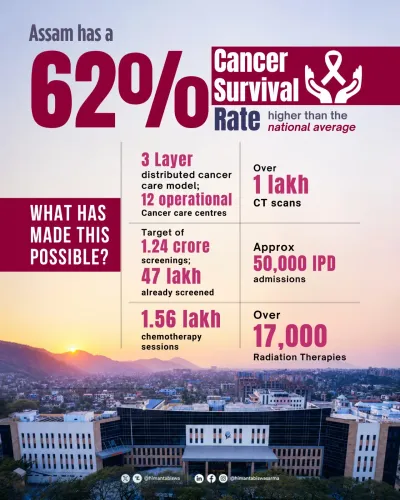
Assam 's cancer survival rate stands at 62 per cent , surpassing the national average, according to CM Himanta Biswa Sarma .
The state operates 12 cancer care centres under a three-tier distributed healthcare model.
47 lakh people have already been screened; the target is 1.24 crore people in the upcoming phase.
More than 1 lakh CT scans conducted and around 50,000 indoor patients treated at these centres.
The network has delivered over 1.56 lakh chemotherapy sessions and more than 17,000 radiation therapy procedures .
Assam's three-tier cancer care programme has pushed the state's cancer survival rate to 62 per cent, surpassing the national average, Chief Minister Himanta Biswa Sarma announced on Monday, 13 July. Sarma attributed the improvement to timely screening, early diagnosis, and prompt treatment under the state's integrated oncology model.
What the Numbers Show
According to official figures shared by the Chief Minister, Assam currently operates 12 cancer care centres under its distributed three-tier healthcare framework. The state has already screened 47 lakh people for various cancers, with an ambitious target to extend coverage to 1.24 crore people in the next phase.
The data further reveals that more than 1 lakh CT scans have been conducted across these facilities. Around 50,000 indoor patients have received treatment at the centres, reflecting growing utilisation of specialised oncology services across the state.
Treatment Capacity and Reach
The cancer care network has delivered over 1.56 lakh chemotherapy sessions and more than 17,000 radiation therapy procedures, significantly expanding access to advanced cancer treatment within Assam. These numbers underline the scale at which the programme is now operating, particularly in districts that previously lacked such specialised infrastructure.
Notably, the programme's distributed model — designed to bring oncology services closer to patients — appears to be reducing referral delays, a key factor in improving survival outcomes for common cancers.
What the Chief Minister Said
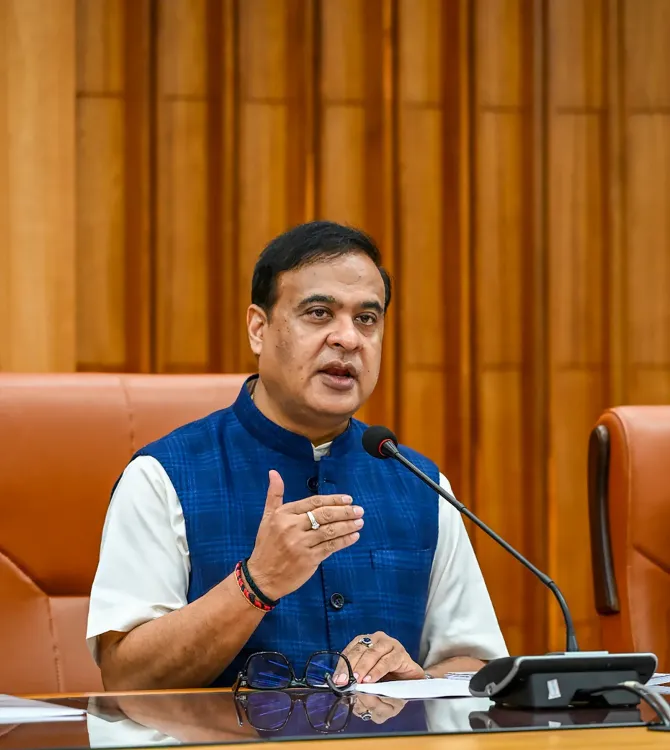
'Our 3-tier cancer care programme is delivering excellent results. Due to timely testing, diagnosis and treatment, our survival rate stands at 62 per cent, much above the national average,' CM Sarma said while sharing the achievement on social media.
He added that the government would continue strengthening early detection mechanisms and expanding treatment facilities to ensure cancer patients receive quality healthcare closer to their homes.
Context and Background
The Assam government has been steadily expanding cancer care infrastructure over the past several years through dedicated hospitals and specialised treatment centres established in partnership with healthcare institutions. The state's focus on mass screening reflects a broader public health shift — from reactive treatment to proactive early detection — which health experts widely recognise as the most effective lever for improving cancer survival rates.
This comes amid growing concern over rising cancer incidence across Northeast India, where dietary patterns, tobacco use, and limited access to tertiary care have historically contributed to late-stage diagnoses. The 62 per cent survival rate, if independently verified, would represent a meaningful departure from the national trend.
With the mass screening drive targeting 1.24 crore people and infrastructure continuing to expand, the programme's next phase will test whether these early gains can be sustained at scale.
Point of View
And the national average it is being compared against is not specified. That said, the operational numbers — 12 centres, 1.56 lakh chemotherapy sessions, 17,000 radiation procedures — suggest genuine scale, not just optics. The real test is whether the 1.24 crore screening target translates into stage-shift: more early-stage diagnoses and fewer late-stage presentations. Northeast India's cancer burden is disproportionately high, and if Assam's distributed model is genuinely compressing referral timelines, it deserves rigorous documentation and national replication — not just a social media post.
NationPress
12 Oct 2026
Frequently Asked Questions
What is Assam's cancer survival rate and how does it compare nationally?
Assam's cancer survival rate stands at 62 per cent, according to Chief Minister Himanta Biswa Sarma. This is described as substantially higher than the national average, though the specific national benchmark was not cited in the official statement.
What is Assam's three-tier cancer care programme?
It is a distributed oncology model with 12 cancer care centres across the state, designed to bring screening, diagnosis, and treatment closer to patients. The programme integrates early detection drives, chemotherapy, CT scanning, and radiation therapy under a single coordinated framework.
How many people has Assam screened for cancer so far?
The state has screened 47 lakh people for various types of cancer as part of its mass screening initiative. The government has set a target to cover 1.24 crore people in the next phase of the programme.
What treatment services are available under the programme?
The network has delivered over 1.56 lakh chemotherapy sessions and more than 17,000 radiation therapy procedures. More than 1 lakh CT scans have been conducted, and around 50,000 indoor patients have received treatment at the centres.
Why does early detection matter for cancer survival in Assam?
Northeast India has historically seen higher rates of late-stage cancer diagnoses due to limited access to tertiary care, tobacco use, and dietary factors. Early detection through mass screening compresses the time between onset and treatment, which is the primary driver of improved survival rates.