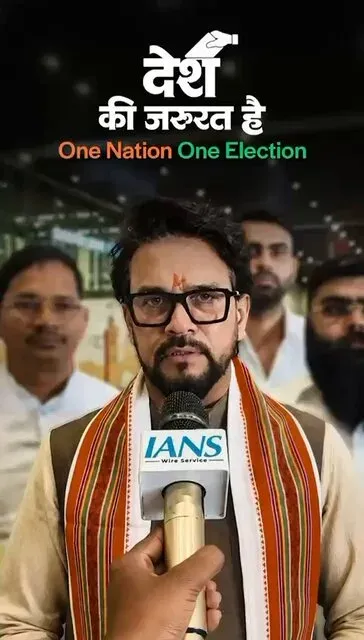
Anurag Thakur backs One Nation One Election in Lucknow
Synopsis
BJP MP Anurag Thakur declared 'One Nation, One Election' to be in the national interest from Lucknow on 13 July 2026, reinforcing the BJP's push for simultaneous Lok Sabha and state assembly polls backed by the Kovind committee report and Law Commission recommendations.
Key Takeaways
BJP MP Anurag Thakur declared 'One Nation, One Election' to be in the national interest from Lucknow on 13 July 2026 .
The Law Commission of India's 2018 report and a NITI Aayog 2017 paper both recommended or examined simultaneous elections.
A high-level committee headed by former President Ram Nath Kovind was constituted in September 2023 to study the proposal; its report is yet to be tabled in Parliament.
Implementation requires constitutional amendments to Articles 83, 85, 172 and 174 , and ratification by state assemblies.
The proposal is contested on federalism grounds by opposition parties and raises questions about state legislative autonomy.
Thakur's statement from Uttar Pradesh's capital signals the BJP is building a public case for the reform at the state level ahead of any legislative push.
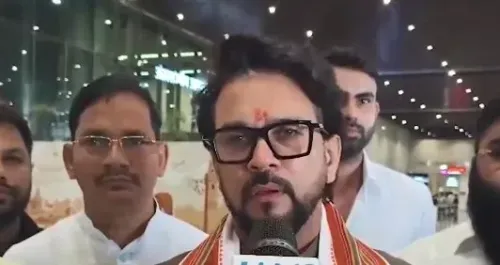
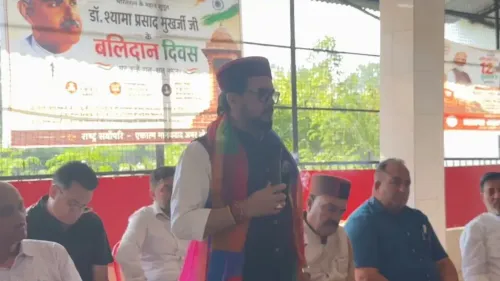
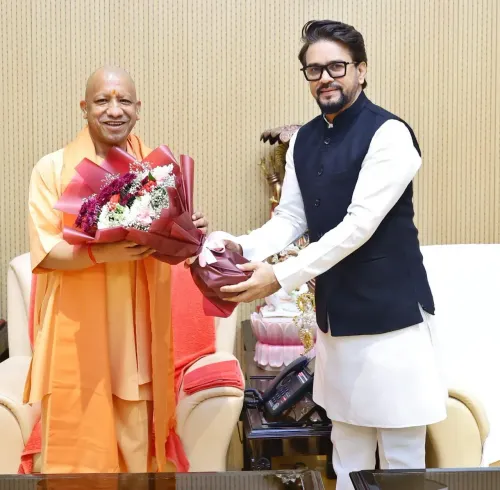
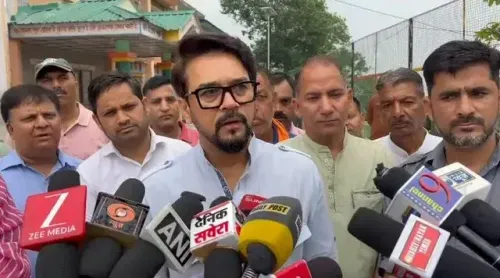
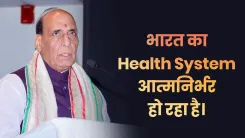
BJP MP Anurag Thakur, former Union Minister of Information & Broadcasting and Youth Affairs & Sports, on Monday, 13 July 2026, publicly declared that 'वन नेशन-वन इलेक्शन' ('One Nation, One Election') is in the national interest, making the statement from Lucknow, the capital of Uttar Pradesh.
Context
Thakur's post, brief and direct, reads: 'वन नेशन-वन इलेक्शन राष्ट्र हित में है' — 'One Nation, One Election is in the national interest.' The statement was made in Lucknow, signalling that the BJP is actively pushing the proposal beyond the national capital into key state political centres. The Bharatiya Janata Party has consistently included simultaneous elections as a plank in its national manifestos and ministerial statements.
Policy Backdrop
The idea of synchronising Lok Sabha and state assembly elections is not new. The Law Commission of India's 2018 report formally recommended simultaneous elections, citing reduction in expenditure and an end to recurring policy paralysis caused by the Model Code of Conduct kicking in multiple times a year. A NITI Aayog discussion paper in 2017 had earlier examined the administrative and financial feasibility of aligning electoral cycles.
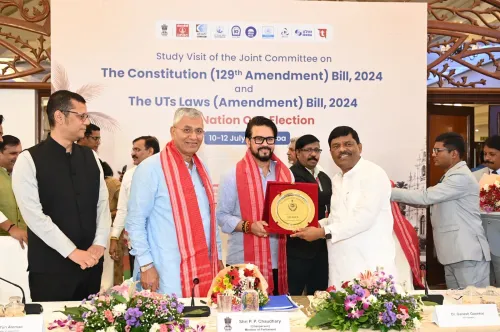
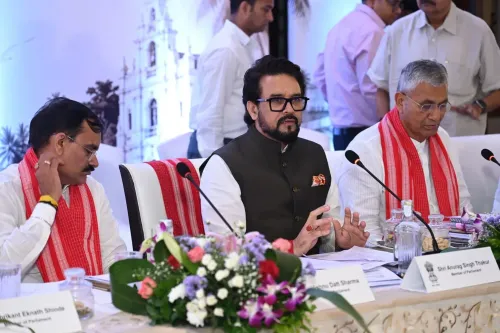
Most significantly, the Government of India constituted a high-level committee in September 2023, headed by former President Ram Nath Kovind, to study the proposal comprehensively. The committee's recommendations, once tabled in Parliament, are expected to shape the legislative roadmap. Implementation would require constitutional amendments to Articles 83, 85, 172 and 174, making it one of the most consequential electoral reforms proposed in independent India.
Stakeholders and Impact
The proposal has broad implications for voters, state governments, and political parties across the spectrum. Proponents argue that holding elections simultaneously would reduce the financial burden on the exchequer — elections are among the costliest exercises in Indian democracy — and allow governments at the Centre and in states to focus on governance rather than perpetual campaign mode.
Critics, however, raise serious concerns on federalism grounds, arguing that tying state assembly tenures to the Lok Sabha cycle could undermine the autonomy of state legislatures and dilute regional political mandates. Opposition parties have largely questioned whether the reform serves democratic plurality or centralises electoral power. The Election Commission of India has also been engaged in assessing its own administrative preparedness for such a shift.
What's Next
All eyes remain on whether the Kovind committee report will be formally tabled in Parliament and whether the government will introduce a constitutional amendment bill in an upcoming session. State assemblies would need to ratify certain amendments, making the political arithmetic complex. Thakur's statement from Lucknow — a city with significant political weight as the seat of Uttar Pradesh's government — suggests the BJP is building a public case for the reform at the grassroots level ahead of any legislative push.
Point of View
One Election' narrative and build ground-level consensus ahead of any legislative move. The timing matters: with the Kovind committee's report yet to be formally tabled, senior party voices amplifying the proposal keep it in public discourse without committing to a parliamentary timeline. The reform sits at the intersection of governance efficiency and constitutional politics, and the BJP's consistent messaging on it suggests it will be a central plank in the party's 2029 electoral positioning. Whether the proposal advances will ultimately depend on the government's ability to secure the multi-party and state-level support that constitutional amendments require.
NationPress
13 Jul 2026
Frequently Asked Questions
What is One Nation One Election?
One Nation One Election is a proposed reform to hold Lok Sabha and all state assembly elections simultaneously, rather than on separate schedules across five years. It aims to reduce election costs and limit the frequency of the Model Code of Conduct disrupting governance.
What did Anurag Thakur say about One Nation One Election?
BJP MP Anurag Thakur stated on 13 July 2026 in Lucknow that 'One Nation, One Election is in the national interest,' reaffirming the BJP's support for simultaneous elections.
What is the Kovind committee on One Nation One Election?
The Government of India constituted a high-level committee in September 2023, chaired by former President Ram Nath Kovind, to study the feasibility and implications of holding simultaneous elections across India. Its recommendations are awaited for tabling in Parliament.
What constitutional changes does One Nation One Election require?
Implementing simultaneous elections would require amendments to Articles 83, 85, 172, and 174 of the Constitution, which govern the tenure and dissolution of Parliament and state legislatures. These amendments would also need ratification by state assemblies.
Why is One Nation One Election controversial?
Critics argue the proposal undermines federalism by tying state assembly tenures to the Lok Sabha cycle, potentially diluting regional political mandates. Opposition parties contend it centralises electoral power, while supporters say it reduces costs and governance disruption.