SBI Chairman Calls on Finance Minister Sitharaman
Synopsis
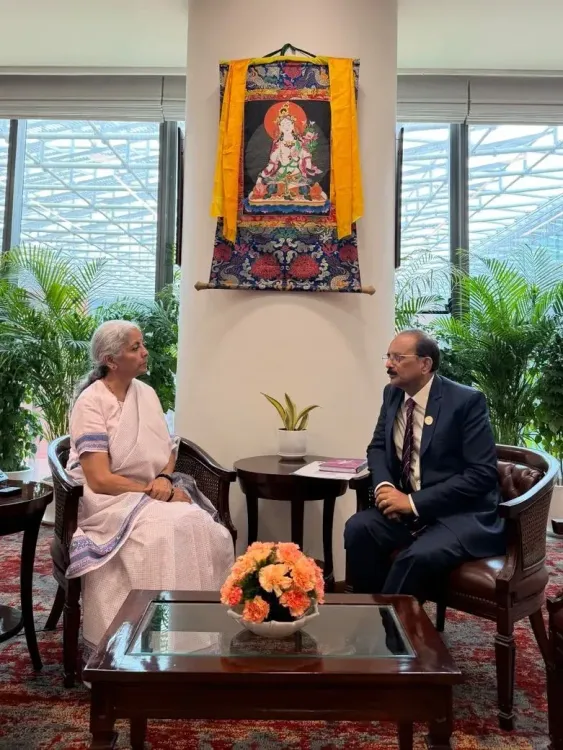
Union Finance Minister Nirmala Sitharaman met State Bank of India Chairman Challa Sreenivasulu Setty on 13 July 2026. The courtesy call is part of routine Finance Ministry engagement with public sector bank heads on credit growth, financial inclusion, and scheme delivery.
Key Takeaways
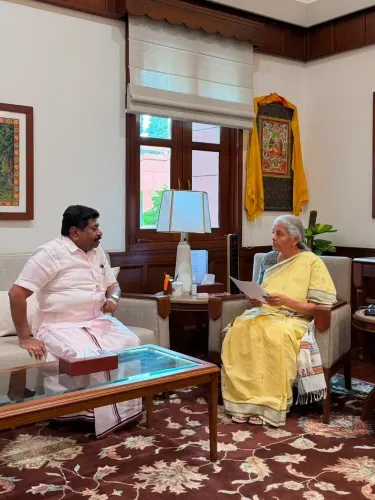
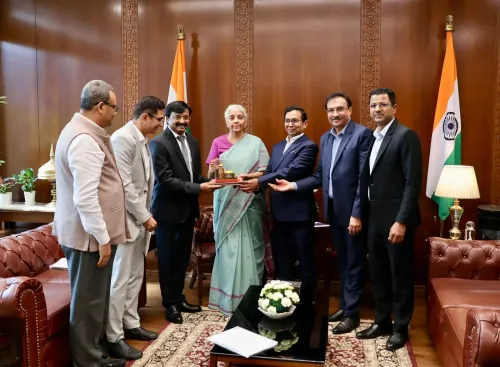
Challa Sreenivasulu Setty , Chairman of State Bank of India , called on Union Finance Minister Nirmala Sitharaman on 13 July 2026 .
SBI is India's largest public sector bank by assets and branch network.
The Finance Ministry holds periodic reviews with public sector bank chairpersons covering credit growth, asset quality, and digital banking.
Government schemes including PMJDY and Mudra loans rely on SBI 's network for last-mile delivery.
The meeting follows governance reforms post- 2019 that institutionalised closer coordination between the ministry and bank boards.
Union Finance Minister Nirmala Sitharaman received Challa Sreenivasulu Setty, Chairman of the State Bank of India, at her office on Monday, 13 July 2026. The courtesy call is part of the Finance Ministry's ongoing engagement with the heads of India's public sector banks.
Context
The meeting between Sitharaman and SBI Chairman Setty follows an established pattern of periodic consultations between the Ministry of Finance and the leadership of major state-owned lenders. Such interactions serve as a channel for the ministry to stay abreast of credit growth, asset quality, and scheme delivery on the ground. SBI is India's largest public sector bank by assets and branch network, making its chairman a key interlocutor for the government on financial matters.
Policy Backdrop
The Finance Ministry institutionalised regular reviews with bank chairpersons following the consolidation of public sector banks after 2019, when several associate banks were merged into SBI and other lenders were amalgamated into larger entities. These reviews typically cover credit disbursement, digital banking progress, and priority sector lending targets. Government flagship programmes such as the Pradhan Mantri Jan Dhan Yojana (PMJDY) and Mudra loans depend heavily on SBI's extensive branch network for last-mile delivery.
The broader governance reform drive initiated after 2014 placed greater emphasis on accountability and coordination between the Finance Ministry and public sector bank boards, making such high-level calls a routine feature of the ministry's calendar.
Stakeholders and Impact
SBI serves hundreds of millions of account holders across India and is a primary vehicle for government credit and financial inclusion mandates. Any direction emerging from consultations between the Finance Minister and the bank's chairman can influence lending priorities, capital allocation, and the pace of digital banking rollout. Small businesses, farmers, and first-time borrowers under priority sector schemes are among the most directly affected stakeholders.
Public sector bank performance also has implications for India's broader fiscal health, as the government is the majority shareholder in SBI and other nationalised banks. Capital adequacy, non-performing asset levels, and profitability metrics are therefore of direct interest to the Finance Ministry.
What's Next
Observers will watch SBI's upcoming quarterly results for signals on credit growth and asset quality trends that may have been discussed during the meeting. Pre-budget consultations with bank chiefs are also a regular feature of the ministry's calendar in the months leading up to the Union Budget. Any regulatory developments on capital requirements or digital lending norms could further shape the agenda of future engagements between Sitharaman and public sector bank heads.
Point of View
Lending targets, or digital finance — and the timing ahead of potential pre-budget discussions adds significance. The institutionalisation of these reviews since the post-2019 bank consolidation reflects the Finance Ministry's tighter grip on public sector bank governance. The broader arc points to a government that views large state-owned lenders not merely as commercial entities but as active instruments of economic policy.
NationPress
12 Oct 2026
Frequently Asked Questions
Why did SBI Chairman meet Finance Minister Nirmala Sitharaman?
The meeting on 13 July 2026 was a courtesy call as part of routine engagement between the Finance Ministry and heads of major public sector banks to discuss banking performance and policy priorities.
Who is the Chairman of State Bank of India in 2026?
Challa Sreenivasulu Setty is the Chairman of State Bank of India (SBI) , India's largest public sector lender.
What do Finance Ministry meetings with SBI typically cover?
These consultations generally cover credit growth, asset quality, digital banking progress, priority sector lending, and the delivery of government schemes such as PMJDY and Mudra loans .
How often does the Finance Minister meet public sector bank chiefs?
The Finance Ministry holds periodic reviews with public sector bank chairpersons, a practice institutionalised following the bank consolidation exercise after 2019 .
What is the significance of SBI in India's banking sector?
SBI is India's largest public sector bank by assets and branch network, serving as a primary vehicle for government financial inclusion programmes and credit delivery across the country.