Sitharaman meets NABARD Chairman Shaji KV

Synopsis
Union Finance Minister Nirmala Sitharaman received NABARD Chairman Shaji KV in New Delhi on 1 June 2026. The meeting reflects ongoing coordination between the Finance Ministry and India's apex rural credit institution ahead of future budget and policy cycles.
Key Takeaways
Nirmala Sitharaman met NABARD Chairman Shaji KV on 1 June 2026 in New Delhi.
NABARD is India's apex refinancing body for agriculture and rural development, established by Parliament in 1982 .
The meeting is part of routine high-level coordination between the Finance Ministry and development finance institutions.
NABARD refinances cooperative banks and regional rural banks, directly impacting credit access for small and marginal farmers.
No specific outcomes were publicly disclosed, consistent with the courtesy-call format.
Observers will watch for follow-on announcements on agricultural credit targets in the next Union Budget .
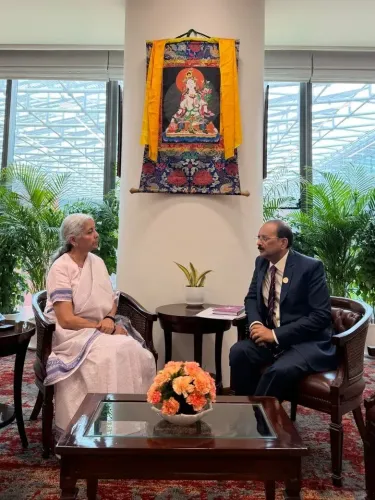
Union Finance Minister Nirmala Sitharaman received Shri Shaji KV, Chairman of the National Bank for Agriculture and Rural Development (NABARD), in a courtesy call on Monday, 1 June 2026, in New Delhi. The meeting is part of the regular high-level coordination between the Finance Ministry and apex development finance institutions that underpin India's rural credit architecture.
Context
NABARD is India's apex refinancing institution for agriculture and rural development, established by an Act of Parliament in 1982. It channels credit to cooperative banks, regional rural banks, and other rural lending institutions, making it a central pillar of the government's farm-finance ecosystem. As chairman, Shaji KV heads an institution that directly influences the flow of agricultural credit to millions of small and marginal farmers across the country.
Such calls on the Finance Minister by heads of development banks are a routine but significant feature of India's financial governance calendar. They allow the ministry and the institution to align priorities ahead of policy cycles, including the Union Budget.
Policy Backdrop
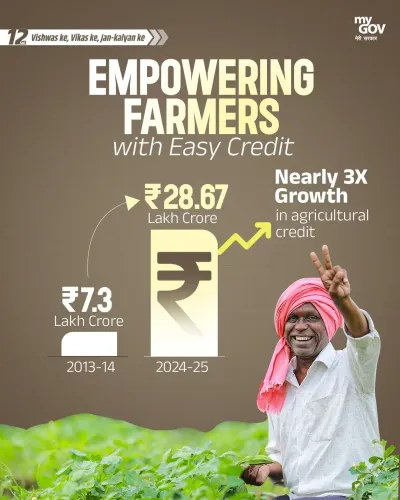
Successive Union Budgets have progressively raised the agricultural credit disbursement target, reflecting the government's stated commitment to doubling farm incomes and strengthening rural infrastructure. NABARD plays a direct role in meeting these targets by refinancing the short-term and long-term credit needs of rural banks and by implementing central government schemes for farm infrastructure and irrigation.
Meetings between the Finance Minister and NABARD leadership typically occur against the backdrop of these annual credit targets and any mid-year course corrections in rural lending policy. The 2026 meeting comes as the government continues to focus on expanding formal credit access in agrarian districts.
Stakeholders and Impact
The primary beneficiaries of NABARD's operations are small and marginal farmers, rural self-help groups, and cooperative credit societies that rely on refinanced credit to meet seasonal agricultural needs. Regional rural banks and cooperative banks, which serve as the last-mile conduit for farm credit, are also directly affected by the refinancing guidelines and capital support that NABARD provides.
Coordination between the Finance Ministry and NABARD has downstream implications for the cost and availability of institutional credit in rural India, touching the livelihoods of a significant share of the country's population engaged in agriculture and allied activities.
What's Next
The outcomes of this meeting were not disclosed publicly, as is customary for ministerial courtesy calls. Observers will watch for any subsequent announcements on revised agricultural credit targets, new refinancing windows, or changes to NABARD's capital base in the lead-up to the next Union Budget. Any new guidelines on priority-sector lending or rural infrastructure financing from NABARD in the coming weeks would be read in the context of this high-level engagement.
Point of View
While routine in form, signals active pre-budget engagement with the rural credit architecture at a time when agricultural credit targets have been rising annually. NABARD's refinancing capacity is a key lever for the government's farm-income and rural infrastructure agenda, making such interactions consequential even when details are not disclosed. The meeting fits a broader pattern of the Finance Ministry tightening coordination with development finance institutions as it prepares the next budget cycle. Any subsequent policy signal from NABARD — on refinancing rates, capital infusion, or new credit windows — will likely trace back to consultations of this kind.
NationPress
15 Sept 2026
Frequently Asked Questions
Who is Shaji KV and what is his role at NABARD?
Shaji KV is the Chairman of the National Bank for Agriculture and Rural Development (NABARD), the apex institution responsible for refinancing rural and agricultural credit in India.
Why did the NABARD chairman meet the Finance Minister?
The meeting is part of routine coordination between the Finance Ministry and NABARD on agricultural credit targets, rural lending policy, and implementation of central government schemes.
What does NABARD do for Indian farmers?
NABARD refinances cooperative banks and regional rural banks that provide credit to small and marginal farmers, and it also funds rural infrastructure and implements central agricultural schemes.
When was NABARD established?
NABARD was established in 1982 under an Act of Parliament to provide focused credit and development support for agriculture and rural areas.
What should we watch for after this meeting?
Watch for announcements on revised agricultural credit disbursement targets, new NABARD refinancing guidelines, or capital support measures in the lead-up to the next Union Budget.