FM Sitharaman: Agri credit up 4x to ₹28.67 lakh crore
Synopsis
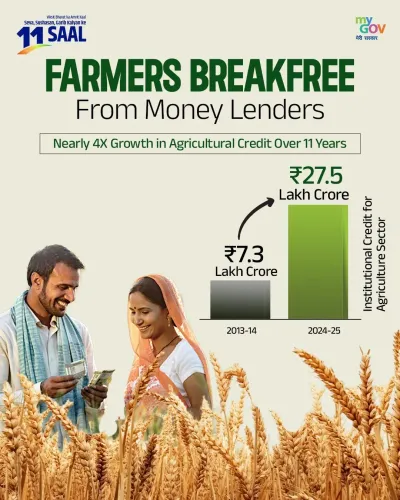
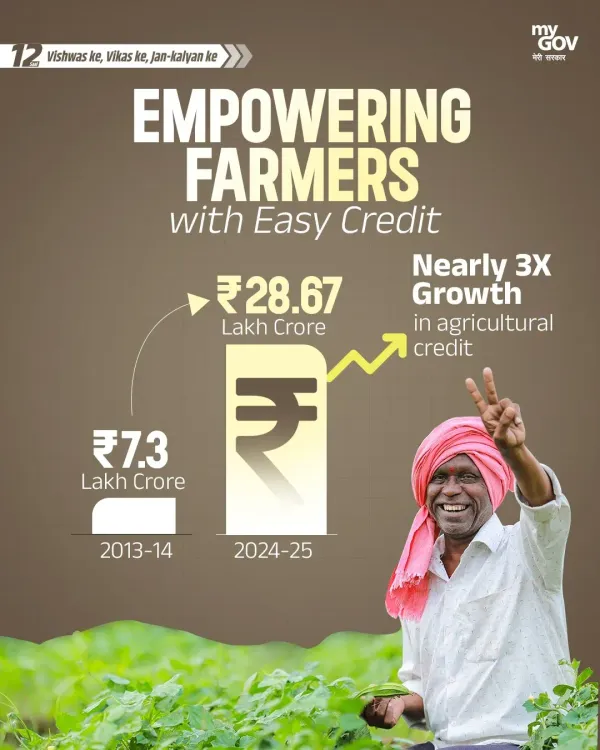
Union Finance Minister Nirmala Sitharaman on June 11, 2026, cited a near four-fold rise in agricultural credit — from ₹7.3 lakh crore in 2013-14 to ₹28.67 lakh crore in 2024-25 — marking twelve years of the Modi government's farm welfare push under #12YearsOfKisanSamriddhi.
Key Takeaways
Agricultural credit disbursement rose from ₹7.3 lakh crore in 2013-14 to ₹28.67 lakh crore in 2024-25 , a near four-fold increase.
The figures were cited by Finance Minister Nirmala Sitharaman on June 11, 2026 , under the hashtag #12YearsOfKisanSamriddhi .
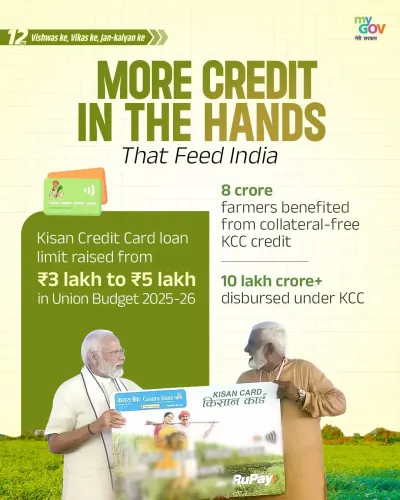
The Kisan Credit Card scheme, launched in 1998, remains a primary vehicle for formal crop-loan delivery to farmers.
Annual agricultural credit targets have been raised in every Union Budget since 2014-15 , reaching ₹11.5 lakh crore by 2019-20 as an intermediate milestone.
Agricultural credit falls under the RBI's priority-sector lending framework , with NABARD conducting annual ground-level reviews.
The next Union Budget and NABARD's annual report will be key markers for whether disbursement growth continues and reaches marginal farmers.
Union Finance Minister Nirmala Sitharaman on Thursday, June 11, 2026, highlighted a near four-fold rise in agricultural credit disbursement under the Modi government, citing growth from ₹7.3 lakh crore in 2013-14 to ₹28.67 lakh crore in 2024-25 as evidence of expanded rural financial access.
Context
The post was made under the hashtag #12YearsOfKisanSamriddhi, marking twelve years of the Narendra Modi government's agricultural and rural welfare programmes. Sitharaman framed the credit expansion as directly enabling 'greater financial access and boosting rural prosperity' — a core BJP governance narrative heading into the next budget cycle.
Agricultural credit refers to formal loans disbursed to cultivators through scheduled commercial banks, regional rural banks, and cooperative institutions, channelled partly through flagship instruments such as the Kisan Credit Card scheme.
Policy Backdrop
The Kisan Credit Card scheme, launched in 1998, was designed to deliver timely crop loans through the formal banking system and reduce farmers' dependence on informal moneylenders. From 2014-15 onward, successive Union Budgets set progressively higher annual agricultural credit targets, with the figure reaching ₹11.5 lakh crore by 2019-20.
Agricultural credit sits within the Reserve Bank of India's priority-sector lending framework, which mandates that a defined share of bank credit flow to agriculture, small enterprises, and allied sectors. The Ministry of Finance and NABARD jointly oversee ground-level credit-flow reviews each year to assess whether targets are being met at the district and block level.
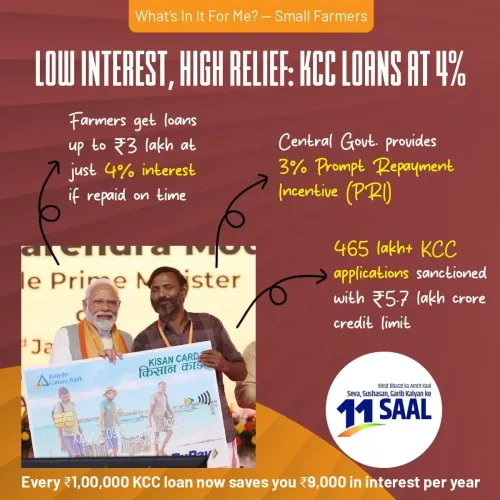
Interest-subvention schemes have run alongside these targets, offering farmers short-term crop loans at subsidised rates — typically 4 per cent per annum for prompt repayers — making formal credit cheaper than informal alternatives.
Stakeholders and Impact
The primary beneficiaries of expanded agricultural credit are India's estimated 140 million farm households, particularly smallholders and marginal farmers who historically lacked collateral to access formal finance. Higher formal credit availability is associated with reduced exposure to exploitative moneylending and improved capacity to invest in inputs, irrigation, and technology.
Rural banks — including regional rural banks and primary agricultural credit societies — bear the operational burden of last-mile disbursement. Critics and farm-sector analysts have noted that aggregate disbursement figures can mask uneven geographic distribution, with better-connected districts absorbing a disproportionate share of credit flows.
The jump from ₹7.3 lakh crore to ₹28.67 lakh crore over eleven years represents a compound annual growth rate of roughly 13 per cent, outpacing general inflation over the same period and suggesting real expansion in credit access, though independent verification of the 2024-25 figure is pending official NABARD and RBI publications.
What's Next
Attention will now turn to the next Union Budget, where the government is expected to announce a fresh annual agricultural credit target — a figure that has risen without interruption since 2014. NABARD's annual report on ground-level credit flow, typically released mid-year, will provide district-level data to test whether the headline numbers translate into access for the most vulnerable cultivators.
The #12YearsOfKisanSamriddhi campaign signals the BJP's intent to foreground rural welfare achievements ahead of electoral cycles, making agricultural credit metrics a likely recurring talking point in official communication through the rest of 2026.
Point of View
But the Finance Minister's framing sidesteps persistent questions about last-mile credit access and the concentration of formal loans among larger, better-connected farmers. The announcement fits a broader pattern in which the Modi government uses anniversary milestones to reset the political narrative around welfare delivery ahead of budget and electoral cycles. For the Opposition, the challenge will be to shift the debate from aggregate disbursement to per-farmer outcomes and rural debt distress data.
NationPress
29 Jul 2026
Frequently Asked Questions
How much has agricultural credit grown under the Modi government?
According to Finance Minister Nirmala Sitharaman, agricultural credit grew from ₹7.3 lakh crore in 2013-14 to ₹28.67 lakh crore in 2024-25 — a near four-fold increase over eleven years.
What is the Kisan Credit Card scheme?
The Kisan Credit Card scheme, launched in 1998, provides short-term crop loans to farmers through the formal banking system at subsidised interest rates, reducing dependence on informal moneylenders.
What is #12YearsOfKisanSamriddhi?
#12YearsOfKisanSamriddhi is a social media campaign marking twelve years of the Narendra Modi government's agricultural and rural welfare initiatives since it came to power in 2014.
Who oversees agricultural credit targets in India?
The Ministry of Finance sets annual agricultural credit targets in the Union Budget, while the Reserve Bank of India's priority-sector lending framework and NABARD's ground-level reviews ensure implementation and monitoring.
What will happen to agricultural credit targets in the next Union Budget?
The government is expected to announce a higher agricultural credit target in the next Union Budget, continuing a trend of annual increases maintained without interruption since 2014-15.