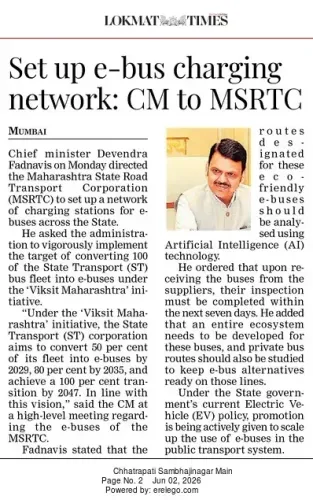
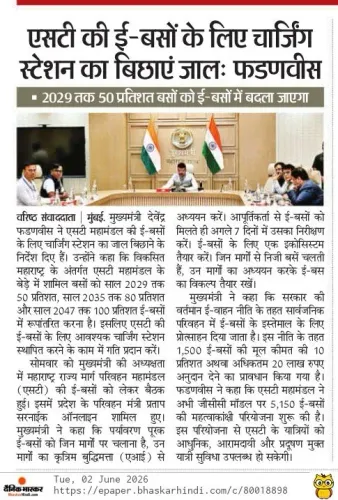
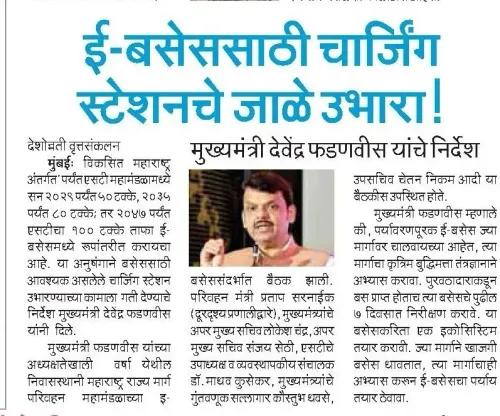
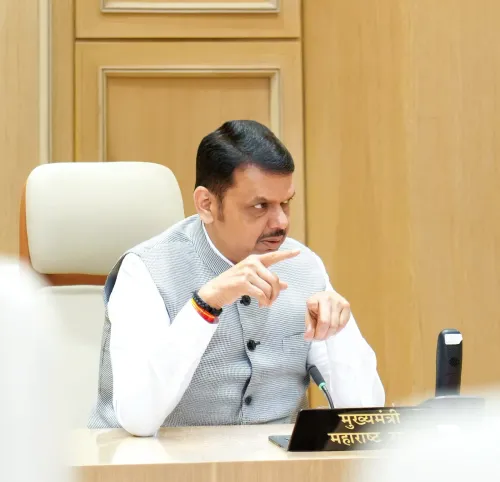
CM Fadnavis Chairs MSRTC Review at Varsha Bungalow
Synopsis
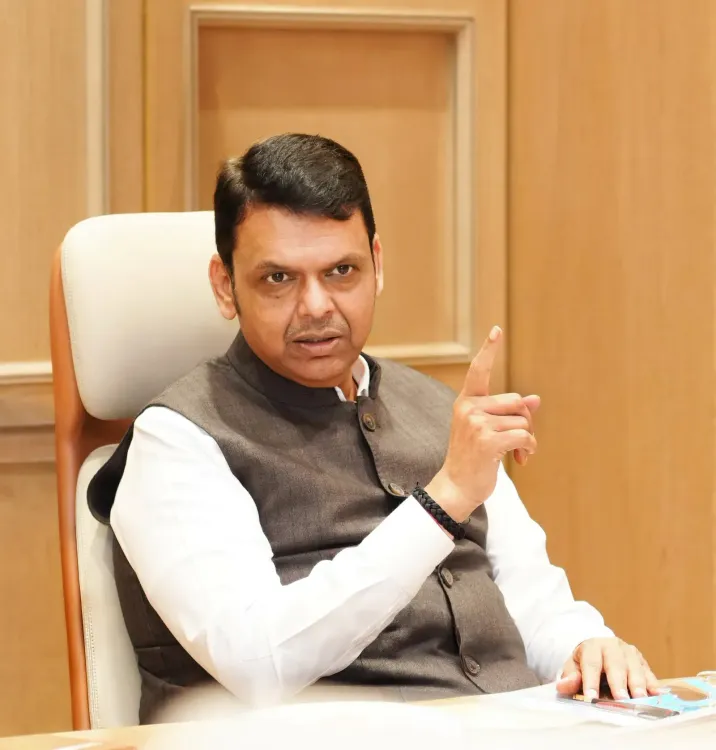
Chief Minister Devendra Fadnavis chaired a formal review of the Maharashtra State Road Transport Corporation at Varsha Bungalow, Mumbai on 13 July 2026, with Minister Pratap Sarnaik and MoS Madhuri Misal in attendance alongside senior officials.
Key Takeaways
Chief Minister Devendra Fadnavis chaired an MSRTC review meeting at Varsha Bungalow, Mumbai on 13 July 2026 at 1:20 pm .
Minister Pratap Sarnaik and Minister of State Madhuri Misal were present alongside senior MSRTC officials.
The Maharashtra State Road Transport Corporation was established in 1960 and is one of India's largest public bus operators.
The meeting follows a pattern of chief-ministerial oversight of state transport undertakings across Indian states.
Potential outcomes include policy decisions on fleet renewal, route changes, or budgetary support for MSRTC.
The announcement was made in three languages — English, Marathi, and Hindi — by the official Chief Minister's Office account.
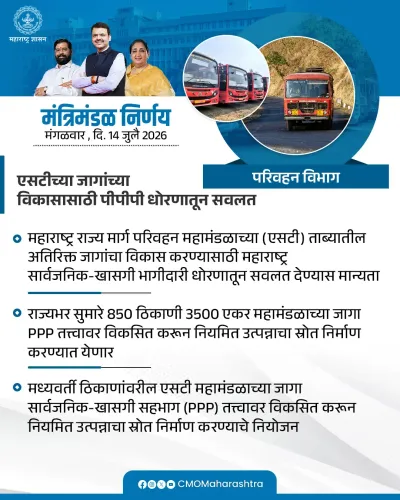
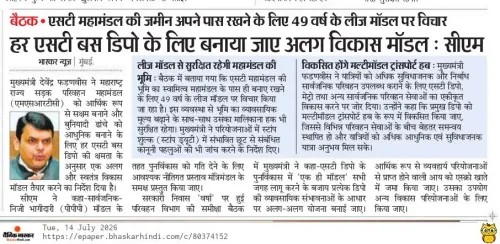
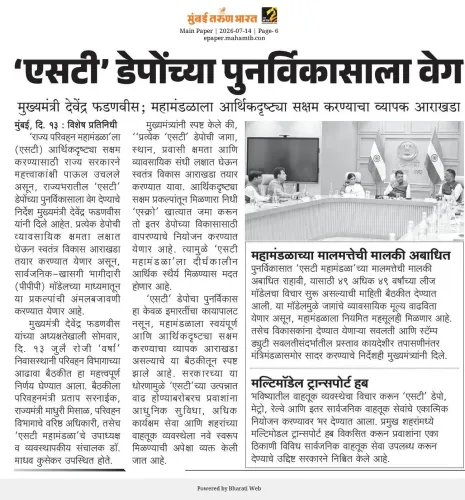
The Chief Minister's Office of Maharashtra announced on Monday, 13 July 2026, that Chief Minister Devendra Fadnavis chaired a high-level review meeting of the Maharashtra State Road Transport Corporation (MSRTC) at Varsha Bungalow, Mumbai, at 1:20 pm.
Context
The meeting brought together Minister Pratap Sarnaik, Minister of State Madhuri Misal, and senior officials of the corporation. The Chief Minister's Office confirmed the event in a trilingual post — in English, Marathi (मुख्यमंत्री देवेंद्र फडणवीस यांच्या अध्यक्षतेखाली 'महाराष्ट्र राज्य मार्ग परिवहन महामंडळा'ची बैठक — 'a meeting of the Maharashtra State Road Transport Corporation under the chairmanship of Chief Minister Devendra Fadnavis'), and Hindi — underlining the meeting's formal, state-level significance.
Policy Backdrop
The Maharashtra State Road Transport Corporation was constituted in 1960 following state reorganisation, with a mandate to provide inter-city and rural bus connectivity across Maharashtra. Over the decades it has grown into one of India's largest public bus operators, serving crores of daily commuters, particularly in semi-urban and rural regions where private transport options remain limited.
Indian state governments maintain a tradition of direct, chief-ministerial oversight of state road transport undertakings. These periodic high-level reviews typically address operational efficiency, fleet health, route rationalisation, and financial sustainability — concerns that have become increasingly pressing for state transport corporations grappling with ageing fleets and subsidy dependencies.
Stakeholders and Impact
The primary stakeholders of any MSRTC policy direction are the corporation's large employee base and the millions of Maharashtra commuters — especially those in districts where MSRTC buses remain the principal mode of affordable public transport. Decisions emerging from such a review can directly affect ticket pricing, service frequency, and route coverage.
Minister Pratap Sarnaik and MoS Madhuri Misal represent the political leadership with direct ministerial responsibility over transport affairs, signalling that the review carried both administrative and policy weight. The presence of senior officials alongside elected ministers points to a structured agenda rather than a ceremonial gathering.
What's Next
Government orders or policy announcements on MSRTC fleet renewal, route adjustments, or budgetary allocations would be the natural follow-through from a review of this nature. Maharashtra's broader infrastructure and public-transport agenda under Chief Minister Fadnavis — who previously held office from 2014 to 2019 and has overseen multiple state transport reviews — will likely shape the direction of any decisions that emerge. Observers will watch for formal communications from the MSRTC or the state transport ministry in the days following the meeting.
Point of View
Who has now led the state across two stints, periodic high-profile reviews of public utilities serve the dual purpose of demonstrating hands-on governance and pre-empting criticism over service deterioration. The trilingual official communication further reflects the administration's effort to project administrative transparency to Maharashtra's diverse linguistic constituencies.
NationPress
12 Oct 2026
Frequently Asked Questions
What is the MSRTC meeting chaired by CM Fadnavis about?
Chief Minister Devendra Fadnavis chaired a formal review meeting of the Maharashtra State Road Transport Corporation on 13 July 2026 at Varsha Bungalow, Mumbai. The specific agenda items were not disclosed, but such meetings typically cover operational performance, fleet condition, route planning, and financial matters.
Who attended the MSRTC review meeting on 13 July 2026?
Minister Pratap Sarnaik, Minister of State Madhuri Misal, and senior MSRTC officials attended the meeting chaired by Chief Minister Devendra Fadnavis.
Where is Varsha Bungalow in Mumbai?
Varsha Bungalow is the official residence and working premises of the Chief Minister of Maharashtra, located in Mumbai. It is the customary venue for high-level government meetings convened by the Chief Minister.
What is the Maharashtra State Road Transport Corporation?
The Maharashtra State Road Transport Corporation, commonly known as MSRTC, is a state-owned public bus service established in 1960. It provides inter-city and rural bus connectivity across Maharashtra and is one of the largest public transport operators in India.
What decisions could follow the MSRTC review meeting?
While no decisions have been officially announced, such reviews typically lead to government orders on fleet renewal, route rationalisation, fare revisions, or budgetary allocations for the corporation. Formal announcements from MSRTC or the state transport ministry are expected in the days following the meeting.