CM Fadnavis calls for unique development model for each MSRTC depot
Synopsis
Chief Minister Devendra Fadnavis has called for a unique development model for each MSRTC depot, moving away from uniform statewide planning. The directive signals a targeted, depot-specific approach to modernising Maharashtra's public bus infrastructure and improving the financial and operational health of MSRTC.
Key Takeaways
CM Devendra Fadnavis on 14 July 2026 directed that a separate development model be prepared for every MSRTC bus depot.
MSRTC , founded in 1948 , operates one of India's largest state-run bus networks with over 250 depots across Maharashtra .
The move marks a shift from uniform statewide transport schemes to granular, depot-level infrastructure planning.
The directive builds on earlier Fadnavis -era transport reforms announced between 2014 and 2019 .
Key stakeholders include MSRTC employees, daily bus commuters, and state transport planners watching for budget and cabinet follow-through.
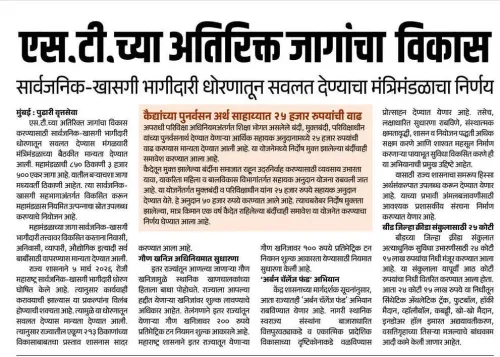
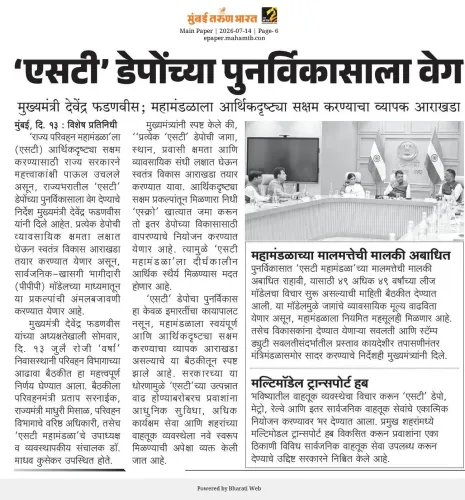
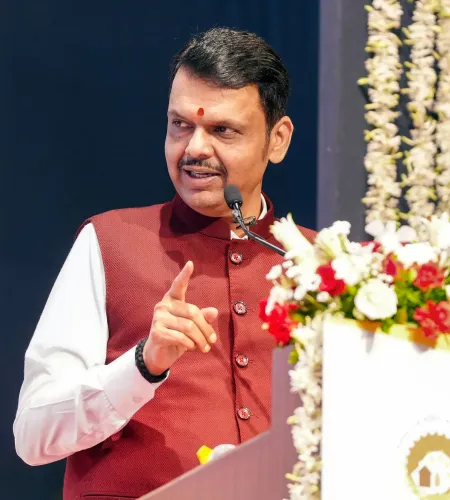
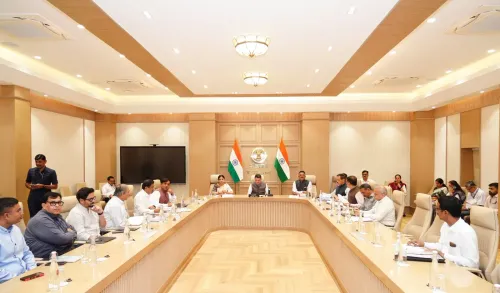
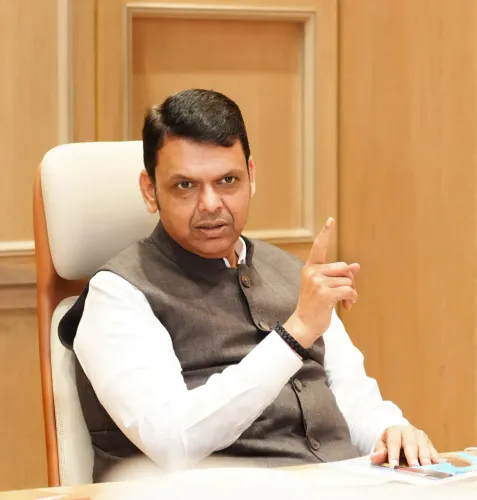
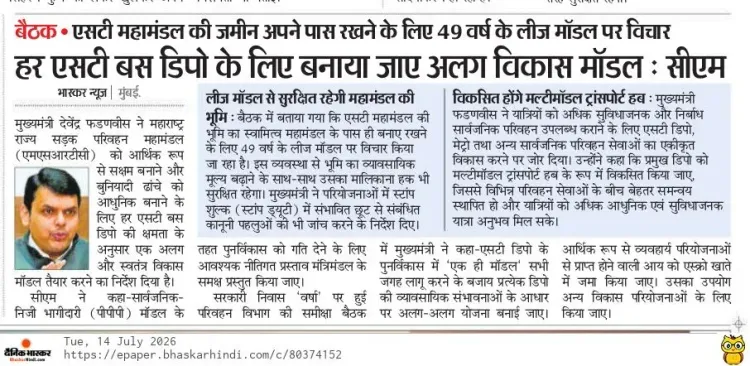
The Chief Minister's Office of Maharashtra on Tuesday, 14 July 2026, shared a directive from Chief Minister Devendra Fadnavis calling for a distinct development model to be prepared for every depot of the Maharashtra State Road Transport Corporation (MSRTC).
The post quoted CM Fadnavis as saying, 'हर एसटी बस डिपो के लिए बनाया जाए अलग विकास मॉडल' ('A separate development model should be created for every ST bus depot'), signalling a move away from uniform, one-size-fits-all planning for the state's public bus infrastructure.
Context
MSRTC, established in 1948, is one of India's largest state-run road transport corporations, operating thousands of buses connecting urban centres, semi-urban towns, and rural districts across Maharashtra. The corporation has historically struggled with financial viability, ageing fleet, and inconsistent depot infrastructure that varies sharply between high-traffic urban depots and low-footfall rural ones.
By directing that each depot receive a tailored development blueprint, CM Fadnavis is effectively acknowledging that a single statewide template cannot address the operational and infrastructural diversity across MSRTC's depot network.
Policy Backdrop
This is not the first time the Fadnavis administration has trained its focus on MSRTC infrastructure. During his earlier tenure from 2014 to 2019, the government announced fleet modernisation and depot upgrade measures as part of broader transport reforms. The current directive appears to build on that lineage, but with a more granular, depot-specific approach.
Maharashtra has increasingly pursued targeted infrastructure interventions rather than uniform statewide schemes, a pattern visible across sectors from irrigation to urban mobility. Depot-level planning aligns with this philosophy, allowing resources and design priorities to be calibrated to local ridership patterns, geographic conditions, and connectivity needs.
Stakeholders and Impact
The directive has direct implications for MSRTC's roughly 250-plus depots spread across the state, as well as the corporation's large workforce of drivers, conductors, and maintenance staff. For daily commuters — particularly in smaller towns and rural areas where MSRTC remains the primary mode of intercity travel — improved depot infrastructure can translate to better punctuality, safer waiting areas, and more reliable services.
Private bus operators have steadily eaten into MSRTC's market share, especially on intercity routes. A depot-by-depot modernisation strategy could help the corporation compete more effectively by improving turnaround times and reducing maintenance downtime at individual locations.
What's Next
The immediate question is whether this directive will be backed by concrete budget provisions for MSRTC capital expenditure in the current fiscal year, or whether cabinet-level approvals will follow for pilot projects at select depots. Observers will also watch for the release of a formal framework outlining how individual depot development models will be assessed, designed, and funded.
If implemented systematically, the depot-specific model could set a precedent for other state transport corporations in India grappling with similar challenges of financial sustainability and infrastructure heterogeneity.
Point of View
Which has long battled financial stress and competition from private operators, this approach could be consequential if backed by actual capital allocation. The political calculus is also clear: MSRTC's workforce and its rural commuter base are significant constituencies, and visible infrastructure upgrades at the depot level are tangible, localisable wins. The real test will be whether the directive translates into a funded, time-bound programme or remains an aspirational policy statement.
NationPress
12 Oct 2026
Frequently Asked Questions
What did CM Devendra Fadnavis say about MSRTC depots?
CM Devendra Fadnavis directed that a separate, unique development model be created for every MSRTC bus depot in Maharashtra, moving away from a uniform approach to depot infrastructure planning.
What is MSRTC and why does it matter?
MSRTC, or Maharashtra State Road Transport Corporation, is a state-owned entity that has operated public bus services across Maharashtra since 1948. It is one of India's largest such corporations and a primary mode of travel for millions of commuters, especially in rural and semi-urban areas.
How many depots does MSRTC have?
MSRTC operates over 250 depots spread across Maharashtra, serving a wide range of urban, semi-urban, and rural routes.
Has Fadnavis worked on MSRTC reforms before?
Yes. During his earlier tenure as Chief Minister from 2014 to 2019, the Fadnavis government announced fleet modernisation and depot infrastructure upgrades as part of broader transport sector reforms.
What will happen next after this MSRTC depot directive?
Observers are watching for state budget provisions for MSRTC capital expenditure and potential cabinet approvals for pilot depot development projects in the current fiscal year.