Sonowal mourns passing of Padma Shri litterateur Gita Upadhyay
Synopsis
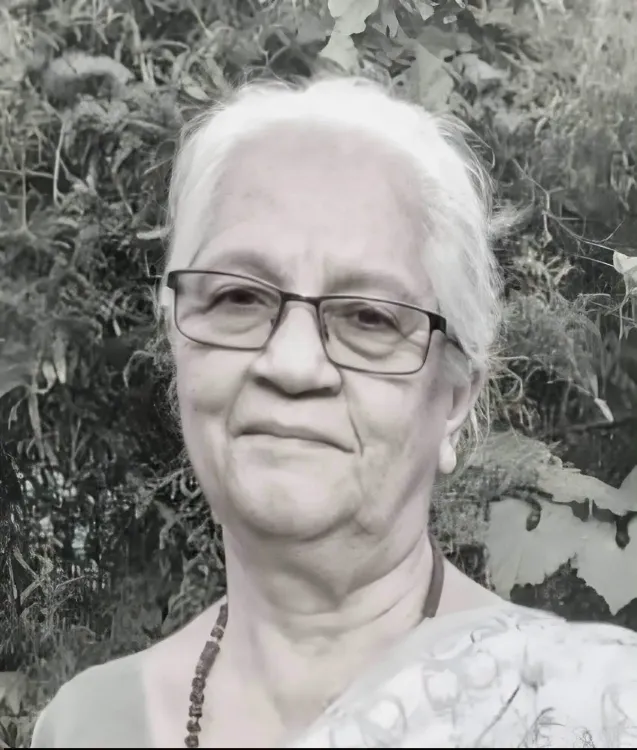
Union Minister Sarbananda Sonowal expressed deep grief over the passing of Padma Shri awardee Gita Upadhyay, a celebrated litterateur and educationist who made lasting contributions to Assamese and Nepali language and literature, calling her legacy an enduring inspiration for future generations.
Key Takeaways
Union Minister Sarbananda Sonowal mourned the death of Padma Shri awardee Gita Upadhyay on 14 July 2026 .
Upadhyay was a noted litterateur and educationist recognised for contributions to both Assamese and Nepali language and literature.
The Padma Shri is India's fourth-highest civilian honour, awarded for distinguished service in fields including literature and education.
Sonowal, a former Chief Minister of Assam , described her creativity, pursuit of knowledge and social commitment as an inspiration for new generations.
He extended condolences to her bereaved family and prayed for the eternal peace of her soul.
State-level literary commemorations and institutional tributes in Assam are anticipated in the coming weeks.
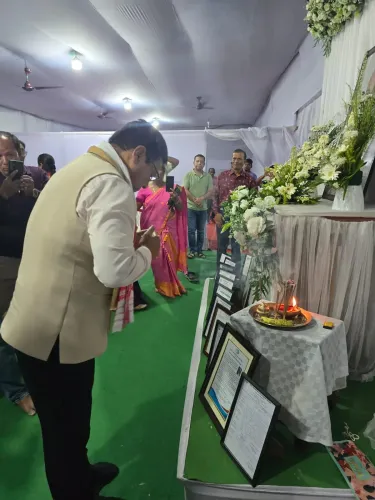
Union Minister of Ports, Shipping and Waterways Sarbananda Sonowal on Tuesday, 14 July 2026, expressed deep grief over the passing of Padma Shri awardee, litterateur and educationist Gita Upadhyay, describing her loss as a profound blow to Assamese and Nepali literary traditions.
Posting in Assamese on X, Sonowal wrote: 'যশস্বী সাহিত্যিক, শিক্ষাবিদ তথা পদ্মশ্ৰী সন্মানেৰে বিভূষিতা গীতা উপাধ্যায় বাইদেউৰ বিয়োগৰ খবৰে আমাক গভীৰভাৱে মৰ্মাহত কৰিলে।' ('The news of the passing of the accomplished litterateur, educationist and Padma Shri honouree Gita Upadhyay has deeply saddened us.') He prayed for eternal peace for her soul and extended heartfelt condolences to her bereaved family, signing off with the traditional invocation Aum Shanti.
Context
Gita Upadhyay was a distinguished figure in both Assamese and Nepali language and literature, earning the Padma Shri — India's fourth-highest civilian honour — for her distinguished contributions to literature and education. Her work straddled two of Assam's major literary traditions, reflecting the state's deep linguistic plurality. She was widely referred to as Baideu, an Assamese honorific for an elder sister or respected woman.
Sonowal, himself from Assam, has consistently used his public platform to acknowledge cultural and literary figures from the Northeast. His tribute underscores the significance Upadhyay held not just within regional literary circles but also in the broader cultural memory of the state.
Policy Backdrop
The Padma Shri award, conferred by the Government of India, has been an important instrument for recognising writers, educators and artists from India's border states and regions with minority language communities. Assam, home to speakers of Assamese, Bengali, Bodo, Nepali and several tribal languages, has seen multiple recipients from its literary community over the decades.
Union ministers from Northeastern states routinely issue public condolences for regional cultural figures, a practice that reflects the federal government's stated commitment to preserving India's linguistic diversity and honouring its custodians. Such tributes also serve to spotlight the contributions of border-region communities whose literary heritage often receives limited national attention.
Stakeholders and Impact
Upadhyay's passing is felt acutely by Assamese writers and the Nepali-speaking diaspora across Northeast India, communities for whom she was a bridge figure working across two literary traditions. Educational institutions and literary organisations in Assam that engaged with her scholarship are likely to mark her contribution formally.
Sonowal's tribute, carrying the weight of a senior Union Cabinet minister and former Chief Minister of Assam, amplifies the public recognition of her legacy and may prompt state cultural bodies to consider commemorative programmes in her honour.
What's Next
State-level literary commemorations or proposals for memorials in Assam may follow in the coming weeks. References in Assam Assembly sessions or programmes by the state's cultural department would signal formal institutional follow-up. The literary community is expected to organise condolence meetings and retrospectives on Upadhyay's body of work across both Assamese and Nepali literature.
Point of View
Signalling to the Northeast's multilingual communities that their literary heritage commands attention at the Union Cabinet level. It fits a consistent pattern of BJP leaders from the region using social media to position themselves as guardians of local cultural identity, reinforcing their political connect with linguistic minorities. The specific mention of both Assamese and Nepali traditions is notable — it acknowledges a historically marginalised bilingual literary space in Assam. Whether this tribute translates into institutional action, such as a state memorial or a literary award in Upadhyay's name, will be the real measure of its political sincerity.
NationPress
12 Oct 2026
Frequently Asked Questions
Who was Gita Upadhyay?
Gita Upadhyay was a Padma Shri-awarded Indian litterateur and educationist celebrated for her contributions to Assamese and Nepali language and literature.
What did Sarbananda Sonowal say about Gita Upadhyay?
Sonowal posted in Assamese saying her passing had deeply saddened him, praised her creativity and social commitment, and extended condolences to her family.
What is the Padma Shri award?
The Padma Shri is India's fourth-highest civilian honour, conferred by the Government of India for distinguished contributions in fields such as literature, education and the arts.
Why is Gita Upadhyay significant for Assam's literary community?
She worked across both Assamese and Nepali literary traditions, making her a bridge figure for two major language communities in Assam's diverse cultural landscape.
What might follow after Sonowal's tribute to Gita Upadhyay?
Literary commemorations, condolence meetings and possible proposals for memorials or cultural programmes in Assam are anticipated following her passing.