CM Fadnavis Directs MSRTC Depot Redevelopment via PPP
Synopsis
Chief Minister Devendra Fadnavis chaired an MSRTC review meeting on 13 July 2026, directing depot-wise PPP redevelopment plans, an escrow revenue model, and multimodal hub integration — all while retaining land ownership through a 49+49-year lease structure.
Key Takeaways
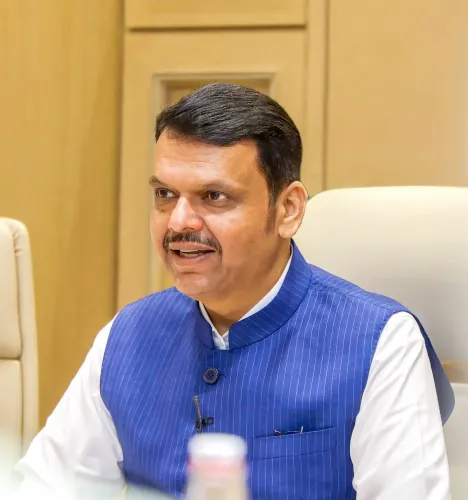
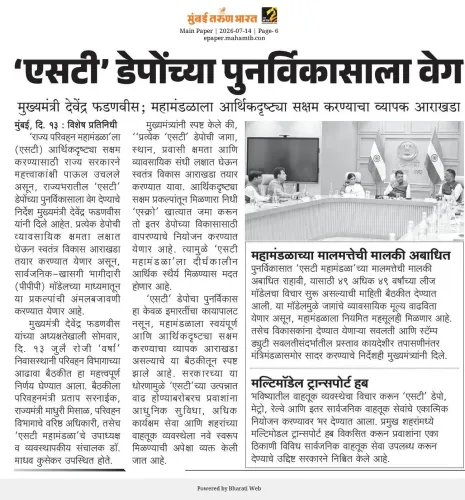
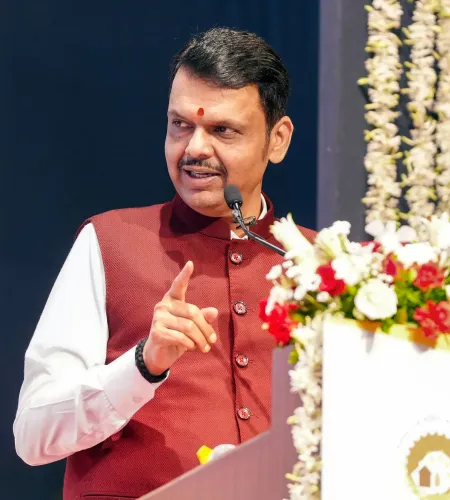
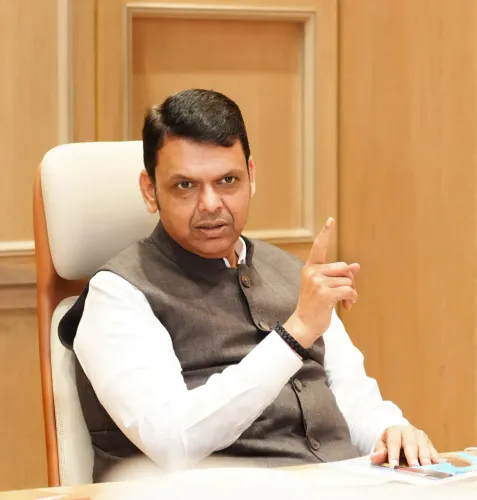
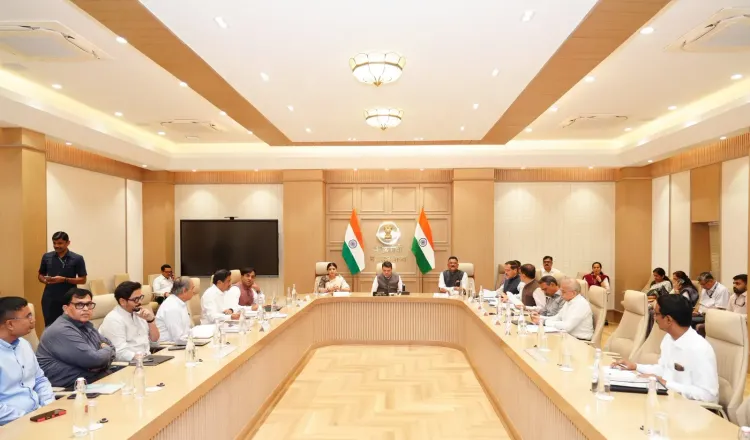
CM Devendra Fadnavis chaired an MSRTC review meeting at Varsha , Mumbai, on 13 July 2026 .
Each MSRTC depot will get a separate development plan based on its individual commercial capacity.
Revenue from viable projects will be deposited in an escrow account and used for other MSRTC development works.
A 49+49-year lease model is being considered to unlock commercial value while keeping land ownership with MSRTC.
A PPP policy proposal with developer concessions will be placed before the state Cabinet for approval.
MSRTC depots are to be developed as multimodal transport hubs integrated with Metro and other transit systems.
The Chief Minister's Office of Maharashtra announced on Monday, 13 July 2026 that Chief Minister Devendra Fadnavis chaired a high-level review meeting of the Maharashtra State Road Transport Corporation (MSRTC) at his official residence, Varsha, in Mumbai, issuing a series of directives to make the cash-strapped corporation financially self-reliant through systematic redevelopment of its depot land assets.
What Was Decided
Fadnavis directed that a separate development plan be drawn up for each MSRTC depot based on its individual commercial capacity. Revenue generated from financially viable projects is to be deposited into an escrow account and ring-fenced for use in other development projects within the corporation. The Chief Minister also directed that a policy proposal on concessions to developers under the Public-Private Partnership (PPP) framework be placed before the state Cabinet for approval.
A key structural safeguard announced at the meeting is that ownership of all MSRTC land will remain with the corporation. To achieve this while unlocking commercial value, the government is considering a 49-plus-49-year lease model — giving developers long-term operational rights without transferring title. Legal aspects of stamp duty concessions for such projects are also to be examined, Fadnavis said.
Context
MSRTC has long struggled with accumulated operational losses and debt, receiving multiple state financial packages since 2015 to stay afloat. The corporation operates inter-city and rural bus services across Maharashtra, making it a critical public utility for millions of commuters — particularly in smaller towns and villages not served by rail or metro. Its depot land, spread across the state, represents a significant but largely untapped asset base.
An earlier round of PPP experiments for bus-terminal redevelopment was explored during Fadnavis's first term (2014-2019), but those efforts did not produce a comprehensive policy framework. Monday's meeting signals a more structured, depot-by-depot approach this time.
Policy Backdrop
The thrust of Monday's directives mirrors a broader national pattern of asset monetisation of state transport land through long-term leases, allowing governments to reduce fiscal pressure on loss-making public sector undertakings without outright privatisation. The escrow mechanism and the insistence on retaining land ownership are designed to address political sensitivities around selling off public assets.
Fadnavis also directed that MSRTC depots be integrated with Metro networks and other public transport systems to develop multimodal transport hubs, providing commuters seamless, uninterrupted connectivity. This aligns with ongoing metro expansion in Mumbai, Pune, and Nagpur, where MSRTC depots could serve as interchange nodes.
Stakeholders and Impact
The meeting was attended by Minister Pratap Sarnaik, Minister of State Madhuri Misal, and senior officials of the state government and MSRTC. Private developers stand to gain access to commercially valuable urban land parcels under long-term leases, while MSRTC staff and commuters could benefit from modernised facilities and a more financially stable corporation.
Urban local bodies and metro rail agencies will also be key stakeholders in the multimodal hub planning exercise, given that depot redevelopment will require coordination on land use, traffic, and transit connectivity.
What's Next
The immediate next step is the preparation of individual depot development plans and a Cabinet-ready PPP policy proposal outlining the concessions framework for developers. Legal scrutiny of stamp duty relief provisions will run in parallel. If the Cabinet clears the policy, it would mark the first comprehensive statutory framework for MSRTC depot monetisation in the state's history — potentially setting a template for other loss-making state transport utilities across India.
Point of View
The government also embeds MSRTC's revival within Maharashtra's larger urban mobility agenda, giving the plan a developmental narrative beyond mere cost-cutting. The real test will come when the Cabinet PPP proposal is tabled, where the specifics of developer concessions and stamp duty relief will face scrutiny from coalition partners and opposition alike.
NationPress
12 Oct 2026
Frequently Asked Questions
What is the MSRTC depot redevelopment plan announced by CM Fadnavis?
CM Devendra Fadnavis directed on 13 July 2026 that each MSRTC depot be redeveloped under a PPP framework with individual plans based on commercial capacity, and that revenue be deposited in an escrow account for further development use.
Will MSRTC lose ownership of its land under the PPP redevelopment plan?
No. CM Fadnavis explicitly stated that ownership of all MSRTC land will remain with the corporation. The government is considering a 49+49-year lease model that gives developers long-term operational rights without transferring land title.
What is the 49+49-year lease model for MSRTC depots?
It is a leasing structure under consideration where private developers can operate redeveloped depot land for up to 49 years with a possible renewal of another 49 years, while MSRTC retains ownership — a model aimed at commercial value creation without asset sale.
What are multimodal transport hubs and how do they relate to MSRTC depots?
Multimodal transport hubs are transit nodes where multiple modes of transport — bus, metro, local rail — are integrated for seamless commuter connectivity. Fadnavis directed that MSRTC depots be planned as such hubs in coordination with Metro networks in Mumbai, Pune, and Nagpur.
What happens to money earned from MSRTC depot redevelopment projects?
Revenue from financially viable depot projects will be deposited into a dedicated escrow account and used specifically for other development projects within MSRTC, ensuring the funds stay within the corporation.