One Nation One Election JPC visits Lucknow; Anurag Thakur cites governance disruption

Synopsis
The One Nation One Election JPC has landed in Lucknow, gathering political and civil society inputs ahead of a 17 July deadline to finalise its report. BJP's Anurag Thakur is making the governance-disruption case, but the real story is the unresolved political fault line: opposition parties fear simultaneous elections could erase regional voices in a country of 28 states.
Key Takeaways
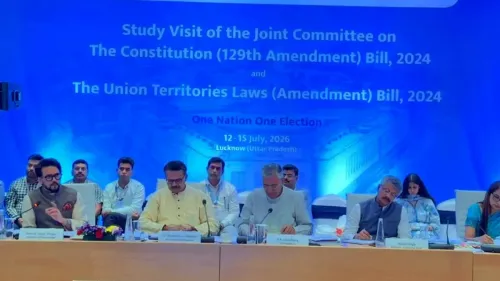
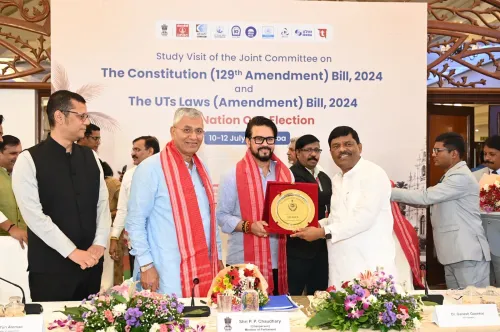
The One Nation One Election JPC visited Lucknow on 13 July as part of its nationwide stakeholder consultation.
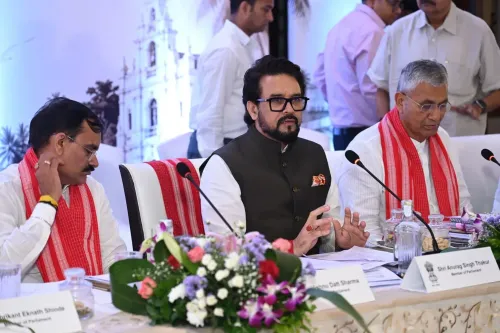
BJP MP Anurag Thakur said the committee is seeking suggestions from political parties, government officials, and civil society before finalising its report.
The JPC is scheduled to adopt its report on 17 July before submitting it to Parliament.
Two bills are under scrutiny: the Constitution (129th Amendment) Bill, 2024 and the Union Territories Laws (Amendment) Bill, 2024 , both introduced on 17 December 2024 .
Critics argue simultaneous elections could allow national issues to overshadow regional concerns, disadvantaging smaller and regional parties.
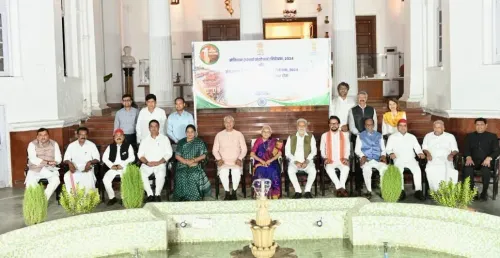
The Joint Parliamentary Committee (JPC) examining the proposed 'One Nation, One Election' legislation visited Lucknow on 13 July as part of its nationwide consultations, with Bharatiya Janata Party (BJP) MP Anurag Thakur stating that the panel is gathering inputs from political parties, government officials, and civil society before finalising its report on simultaneous elections.
JPC's Nationwide Consultation Drive
The committee has been travelling across states to solicit suggestions and proposed amendments to the government's simultaneous elections bill. Thakur said the exercise is aimed at improving the legislation before it is formally submitted to Parliament. The JPC is expected to finalise and adopt its report at a meeting scheduled for 17 July.
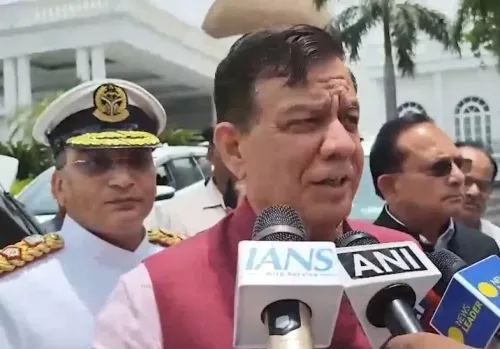
'The Joint Parliamentary Committee on 'One Nation, One Election' visited several states to consult with political parties, government officials, and civil society regarding the government's proposed bill, seeking suggestions or amendments to improve it. The objective is to enable simultaneous elections for Legislative Assemblies and the Lok Sabha across the country,' Thakur said.
The Case Against Staggered Elections
Thakur argued that the current electoral system imposes repeated governance disruptions through frequent enforcement of the Model Code of Conduct (MCC). He said the cyclical imposition of the MCC over a five-year period stalls investments and development projects, while diverting large numbers of administrative personnel to election duties — crowding out other critical governance functions.
'Currently, the repeated imposition of the Model Code of Conduct over a five-year period disrupts governance and stalls investments or development projects; furthermore, the electoral cycle often overshadows other critical administrative tasks, as vast numbers of personnel are diverted to election duties,' he said.
Political Fault Lines on the Proposal
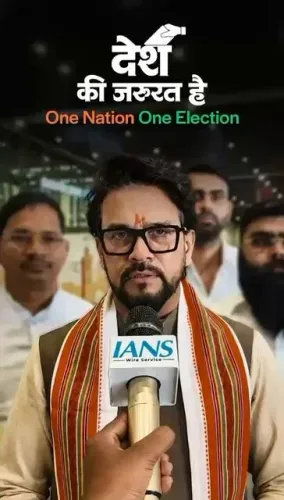
Thakur acknowledged that political parties hold divergent views on the reform, even as he cited what he described as substantial data in favour of simultaneous elections. A key concern raised by critics is that holding Lok Sabha and state assembly elections simultaneously could allow national narratives to dominate, potentially marginalising regional issues and smaller parties.
'While there is significant data supporting the 'One Nation, One Election' concept and the benefits of involving so many people in this process, political parties hold varying views; some fear that national issues might dominate the discourse if simultaneous elections are held and the regional issues might not be highlighted. Despite these differing arguments, a large number of people support the 'One Nation, One Election' initiative,' Thakur said.
The Legislative Framework
The JPC is scrutinising two bills introduced in the Lok Sabha on 17 December 2024: the Constitution (One Hundred and Twenty-Ninth Amendment) Bill, 2024, which forms the constitutional backbone of the reform, and the Union Territories Laws (Amendment) Bill, 2024, which extends the simultaneous elections framework to Union Territories. Together, the two bills seek to lay the legal and constitutional foundation for synchronising elections across the country.
With the JPC's report due by 17 July, Parliament will next determine the legislative path forward for one of the most consequential electoral reforms proposed in independent India's history.
Point of View
But the political consensus it needs does not yet exist. Thakur's governance-disruption argument is legitimate — repeated MCC enforcement does freeze public spending — but it sidesteps the structural concern: simultaneous elections could entrench the electoral advantage of a party with a dominant national identity over those whose strength is rooted in state-level issues. The 17 July deadline for the report will test whether the committee has genuinely absorbed dissenting inputs or is moving toward a predetermined conclusion. The real accountability question is not whether simultaneous elections are efficient, but whether they are democratic in a federation as diverse as India's.
NationPress
12 Oct 2026
Frequently Asked Questions
What is the One Nation One Election proposal?
One Nation One Election is a proposed electoral reform that seeks to synchronise voting for the Lok Sabha and all state legislative assemblies across India into a single simultaneous cycle. It is backed by the Constitution (129th Amendment) Bill, 2024, and the Union Territories Laws (Amendment) Bill, 2024, both introduced in the Lok Sabha on 17 December 2024.
Why did the JPC visit Lucknow?
The Joint Parliamentary Committee is conducting a nationwide consultation tour to gather inputs from political parties, government officials, and civil society before finalising its report on the simultaneous elections bills. Lucknow was one stop on this multi-state outreach, visited on 13 July.
When will the JPC submit its report on One Nation One Election?
The JPC is scheduled to finalise and adopt its report at a meeting on 17 July, after which it will be submitted to Parliament for further consideration.
What are the main arguments for and against simultaneous elections?
Proponents, including BJP MP Anurag Thakur, argue that staggered elections repeatedly trigger the Model Code of Conduct, disrupting governance, stalling investments, and diverting administrative resources. Critics contend that holding Lok Sabha and state assembly elections together could allow national issues to dominate, marginalising regional concerns and disadvantaging smaller parties.
Which bills form the legal basis for One Nation One Election?
The Constitution (One Hundred and Twenty-Ninth Amendment) Bill, 2024, provides the constitutional framework, while the Union Territories Laws (Amendment) Bill, 2024, extends the reform to Union Territories. Both were introduced in the Lok Sabha on 17 December 2024 and referred to the JPC for detailed examination.