Pradhan pays tribute to Utkal Deepika founder Gaurishankar Ray
Synopsis
Union Education Minister Dharmendra Pradhan paid tribute to Gaurishankar Ray, founder-editor of Utkal Deepika — Odisha's first newspaper established in 1866 — on his birth anniversary, honouring Ray's role as a key architect of the movement for a separate Odisha province.
Key Takeaways
Dharmendra Pradhan paid tribute to Gaurishankar Ray on his birth anniversary on 13 July 2026 .
Gaurishankar Ray founded Utkal Deepika in 1866 in Cuttack , making it Odisha's first modern newspaper.
Ray is recognised as one of the principal architects of the campaign for a linguistically separate Odisha province.
Odisha was formally constituted as India's first linguistically reorganised province on 1 April 1936 .
The tribute underscores the political and cultural salience of Odia linguistic identity for national leaders from the state.
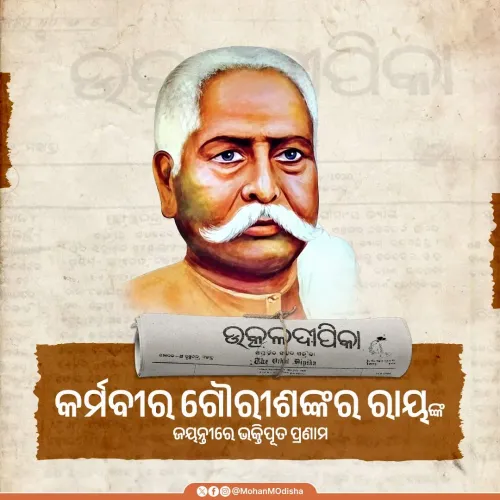
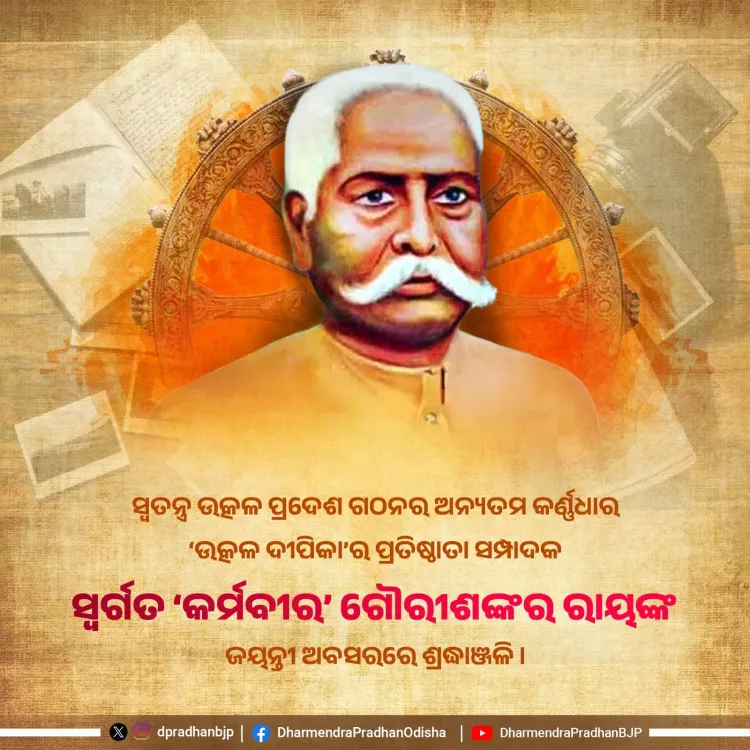
Union Education Minister Dharmendra Pradhan on Monday, 13 July 2026, paid floral tribute to Gaurishankar Ray, founder-editor of Utkal Deepika — Odisha's first modern newspaper — on the occasion of Ray's birth anniversary, honouring his pivotal role in the movement for a separate Odisha province.
Context
Pradhan's post, written in Odia, offered homage to the late Karmaveer Gaurishankar Ray, describing him as one of the principal architects (karnadhar) of the formation of a separate Utkal Pradesh. The tribute acknowledges Ray's twin legacy: as a pioneering journalist and as a political mobiliser who used the press to advocate for Odia linguistic identity under British rule.
Utkal Deepika, which Ray founded in 1866 in Cuttack, was the first Odia-language newspaper and became the foremost platform for the Odia cultural and administrative assertion movement of the 19th century.
Policy Backdrop
Odisha became India's — and the world's — first linguistically reorganised province on 1 April 1936, carved out from the Bengal and Bihar-Orissa presidencies after decades of sustained agitation. Figures such as Gaurishankar Ray and institutions like the Utkal Sammilani, founded in 1903, were central to that movement, using print media and public petitions to build the case for a distinct Odia-speaking state.
The Utkal Deepika served not merely as a newspaper but as a vehicle for standardising the Odia language and asserting its independence from Bengali literary dominance — a cultural battle that directly underpinned the political demand for a separate province.
Stakeholders and Impact
The tribute carries significance for the Odia community, regional historians, and journalists who regard Gaurishankar Ray as a founding figure of both Odia journalism and Odia political consciousness. For Pradhan, a senior BJP leader from Odisha, such commemorations reinforce his connection to the state's deep cultural heritage even while serving in a national cabinet role in New Delhi.
Commemorations of 19th-century regional reformers by Union ministers reflect the continued political salience of linguistic-state movements that shaped India's post-independence federal map, linking contemporary national leadership with pre-independence Odia cultural assertion.
What's Next
Advocates for Odia heritage are likely to renew calls for greater inclusion of Utkal Deepika-era figures in school curricula and heritage conservation projects — an area that falls directly within the mandate of the Ministry of Education. Odisha Foundation Day on 1 April each year remains the principal occasion when such proposals gain traction, and Pradhan's public tribute may lend fresh momentum to those efforts.
Point of View
Honouring the founder of Odisha's first newspaper carries particular resonance — it implicitly connects the ministry's language and heritage agenda to a pre-independence legacy of Odia linguistic assertion. The commemoration also signals that the BJP's Odisha outreach strategy continues to lean on regional pride and historical symbolism. Whether such tributes translate into concrete curriculum or heritage policy moves will be the more substantive test.
NationPress
12 Oct 2026
Frequently Asked Questions
Who was Gaurishankar Ray?
Gaurishankar Ray was a pioneering Odia journalist and activist who founded Utkal Deepika in 1866 — Odisha's first modern newspaper — and was a leading voice in the movement for a separate Odisha province under British rule.
What is Utkal Deepika?
Utkal Deepika was the first Odia-language newspaper, established in 1866 in Cuttack. It served as a platform for advocating Odia linguistic identity and mobilising public opinion in favour of a separate Odisha province.
When was Odisha formed as a separate state?
Odisha was constituted as a separate province on 1 April 1936, becoming India's first linguistically reorganised administrative unit, following decades of agitation by figures including Gaurishankar Ray.
Why did Dharmendra Pradhan pay tribute to Gaurishankar Ray?
Pradhan paid tribute on the occasion of Gaurishankar Ray's birth anniversary, recognising Ray's dual legacy as the founder of Odisha's first newspaper and as a key architect of the movement for a separate Odia-speaking province.
What is the significance of Utkal Deepika in Odia history?
Utkal Deepika , founded in 1866, was instrumental in standardising the Odia language, countering Bengali literary dominance, and building the political case for a distinct Odia state — making it a cornerstone of Odia cultural and political identity.