Pradhan Hails Odia Diaspora Service, Eyes 2036 Statehood Centenary
Synopsis
Union Education Minister Dharmendra Pradhan praised Chennai's Utkal Association of Madras for community welfare work and called on Odia society to honour the spirit of Gopabandhu Das and Veer Surendra Sai as Odisha approaches its 2036 statehood centenary and India its 2047 independence centenary.
Key Takeaways
Union Education Minister Dharmendra Pradhan praised the Utkal Association of Madras for serving vulnerable people in Chennai .
He invoked the principle 'Nara Seva hi Narayana Seva' as the philosophical core of Odia cultural identity.
Pradhan cited Gopabandhu Das , Veer Surendra Sai , and Buxi Jagabandhu as exemplars of selfless service and sacrifice.
Odisha was constituted as India's first linguistic province on 1 April 1936 and will mark its centenary in 2036 .
The minister called for drawing on Kalinga's maritime heritage to build a bridge toward the future Odisha.
His remarks connect regional Odia identity to the national Viksit Bharat 2047 centenary vision.
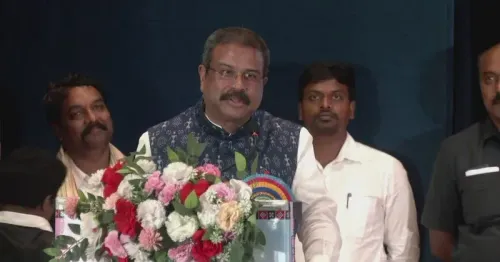
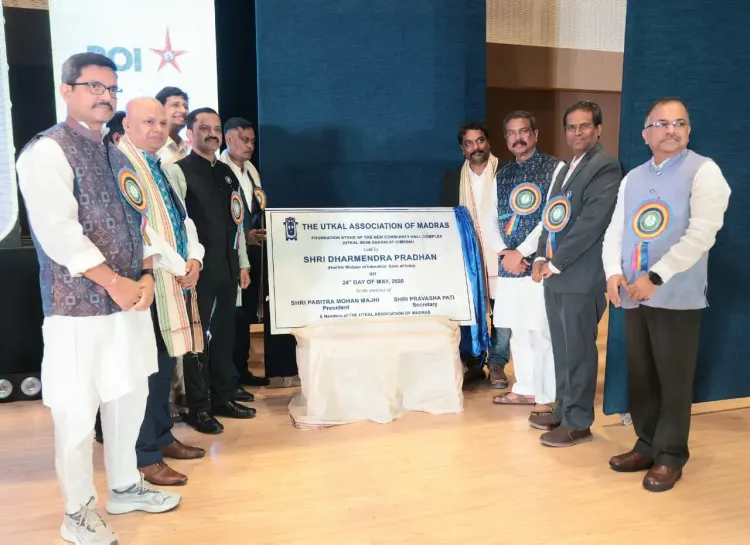
Union Education Minister Dharmendra Pradhan on Sunday, 24 May 2026, praised the Utkal Association of Madras for its community welfare work in Chennai, invoking Odisha's cultural ethos of selfless service and calling on Odia society to build toward the twin centenary milestones of 2036 and 2047.
Context
Posting in Odia, Pradhan described Odia society as 'daayitwasamppanna o aadhyatmika samaaj' — 'a responsible and spiritual society' — whose culture, he said, calls on the prosperous to think not of themselves alone but of the poor and helpless. He cited the guiding principle 'Nara Seva hi Narayana Seva' ('Service to man is service to God') as the philosophical foundation of this tradition. The minister specifically commended the Chennai-based Utkal Association of Madras for carrying that spirit into active community service among vulnerable people in the city.
Policy Backdrop
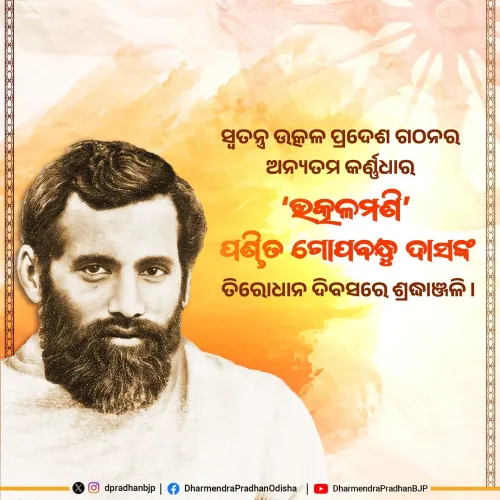
Odisha was carved out on 1 April 1936 as India's first linguistically defined province, after decades of sustained agitation led by figures such as Utkalmani Gopabandhu Das — journalist, social reformer and Odia nationalist. Pradhan invoked Gopabandhu Das alongside Veer Surendra Sai, the 19th-century guerrilla resistance leader against British rule in western Odisha, and Buxi Jagabandhu, who led the 1817 Paika Rebellion — an early armed uprising against colonial land policies. All three, Pradhan wrote, gave up everything guided by the same spirit of selfless service. The linguistic reorganisation of states was later formalised nationally through the States Reorganisation Act, 1956.
Stakeholders and Impact
The post speaks directly to the Odia diaspora — particularly those settled outside the state in cities such as Chennai — urging them to see community service as an extension of a centuries-old cultural identity. Pradhan highlighted Kalinga's rich maritime and trading heritage as a source of inspiration, arguing that history is 'a mirror for moving forward on the path of the future.' For Odia cultural associations nationwide, the minister's public endorsement reinforces their role as custodians of regional identity beyond state borders. The framing also connects local welfare work to the larger national narrative of Viksit Bharat 2047, the government's vision for a developed India at the centenary of Independence.
What's Next
With 2036 marking the centenary of Odisha's formation as a separate linguistic province and 2047 marking India's independence centenary, Pradhan called for building what he described as a 'special bridge' — drawing on Kalinga's glorious past to shape the Odisha of the future. Official preparations for statehood centenary programmes, potential curriculum initiatives linking regional history with the National Education Policy 2020, and the role of the Odia diaspora in those commemorations are expected to gain momentum in the years ahead. The minister's remarks signal that the central government is likely to frame Odisha's centenary as a national cultural event, not merely a state one.
Point of View
Elevate pre-colonial heroes, and anchor regional pride to two national centenary moments. By invoking Gopabandhu Das, Veer Surendra Sai, and Buxi Jagabandhu in the same breath as community service, he frames BJP's Odisha chapter as the inheritor of a long reformist and resistance tradition. The Kalinga maritime heritage reference is also pointed: it subtly connects historical Odia economic ambition to present-day development narratives. As Odisha's 2036 centenary approaches, expect this framing — regional glory plus national purpose — to become a recurring BJP mobilisation theme in the state.
NationPress
9 Oct 2026
Frequently Asked Questions
When is Odisha's statehood centenary?
Odisha will mark the centenary of its formation as a separate linguistic province on 1 April 2036 . The state was constituted on 1 April 1936 as India's first province created on linguistic lines.
Who was Gopabandhu Das and why is he called Utkalmani?
Gopabandhu Das was an Odia nationalist, social reformer and journalist who campaigned vigorously for a separate Odisha province. He is honoured with the title Utkalmani ('Jewel of Utkal') for his central role in the Odia identity movement.
What is the Utkal Association of Madras?
The Utkal Association of Madras is a Chennai-based organisation of Odia migrants that focuses on community welfare and cultural activities. Dharmendra Pradhan praised it for serving vulnerable people in the city.
Who was Buxi Jagabandhu?
Buxi Jagabandhu was the leader of the 1817 Paika Rebellion in Odisha, one of the earliest armed uprisings against British colonial land policies, predating the 1857 revolt.
What is Viksit Bharat 2047?
Viksit Bharat 2047 is the Indian government's vision for a fully developed India by 2047 , the centenary of Independence. Pradhan's post links Odisha's regional centenary ambitions to this broader national goal.