Pradhan Reaffirms Modi Govt's Commitment to Youth Empowerment
Synopsis
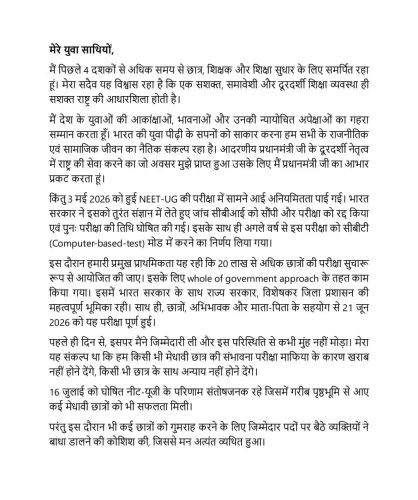
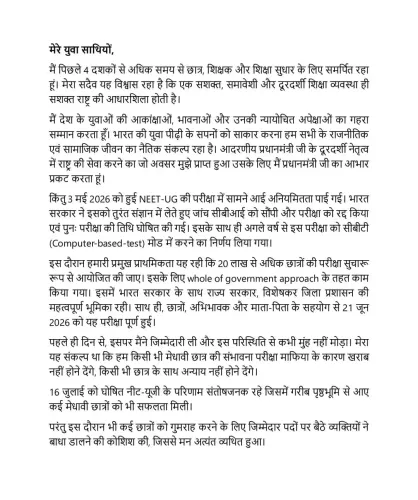
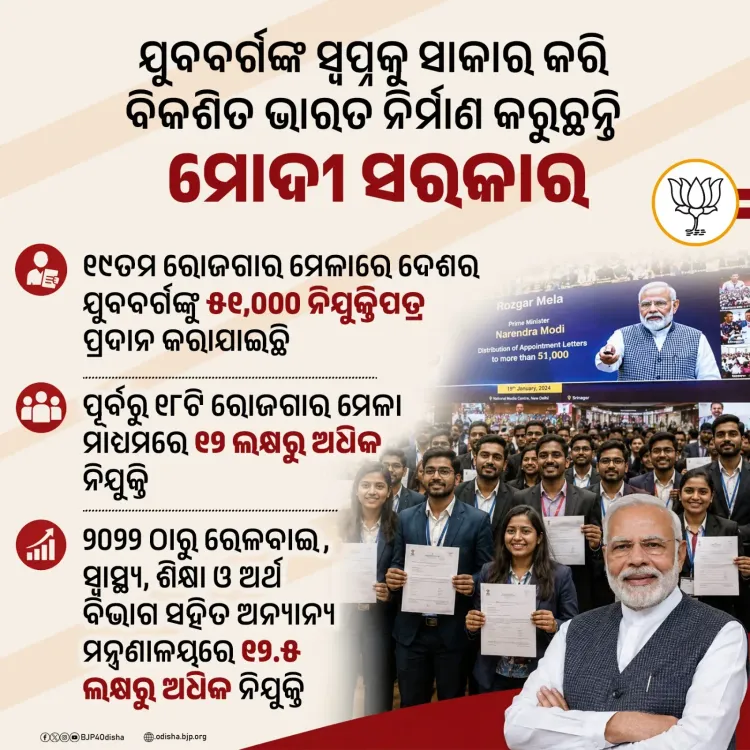
Union Education Minister Dharmendra Pradhan on 28 May 2026 posted in Odia reaffirming the Modi government's resolve to make India's youth self-reliant and empowered, linking youth progress to national advancement amid ongoing implementation of NEP 2020 and the Skill India Mission.
Key Takeaways
Dharmendra Pradhan posted in Odia on 28 May 2026 , stating that youth progress equals national progress.
The Modi government has been described by the minister as 'committed' to making youth self-reliant and empowered.
The Skill India Mission (2015) targeted vocational training for over 10 million youth through PMKVY and NSDC .
NEP 2020 mandates vocational exposure from Class 6 and targets 50 percent vocational coverage by 2025 .
The Atmanirbhar Bharat package includes dedicated components for youth entrepreneurship and apprenticeship.
Budget allocations for PMKVY 4.0 and skill universities under the 2026-27 cycle will be a key policy marker ahead.
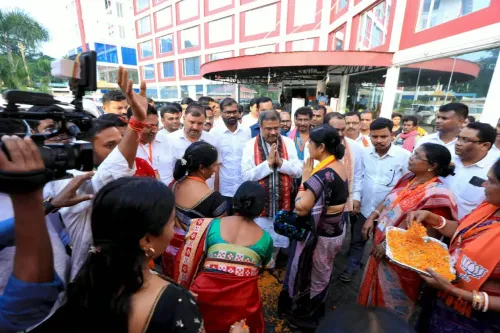
Union Education Minister Dharmendra Pradhan on Thursday, 28 May 2026, reaffirmed the Modi government's resolve to make India's youth self-reliant and empowered, stating that the progress of the younger generation is inseparable from the nation's own advancement. The minister posted the message in Odia, signalling a direct outreach to his home state of Odisha.
Context
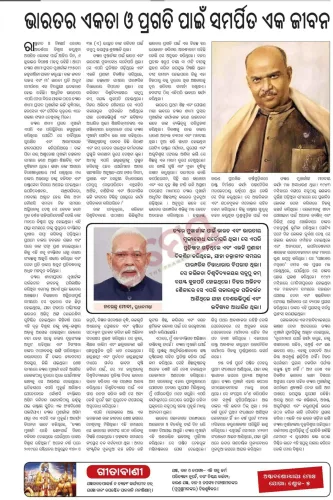
Posting in Odia, Pradhan wrote: 'ଯୁବପିଢ଼ିଙ୍କ ପ୍ରଗତି ହିଁ ଦେଶର ଉନ୍ନତି' — 'The progress of the youth is the progress of the nation.' He added that the Modi government is committed to making the country's youth self-reliant and empowered. The choice of Odia underscores the minister's sustained regional outreach, a pattern consistent with his role as one of the BJP's most prominent faces from Odisha.
The statement comes in the broader context of the government's ongoing push to translate India's demographic dividend into measurable economic and social outcomes. Pradhan, who also served as Union Petroleum Minister before taking charge of education, has consistently linked the education portfolio to employment readiness and national self-sufficiency.
Policy Backdrop
The sentiment expressed by the minister aligns directly with two of the government's flagship frameworks. The Skill India Mission, launched in 2015, brought together the Pradhan Mantri Kaushal Vikas Yojana (PMKVY) and the National Skill Development Corporation (NSDC) with a mandate to provide short-term vocational training to over 10 million youth across the country.
The National Education Policy 2020 (NEP 2020) further deepened this orientation by mandating vocational exposure from Class 6 onwards, introducing multiple entry-exit options in higher education, and setting a target of 50 percent vocational coverage by 2025. The Atmanirbhar Bharat package of 2020 added dedicated components for youth entrepreneurship and apprenticeship, weaving the self-reliance theme directly into economic policy.
Stakeholders and Impact
The primary beneficiaries of these converging policy streams are India's vast youth population, vocational trainees enrolled under PMKVY, and students navigating the transition to the NEP 2020 framework across state education departments. For Odisha specifically, central skilling schemes have been a recurring subject of the minister's regional communication, making posts of this nature a signal to state-level administrators and youth welfare bodies.
Civil society organisations working on school-to-work transitions and industry bodies engaged with apprenticeship programmes are also key stakeholders, as implementation of NEP 2020's vocational components depends heavily on public-private coordination at the district level.
What's Next
Parliamentary scrutiny of NEP 2020 implementation progress and budget allocations for skill universities and PMKVY 4.0 under the 2026-27 Union Budget cycle will be the next concrete test of the government's stated commitment. The minister's repeated emphasis on youth self-reliance suggests continued legislative and administrative attention to skilling infrastructure in the months ahead, with Odisha likely to remain a focal point given Pradhan's political profile in the state.
Point of View
Reinforcing the BJP's outreach in Odisha while simultaneously amplifying the national self-reliance narrative. By framing youth empowerment as the engine of national progress, the minister echoes a well-established BJP messaging arc that stretches from the Skill India Mission of 2015 through NEP 2020 and Atmanirbhar Bharat. The timing, ahead of anticipated parliamentary scrutiny of NEP 2020 implementation and PMKVY 4.0 allocations, suggests the government is shoring up its narrative credentials on youth policy. The post is unlikely to shift policy on its own, but it signals that youth empowerment will remain a central rhetorical and legislative priority for the ministry.
NationPress
11 Oct 2026
Frequently Asked Questions
What did Dharmendra Pradhan post about youth empowerment?
Dharmendra Pradhan posted in Odia on 28 May 2026 stating that the progress of youth is the progress of the nation and that the Modi government is committed to making India's youth self-reliant and empowered.
What is the Skill India Mission?
The Skill India Mission was launched in 2015 to provide short-term vocational training to over 10 million youth through programmes such as PMKVY and the National Skill Development Corporation .
How does NEP 2020 support youth self-reliance?
NEP 2020 introduces vocational education from Class 6 , offers multiple entry-exit options in higher education, and targets 50 percent vocational coverage by 2025 , directly linking schooling to employability.
Why did Pradhan post in Odia?
Dharmendra Pradhan is a senior BJP leader from Odisha and regularly communicates in Odia as part of sustained regional outreach, highlighting central government schemes and policy positions to audiences in his home state.