Pradhan pays tribute to Byasakabi Fakir Mohan Senapati on death anniversary
Synopsis
Union Education Minister Dharmendra Pradhan paid tribute on 15 June 2026 to Byasakabi Fakir Mohan Senapati — father of modern Odia prose and a driving force behind the creation of a separate Odia province — on his death anniversary, linking regional cultural memory to the Centre's mother-tongue education agenda.
Key Takeaways
Dharmendra Pradhan posted a tribute in Odia on 15 June 2026 marking the death anniversary of Fakir Mohan Senapati (1843–1918) .
Senapati is honoured with the title 'Byasakabi' and is credited with creating modern Odia prose and the Odia short story form.
He was a key intellectual figure in the agitation that led to Odisha becoming India's first linguistic province on 1 April 1936 .
Odia was granted classical language status in 2014 , and NEP 2020 promotes mother-tongue instruction — both aligning with Senapati's legacy.
Pradhan, an Odia leader from Sambalpur , has consistently invoked regional cultural icons in his public communication as Education Minister.
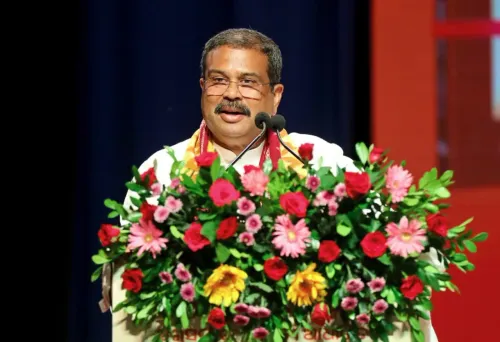
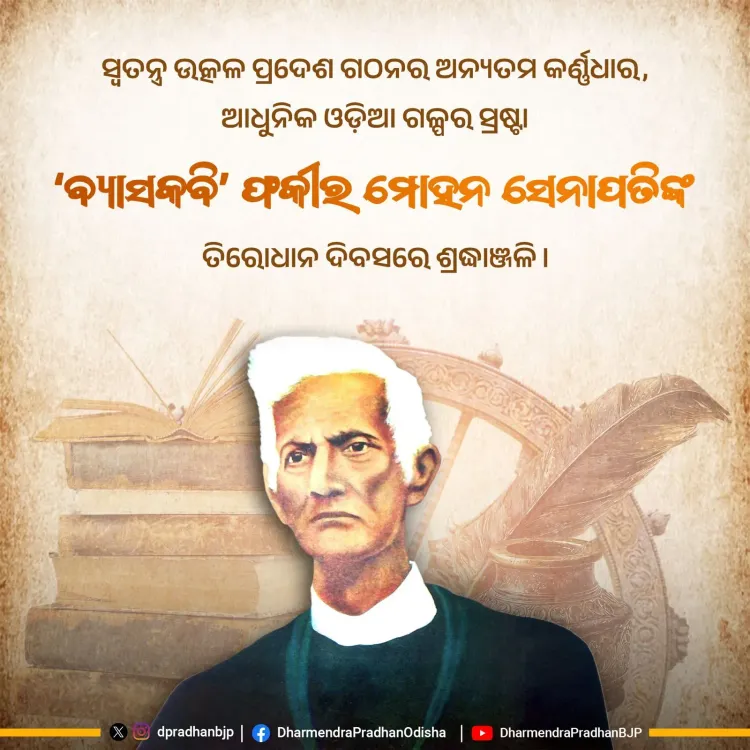
Union Education Minister Dharmendra Pradhan on Monday, 15 June 2026 paid tribute to Fakir Mohan Senapati, revered as the father of modern Odia prose, on the writer's death anniversary, honouring his twin legacy as a literary pioneer and a key architect of the movement for a separate Odia-speaking province.
Context
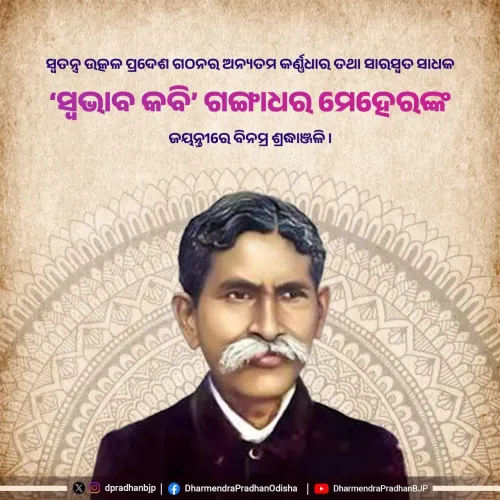
Pradhan's post, written in Odia, described Senapati as 'Byasakabi' — a title meaning 'poet equal to Vyasa' — and saluted him as one of the principal drivers (karnadhara) of the formation of a separate Utkal Pradesh and as the creator of modern Odia fiction. The tribute was accompanied by an image shared on the minister's official X account.
Fakir Mohan Senapati (1843–1918) is widely regarded as the architect of modern Odia literature. His landmark novel Chha Mana Atha Guntha and his pioneering short stories gave the Odia language a distinct literary identity at a time when it faced erasure under Bengali administrative dominance in the region.
Policy Backdrop
Senapati's activism was inseparable from the broader Odia language movement of the 19th and early 20th centuries, which culminated in Odisha's formation as India's first linguistic province on 1 April 1936. His literary output provided intellectual and cultural ammunition to advocates who argued that Odia was a distinct, rich language deserving its own administrative unit.
The tribute carries resonance in the current policy environment: Odia was accorded classical language status in 2014, and the National Education Policy 2020 — championed by Pradhan during his tenure as Education Minister — mandates promotion of mother-tongue medium instruction in early schooling, a principle Senapati's generation fought hard to establish.
Stakeholders and Impact
The Odia literary community, academics, and students across Odisha observe Senapati's death anniversary as a moment of cultural reflection. For the BJP, which governs both at the Centre and, since 2024, in Odisha, such tributes serve to reinforce the party's connect with regional cultural pride in a state where it is consolidating its political presence.
Pradhan, himself an Odia leader from Sambalpur, has consistently invoked regional cultural icons in public communication, positioning the Centre's education agenda — particularly NEP 2020's language provisions — as a continuation of the linguistic rights movements that figures like Senapati led.
What's Next
Attention will turn to whether the tribute is followed by concrete announcements — such as central grants for Odia-language publishing, digital archiving of Senapati's manuscripts, or curriculum integration under NEP 2020 — particularly as Odisha approaches its annual Utkal Divas (1 April) commemorations and cultural programmes tied to the classical language status. The alignment of ministerial tributes with policy action on mother-tongue education will be closely watched by the Odia literary establishment.
Point of View
Invoking Senapati connects personal cultural identity with institutional authority. The pattern of BJP ministers regularly honouring regional literary icons reflects a deliberate strategy to cement cultural legitimacy in states where the party is expanding, with Odisha being a prime example after its 2024 electoral breakthrough. Whether such tributes translate into tangible policy action — archiving, curriculum reform, publishing grants — will determine how the Odia intellectual community receives them.
NationPress
15 Sept 2026
Frequently Asked Questions
Who is Fakir Mohan Senapati?
Fakir Mohan Senapati (1843–1918) was an Odia writer known as 'Byasakabi' who is credited with creating modern Odia prose and the short story form. He was also a leading voice in the movement to establish a separate Odia-speaking province, which resulted in the formation of Odisha on 1 April 1936.
Why did Dharmendra Pradhan pay tribute to Fakir Mohan Senapati?
Pradhan posted a tribute on 15 June 2026 to mark Senapati's death anniversary, honouring his legacy as the father of modern Odia literature and a key figure in the Odia language movement.
What does 'Byasakabi' mean?
'Byasakabi' is an honorific title in Odia meaning 'a poet equal to Vyasa' — the legendary author of the Mahabharata — and is used to describe Fakir Mohan Senapati in recognition of his towering contribution to Odia literature.
What is the connection between Fakir Mohan Senapati and the formation of Odisha?
Senapati was one of the principal intellectual figures in the agitation for a separate Odia-speaking province. His literary work helped assert the distinctiveness of the Odia language, contributing to the movement that led to Odisha's formation as India's first linguistic province on 1 April 1936.
How does NEP 2020 relate to Odia language advocacy?
The National Education Policy 2020 mandates promotion of mother-tongue medium instruction in early grades, echoing the core demand of the Odia language movement that Senapati championed — that children must be educated in their own language. Odia also holds classical language status since 2014, reinforcing this policy direction.