CM Bhajan Lal Invokes 1975 Emergency, Vows to Guard Democracy

Synopsis
Rajasthan Chief Minister Bhajan Lal Sharma invoked the 1975 Emergency on 30 October 2026, urging citizens to pledge lifelong defence of the Constitution and democracy — a recurring BJP political motif rooted in that 21-month suspension of civil liberties under Congress rule.
Key Takeaways
CM Bhajan Lal Sharma posted on 30 October 2026 urging citizens to remember the 'atrocities' of the Congress-era Emergency and pledge to protect the Constitution.
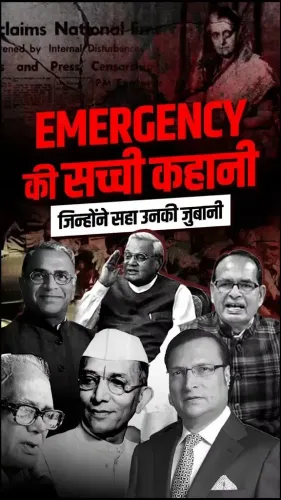
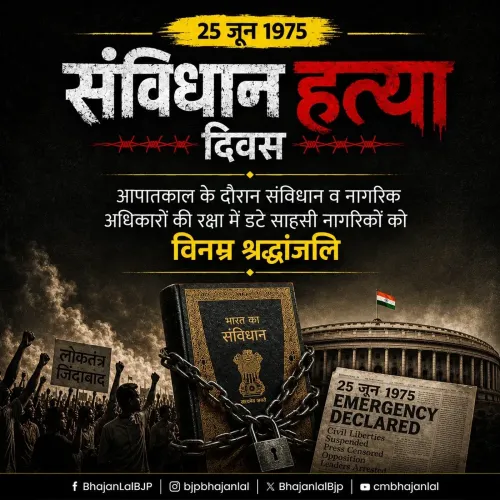
The 1975 Emergency was declared on 25 June 1975 by Prime Minister Indira Gandhi and lasted 21 months , suspending civil liberties and censoring the press.
The Emergency was revoked on 21 March 1977 after which Congress suffered a decisive electoral defeat.
BJP leaders have repeatedly invoked the Emergency as a counter-narrative to Congress on issues of democratic governance and institutional integrity.
As Rajasthan's chief minister, Sharma's statement carries official weight beyond routine party commentary.
Fifty-one years after Indira Gandhi's government plunged India into one of its darkest constitutional chapters, the memory of the 1975 Emergency is back at the centre of political conversation — this time as a rallying call from Rajasthan Chief Minister Bhajan Lal Sharma, who on Friday, 30 October 2026, urged citizens to renew their commitment to the Constitution and democracy.
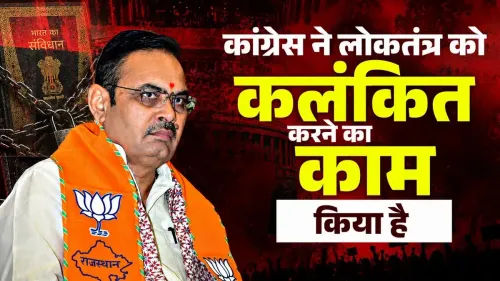
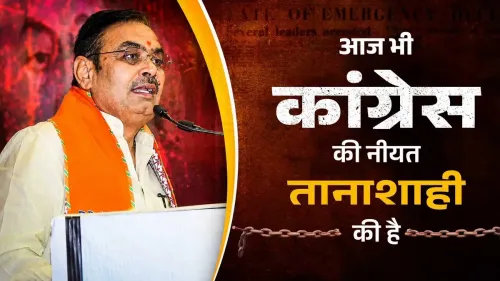
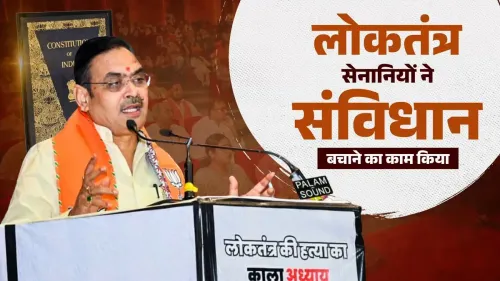
Posting in Hindi on X, CM Sharma wrote: 'Kांग्रेस के आपातकाल के अत्याचारों को याद रखते हुए आइए, संकल्प लें कि संविधान और लोकतंत्र की रक्षा के लिए सदैव डटे रहेंगे.' Translated: 'Remembering the atrocities of Congress's Emergency, let us resolve that we will always stand firm in protecting the Constitution and democracy.'
What the 1975 Emergency Actually Was
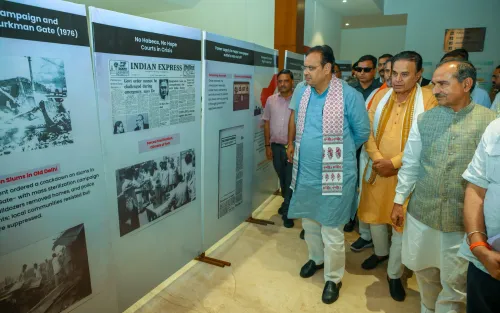
The national Emergency was proclaimed on 25 June 1975 by the government of Prime Minister Indira Gandhi, officially on grounds of 'internal disturbance.' For the next 21 months, civil liberties were suspended, opposition leaders were detained without trial, and the press operated under strict censorship. The Emergency was finally revoked on 21 March 1977, after which the Congress party faced a historic electoral rout. It remains the single most contested episode in post-Independence Indian democratic history.
BJP's Recurring Use of the Emergency as a Political Touchstone
BJP leaders have consistently returned to the Emergency as a defining contrast point in their political narrative — framing their own governance as a defence of the constitutional order that Congress, in their telling, once dismantled. CM Sharma's post follows this well-worn pattern, invoking the 'atrocities' of that period to sharpen a contemporary commitment to democratic values. The Indian National Congress has long disputed characterisations of the Emergency period, though the historical record of civil-liberty suspensions during those 21 months is not in dispute.
The post carries added weight given Sharma's position as the head of a state government — transforming what could read as routine political commentary into an official-register pledge. Whether it is a prelude to commemorative events in Rajasthan's state assembly or part of a broader national-party campaign cycle remains to be tracked in coming weeks.
Point of View
Allowing the party to simultaneously claim the mantle of constitutional guardians and keep Congress on the defensive over a documented democratic failure. The timing, without a confirmed external trigger, suggests this is part of an ongoing party-wide rhetorical cycle rather than a response to a specific provocation. What is worth watching is whether state assemblies formalise such commemorative rhetoric into legislative resolutions — that would mark an escalation from social-media signalling to institutional politics.
NationPress
30 Oct 2026
Frequently Asked Questions
What was the 1975 Emergency in India?
The national Emergency was declared on 25 June 1975 by Prime Minister Indira Gandhi 's Congress government, suspending civil liberties, detaining opposition leaders, and censoring the press for 21 months until it was revoked on 21 March 1977 .
Why did CM Bhajan Lal Sharma mention the Emergency?
CM Sharma invoked the Emergency to call on citizens to pledge lifelong protection of the Constitution and democracy, framing the historical event as a warning about threats to democratic values — a recurring BJP political narrative.
Who declared the Emergency in 1975?
Prime Minister Indira Gandhi of the Indian National Congress advised the declaration of the Emergency on 25 June 1975 , citing internal disturbance as the official ground.
How long did the 1975 Emergency last?
The Emergency lasted 21 months , from 25 June 1975 to 21 March 1977 , after which Congress lost the subsequent general election.
Why do BJP leaders keep referring to the 1975 Emergency?
BJP leaders use the 1975 Emergency as a political touchstone to contrast their governance with what they describe as Congress's historical assault on democratic institutions, positioning their party as defenders of the Constitution.