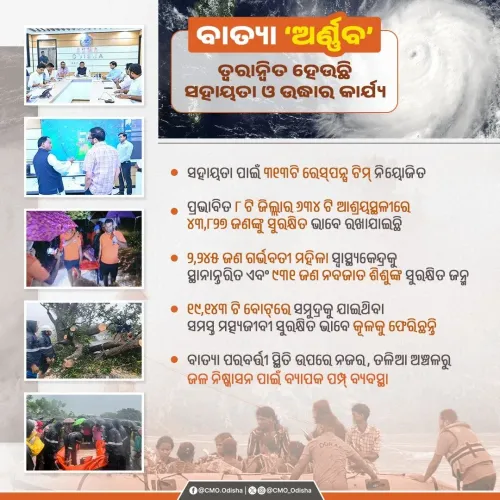
Odisha CMO: Airdrops at 21 Sites as Rain Relief Push Continues
Synopsis
The Chief Minister's Office of Odisha announced on 30 October 2026 that helicopter airdrops of essential relief supplies are underway at 21 locations hit by heavy rainfall, as ground access remains disrupted and state agencies work to reach stranded residents.
Key Takeaways
The Chief Minister's Office of Odisha confirmed active aerial relief operations on 30 October 2026 .
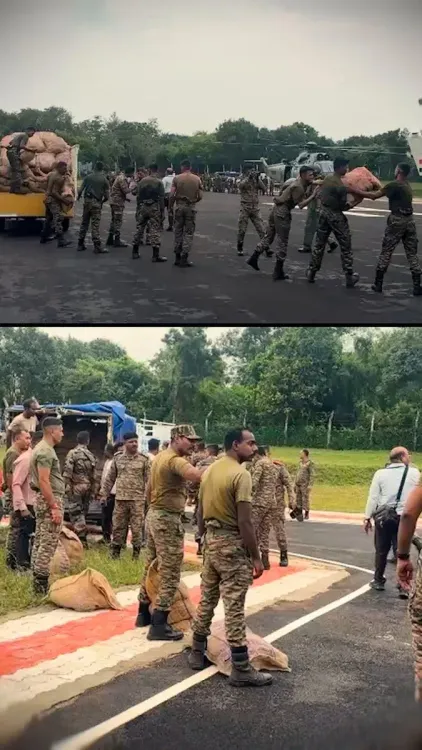
Helicopter airdrops of essential supplies are underway at 21 sites in rain-affected areas.
Ground access to affected pockets is disrupted, making aerial delivery the primary relief channel.
The Odisha State Disaster Management Authority (OSDMA) , formed after the 1999 Super Cyclone, coordinates the state's disaster response.
Damage assessment and potential requests for central government assistance are expected once the rainfall subsides.
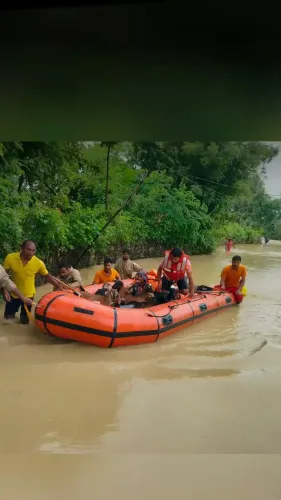
When roads vanish under floodwater, the sky becomes the only lifeline — and Odisha has opened it. The Chief Minister's Office of Odisha confirmed on Friday, 30 October 2026 that aerial relief operations are now active across 21 locations in rain-battered parts of the state, as ground access remains disrupted by heavy rainfall.
The post, shared by the official CMO account, states in Odia: 'ପ୍ରବଳ ବର୍ଷାରେ ପ୍ରଭାବିତ ଅଞ୍ଚଳରେ ରିଲିଫ୍ ସହାୟତା ଯୋଗାଣ ଜାରି ରହିଛି' — 'Relief assistance supply continues in areas affected by heavy rainfall.' Airdrops of essential supplies have begun at 21 sites, with the drive to reach affected residents ongoing.
Helicopters Over Floodwater: How Odisha's Aerial Relief Works
Odisha's use of helicopter airdrops for marooned communities is not improvised — it is doctrine. The state has embedded aerial delivery into its standard disaster-response playbook ever since the catastrophic Super Cyclone of 1999, which killed thousands and exposed fatal gaps in last-mile relief. Out of that tragedy came the Odisha State Disaster Management Authority (OSDMA), now the nodal agency that coordinates flood and cyclone response across the state.
Eastern India's monsoon season routinely cuts off low-lying villages when rivers breach their banks and roads wash out. In those windows, helicopters carrying food packets, drinking water, medicines, and emergency supplies become the only practical bridge between an administration and its most vulnerable citizens. With 21 airdrop points now activated, the current operation signals a flood footprint significant enough to overwhelm ground logistics.
What Comes After the Drops
The immediate priority is getting essentials to stranded residents before health emergencies compound the crisis. Once rainfall eases, officials will pivot to formal damage assessment — housing loss, crop destruction, infrastructure damage — figures that will determine whether the state government requests additional central assistance from New Delhi.
Odisha has, over the past two decades, built a reputation as one of India's most competent disaster-response states. The combination of OSDMA's institutional depth and the government's willingness to deploy aerial assets early is precisely what that reputation rests on. The test, as always, is speed and reach — whether every one of the 21 designated pockets gets supplied before the next rain band arrives.
Point of View
A choice that often determines whether a flood crisis becomes a humanitarian failure. The broader pattern of escalating extreme-rainfall events in eastern India means this kind of operational capacity is no longer just commendable — it is essential infrastructure. How quickly damage reports translate into central assistance requests will be the next political and administrative test.
NationPress
30 Oct 2026
Frequently Asked Questions
Which areas in Odisha are affected by heavy rainfall right now?
The Chief Minister's Office has confirmed relief operations across 21 locations hit by heavy rainfall, though the exact district-wise breakdown has not been specified in the official post.
What is OSDMA and what role does it play in Odisha floods?
OSDMA, the Odisha State Disaster Management Authority, is the state's nodal disaster-response agency. Established in 1999 after the Super Cyclone, it coordinates flood relief, cyclone preparedness, and aerial supply operations.
How does Odisha conduct helicopter airdrops during floods?
When floodwaters cut off road access, Odisha uses helicopters to deliver food, drinking water, medicines, and emergency supplies to marooned communities — a procedure embedded in OSDMA's standard operating protocols.
Will the Odisha government request central aid for the current floods?
Formal requests for central government assistance typically follow damage assessments once rainfall subsides. Officials have indicated that assessment reports are the next step after the ongoing relief operations.
How has Odisha improved its disaster response over the years?
Since the catastrophic 1999 Super Cyclone, Odisha has built one of India's most institutionalised disaster-response systems, using early warning networks, pre-positioned relief stocks, and aerial delivery to drastically cut casualties in subsequent events.