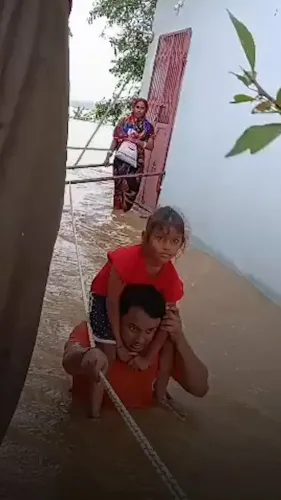
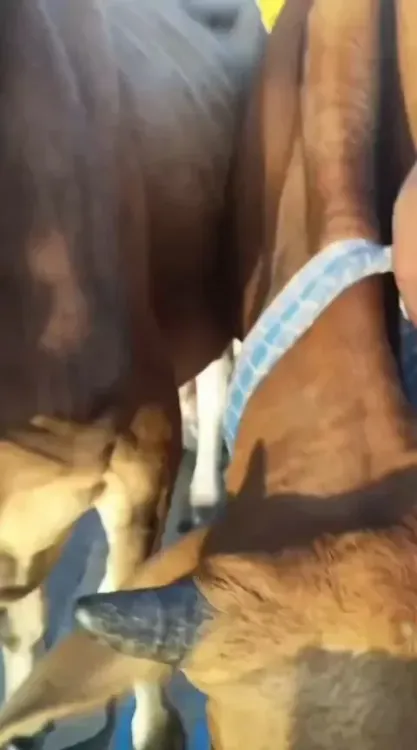
Odisha CM Office: Flood-Trapped Animals Being Rescued
Synopsis
The Chief Minister's Office of Odisha announced on 3 August 2026 that flood rescue operations are actively covering domestic and other animals trapped by rising waters, describing coordinated multi-agency efforts to ensure their protection, care, and support alongside human relief.
Key Takeaways
The Chief Minister's Office of Odisha confirmed on 3 August 2026 that animals trapped in flood-affected areas are being rescued alongside humans.
The government stated that 'every animal life is equally precious' in a flood situation, framing animal welfare as integral to disaster response.
Coordinated, multi-agency efforts are ensuring rescued animals receive protection, care, and necessary support after evacuation.
Odisha has formally integrated livestock evacuation into its disaster management protocols since the major floods of the early 2000s.
Animal Husbandry Department teams operate at the district level during inundation events as part of standard flood response.
For rural households, livestock represent livelihoods — making animal rescue an economic intervention as much as a welfare measure.
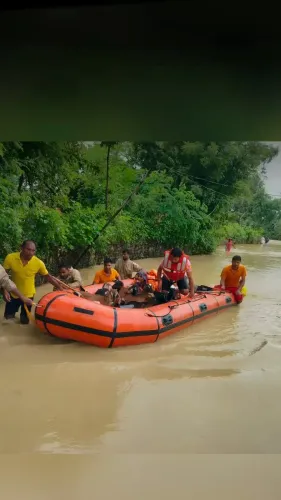
When floodwaters rise in Odisha, the state's rescue machinery does not stop at the human shoreline. The Chief Minister's Office of Odisha confirmed on Monday, 3 August 2026 that domestic and other animals trapped in flood-affected areas are being evacuated to safety — a deliberate, coordinated effort that places animal lives alongside human ones in the state's disaster response.
The post, shared in Odia, states plainly: 'ବନ୍ୟା ପରିସ୍ଥିତିରେ କେବଳ ମଣିଷ ନୁହେଁ, ପ୍ରତ୍ୟେକ ପ୍ରାଣୀର ଜୀବନ ମଧ୍ୟ ସମାନ ମୂଲ୍ୟବାନ' — 'In a flood situation, not only human lives but every animal life is equally precious.' The government describes the effort as a coordinated, multi-agency push ensuring the 'protection, care, and necessary support' of animals caught in the inundation.
A Rescue Doctrine That Counts Every Life
Odisha's approach is not improvised compassion — it is institutionalised protocol. Since the devastating floods of the early 2000s, the state's disaster management framework has formally integrated livestock evacuation alongside human rescue operations. Animal Husbandry Department teams deploy at the district level during inundation events, a practice that has become a signature feature of Odisha's widely studied disaster response model.
For rural households, livestock are not pets alone — they are livelihoods. A cow, a buffalo, a goat lost to floodwaters can erase a family's economic footing for seasons. The state's coordinated rescue effort, therefore, is as much an economic shield as it is a welfare measure.
What 'Coordinated Effort' Means on the Ground
The CMO's language — 'ସମନ୍ୱିତ ପ୍ରୟାସ' (coordinated effort) — points to multi-department action: revenue and disaster management personnel working alongside veterinary teams to identify, evacuate, and shelter animals stranded by rising water. Temporary shelters and veterinary care are part of the standard deployment, ensuring rescued animals receive attention after rescue, not just during it.
Odisha's rivers — the Mahanadi, the Brahmani, and others — make annual monsoon flooding a near-certainty for swathes of the state. That predictability has driven the government to build preparedness cycles, including pre-monsoon animal husbandry drills, that kick in automatically when water levels breach thresholds.
District-wise updates, veterinary camp deployments, and any compensation announcements for livestock losses will be the next markers to watch as the 2026 monsoon flood response unfolds across Odisha.
Point of View
Making rescue operations directly legible as economic protection. The CMO's choice to post in Odia, with a video, signals this message is aimed squarely at the state's own rural electorate, not at national or international audiences. Whether the ground-level execution matches the communication will be tested by district-level outcome data in the days ahead.
NationPress
18 Sept 2026
Frequently Asked Questions
Is Odisha rescuing animals during the 2026 floods?
Yes. The Chief Minister's Office of Odisha confirmed on 3 August 2026 that domestic and other animals trapped in flood-affected areas are being rescued through coordinated government efforts.
Which government department handles animal rescue during Odisha floods?
The Animal Husbandry Department, working alongside revenue and disaster management personnel, handles livestock evacuation and veterinary care during flood operations in Odisha.
Does Odisha have a policy for rescuing animals during floods?
Yes. Odisha formally integrated livestock evacuation into its disaster management protocols following the major floods of the early 2000s, making it a standard part of annual monsoon response.
Why does the Odisha government rescue animals during floods?
The state treats animal welfare as an extension of human relief, recognising that livestock are critical livelihoods for rural households. Losing animals to floods can devastate a family's economic stability for multiple seasons.
What rivers cause flooding in Odisha during the monsoon?
The Mahanadi and Brahmani are among the major rivers that cause recurrent monsoon flooding across large parts of Odisha each year.