Odisha CMO: Flood Evacuees and Cattle Moved to Safety
Synopsis
The Chief Minister's Office of Odisha confirmed on 30 July 2026 that flood-affected residents and livestock have been evacuated to safe shelters. Relief camps, cooked-meal centres, and dry ration distribution — rice, chuda, and guda — are active across affected zones, with field officials deployed round-the-clock.
Key Takeaways
Large numbers of flood-affected residents and livestock ( gosampad ) have been shifted to safe shelters from inundated areas.
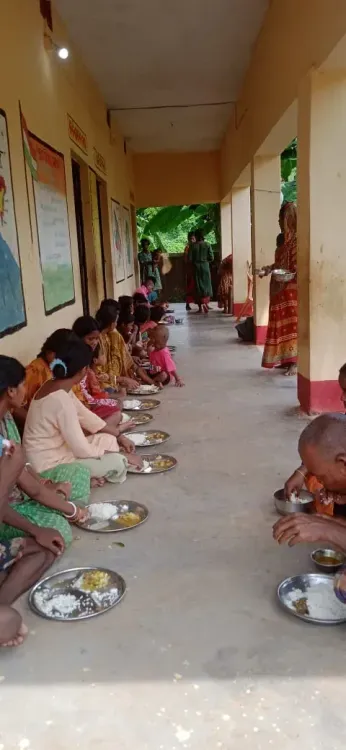
Multiple relief camps and cooked-food centres are operational in affected zones to provide hot meals to displaced people.
Emergency dry rations — rice, chuda (flattened rice), and guda (jaggery) — are being distributed as immediate relief.
Fodder has been arranged for evacuated livestock, addressing the economic vulnerability of rural families.
All concerned officials are deployed at the field level for continuous, round-the-clock relief coordination.
Odisha's response draws on a disaster-management framework institutionalised after the 1999 super cyclone .
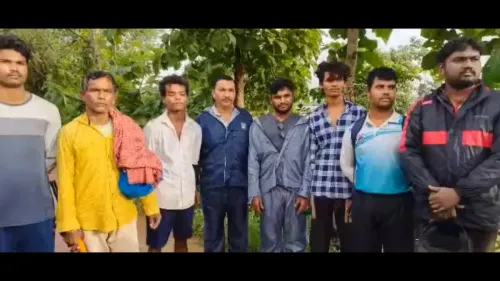
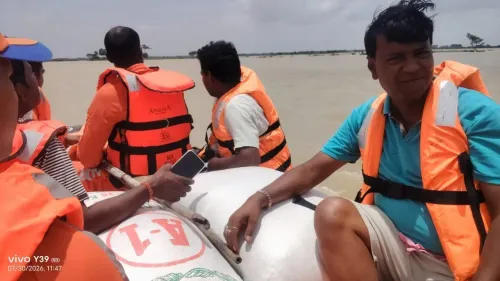
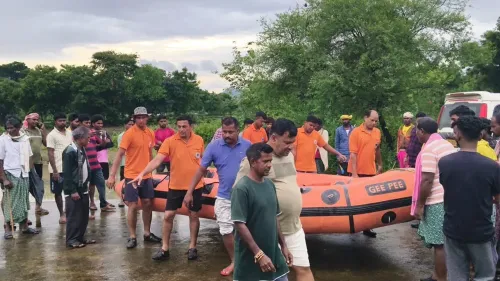
When floodwaters rise in Odisha, the state's response machine moves fast — and this time, it is moving for both people and livestock. The Chief Minister's Office of Odisha confirmed on Thursday, 30 July 2026 that large-scale evacuation of flood-affected residents and cattle from inundated areas is underway, with shelter, food, and fodder already in place across affected zones.
Evacuation on the ground: people and cattle moved together
The CMO stated that 'a large number of citizens along with livestock have been shifted to safe shelters from waterlogged and affected areas.' The simultaneous evacuation of cattle — referred to in Odia as gosampad (livestock wealth) — signals the breadth of the operation. Fodder has been arranged specifically for the animals, reflecting a protocol that treats livestock loss as a serious economic blow to rural families.
Relief camps and cooked-meal centres across affected zones
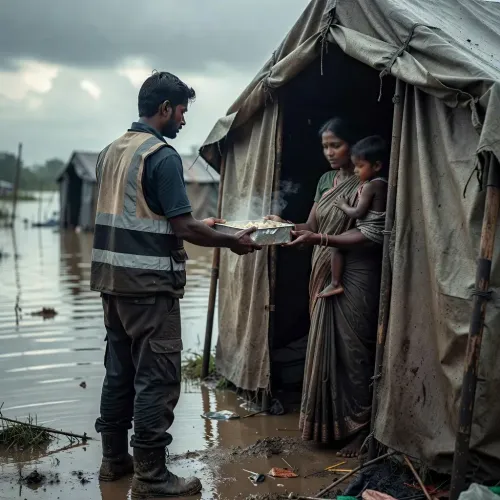
Numerous relief camps and cooked-food centres are operational in the flood-hit areas, ensuring displaced residents do not go hungry. Beyond hot meals, emergency dry rations — rice, chuda (flattened rice), and guda (jaggery) — are being distributed as immediate relief. These three items are a staple emergency combination in Odisha's flood-response playbook, providing quick energy with minimal preparation.
Field officials deployed for round-the-clock control
All concerned officials have been stationed at the field level, working 'continuously to control the situation and deliver assistance to people,' the CMO said. This ground-level deployment is central to Odisha's disaster management doctrine — a framework built and hardened after the devastating 1999 super cyclone that reshaped how the state responds to natural calamities. The emphasis on officials staying in the field, not in offices, is deliberate and institutionalised.
Odisha's eastern geography, threaded by rivers including the Mahanadi, makes annual monsoon flooding a near-certainty. What has changed over decades is the state's ability to move people and cattle quickly, pre-position supplies, and keep relief machinery running without waiting for central directives. The 2026 monsoon season has now activated that machinery in full.
The question now is scale: how many people remain displaced, whether central teams or the National Disaster Response Force (NDRF) have been requisitioned, and how quickly the waters recede. For the families currently in relief camps, those answers cannot come soon enough.
Point of View
Not an afterthought. The CMO's public update, paired with field-level official deployment, reflects a pattern of visible, accountable crisis communication that successive Odisha governments have used to signal administrative competence during monsoon emergencies. The 2026 response will be watched for whether the scale of relief matches the scale of displacement, and whether central resources such as NDRF teams are eventually drawn in — a threshold indicator of how severe this season's flooding truly is.
NationPress
13 Sept 2026
Frequently Asked Questions
What is the Odisha government doing for flood-affected people in 2026?
The Odisha government has evacuated large numbers of flood-affected residents to safe shelters, set up relief camps and cooked-food centres, and is distributing dry rations including rice, flattened rice (chuda), and jaggery (guda) as emergency relief.
Are cattle and livestock being rescued in the Odisha floods?
Yes. The Chief Minister's Office confirmed that livestock have been evacuated alongside residents to safe shelters, and fodder has been arranged for the animals.
Which rivers cause flooding in Odisha during the monsoon?
Odisha is prone to riverine flooding from several rivers, most notably the Mahanadi, during the annual monsoon season.
How does Odisha manage flood relief operations?
Odisha operates a disaster-management framework built after the 1999 super cyclone, involving early-warning systems, large-scale evacuation, relief camps, dry ration distribution, and field-level deployment of officials for round-the-clock coordination.
What food is distributed in Odisha flood relief camps?
Flood relief in Odisha typically includes cooked meals at relief camps and cooked-food centres, as well as dry ration kits containing rice, chuda (flattened rice), and guda (jaggery) for immediate emergency use.