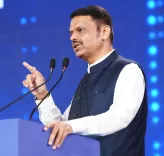
Akhilesh Yadav says AIIMS itself needs treatment under BJP rule

Synopsis
Samajwadi Party president Akhilesh Yadav declared on October 30 that AIIMS itself needs treatment under BJP rule, branding the government's ₹2.25 crore-a-day publicity claims as false propaganda and invoking the 'Andher Nagri' idiom to condemn what he called a reign of disorder.
Key Takeaways
Samajwadi Party president Akhilesh Yadav posted on October 30, 2026 that AIIMS needs treatment under BJP governance.
He invoked the अंधेर नगरी idiom, calling BJP's rule a 'kingdom of darkness and disorder.' Yadav dismissed the government's claimed daily publicity expenditure of ₹2.25 crore as 'false propaganda.' AIIMS , established in 1956 , is India's premier government medical institution and a politically symbolic target.
The BJP has expanded the AIIMS network since 2014 and launched Ayushman Bharat PMJAY in 2018 as flagship health initiatives.
The health ministry has not yet issued a formal response to Yadav's specific charges.
India's flagship medical institution has become a political flashpoint. Samajwadi Party president Akhilesh Yadav fired a sharp broadside at the BJP government on Friday, October 30, 2026, declaring that AIIMS itself is in need of treatment under BJP's watch — and dismissing official claims of massive daily publicity expenditure as nothing but hollow propaganda.
In his post, Yadav wrote: 'भाजपा राज में AIIMS को भी इलाज की ज़रूरत है।' — 'Under BJP rule, even AIIMS needs treatment.' He invoked the idiom 'अंधेर नगरी' ('a kingdom of darkness and disorder') to characterise the government's governance, and took a direct swipe at what he called a 'false propaganda' of ₹2.25 crore per day in government publicity spending.
Why 'AIIMS needs treatment' cuts deep
All India Institute of Medical Sciences, established in 1956, sits at the very top of India's public healthcare pyramid. It is the institution ordinary citizens look to when every other hospital has failed them. When a politician says AIIMS itself is broken, the charge is designed to hit at the credibility of an entire governance model — not just one ministry's budget line.
The BJP-led Union government has overseen a significant expansion of the AIIMS network since 2014, announcing new campuses across states in successive Union Budgets to extend tertiary care to underserved regions. The government has also pointed to the Ayushman Bharat Pradhan Mantri Jan Arogya Yojana, launched in 2018, as evidence of its health-sector ambition. Yadav's post challenges that official narrative head-on.
The ₹2.25 crore-a-day publicity charge
The specific figure of ₹2.25 crore per day in government publicity spending cited by Yadav is a recurring weapon in opposition rhetoric — the argument being that money spent advertising achievements could instead fix the very institutions being advertised. Whether the precise number refers to a parliamentary disclosure or a recent audit is not independently verifiable from current data, but the political logic is familiar and potent: it forces the ruling side to defend a number rather than a narrative.
Opposition leaders, including Yadav, have consistently used Parliament sessions and social media to contrast government claims on healthcare delivery with on-the-ground conditions at central institutions. The 'अंधेर नगरी' reference — drawn from a nineteenth-century Hindi satirical play about a state where chaos reigns and the ruler is blind — sharpens the critique into something more than a press-release complaint. It is a cultural indictment.
SP's pattern of targeting central health institutions
For Akhilesh Yadav, attacking the condition of central government-run institutions serves a dual purpose: it plays to Uttar Pradesh's large base of patients who depend on AIIMS Delhi and the newer AIIMS campuses in the state, and it keeps health — an issue with direct household resonance — on the political agenda ahead of any electoral cycle. The Samajwadi Party has consistently argued that headline schemes mask deteriorating institutional infrastructure.
The health ministry has yet to formally respond to the specific claims in the post. Watch for parliamentary questions and ministerial statements in the upcoming session that may directly engage with AIIMS infrastructure metrics or publicly counter the publicity-spending figure.
When the nation's best-known hospital becomes a symbol of governmental failure in a politician's vocabulary, the debate has moved far beyond budgets and bed counts — it is now about trust in the state itself.
Point of View
Not a rural PHC, but India's crown jewel of public medicine — is itself unwell, he raises the stakes of the healthcare debate dramatically. The ₹2.25 crore publicity-spending jab is equally calculated: it reframes every government advertisement as a diversion of resources rather than a communication of achievement. With Uttar Pradesh's enormous patient population dependent on central medical infrastructure, this framing has direct electoral resonance for the Samajwadi Party's core base. The broader arc here is clear — opposition parties have increasingly shifted from attacking policy design to attacking institutional integrity, a higher-risk but higher-reward political strategy.
NationPress
31 Oct 2026
Frequently Asked Questions
What did Akhilesh Yadav say about AIIMS on October 30 2026?
Akhilesh Yadav posted that AIIMS itself needs treatment under BJP rule, calling the government's functioning an 'Andher Nagri' (kingdom of disorder) and dismissing its ₹2.25 crore-a-day publicity spending as false propaganda.
What is AIIMS and why is it politically significant?
All India Institute of Medical Sciences, established in 1956, is India's premier government-run medical institution. Its symbolic stature makes it a high-value political target — criticism of AIIMS implies a failure of central governance at its most visible level.
What is the BJP government's record on AIIMS expansion?
Since 2014, the BJP-led Union government has announced new AIIMS campuses across multiple states in successive Union Budgets to extend tertiary healthcare, alongside the Ayushman Bharat PMJAY scheme launched in 2018.
What does 'Andher Nagri' mean in Akhilesh Yadav's post?
'Andher Nagri' literally means a city or kingdom of darkness and disorder. It refers to a famous nineteenth-century Hindi satirical play depicting chaotic, unjust rule — Yadav used it to characterise BJP governance as lawless and irrational.
Has the BJP government responded to Akhilesh Yadav's AIIMS criticism?
As of October 30, 2026, the health ministry had not issued a formal response to Yadav's specific post. Parliamentary questions and ministerial statements in upcoming sessions are likely avenues for a response.