Akhilesh Yadav slams BJP rule: UP needs IIT, getting SIT
Synopsis
Samajwadi Party president Akhilesh Yadav on June 15 attacked the BJP government in Uttar Pradesh with a sharp Hindi quip, saying the state deserves a new IIT but is instead getting an SIT — framing the ruling party's use of investigative bodies as a substitute for educational development.
Key Takeaways
Samajwadi Party president Akhilesh Yadav posted a pointed attack on the BJP government in Uttar Pradesh on June 15, 2026 .
He contrasted the need for a new Indian Institute of Technology (IIT) in UP with the government's formation of a Special Investigation Team (SIT) .
Uttar Pradesh already has IITs at Kanpur and Varanasi , but demand for premier technical seats in the state remains high.
The BJP government has constituted multiple SITs since 2017 to probe alleged irregularities from the previous SP regime.
The SP frames these SIT probes as politically motivated distractions from development and education spending.
The debate is expected to intensify ahead of the next Uttar Pradesh assembly election cycle.
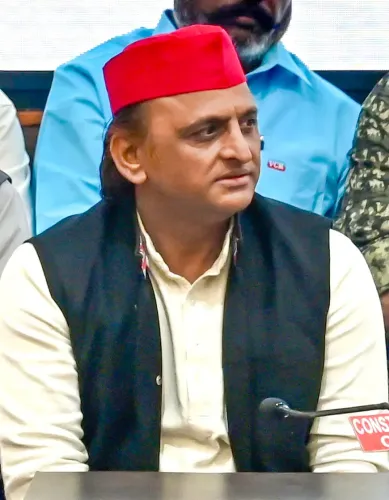
Samajwadi Party president Akhilesh Yadav on Monday, June 15, 2026, launched a sharp attack on the Bharatiya Janata Party government in Uttar Pradesh, saying the state deserves a new Indian Institute of Technology (IIT) but is instead getting a Special Investigation Team (SIT).
Posting in Hindi on X, Yadav wrote: 'भाजपा का भ्रष्ट-शासनकाल दुर्भाग्यपूर्ण है, प्रदेश में बननी चाहिए IIT; पर बन रही है SIT।' — translated: 'The BJP's corrupt tenure in power is unfortunate; the state should be getting an IIT, but instead an SIT is being formed.'
Context
The one-liner is a pointed rhetorical contrast between educational aspiration and what the opposition frames as political retribution. Uttar Pradesh already hosts two of India's oldest IITs — at Kanpur and Varanasi (BHU) — yet opposition leaders and student groups have long called for additional premier technical campuses in a state with over 24 crore residents.
Since the BJP came to power in Uttar Pradesh in 2017, the state government has constituted multiple Special Investigation Teams to probe alleged irregularities from the preceding Samajwadi Party government's tenure (2012–2017). The SP has consistently characterised these probes as politically motivated diversions.
Policy Backdrop
During the SP government's 2012–2017 term, the administration prioritised new higher-education campuses and infrastructure projects across Uttar Pradesh districts. Yadav, as Chief Minister, positioned educational expansion as a signature of his administration.
The BJP-led government that succeeded it framed several SIT investigations as accountability measures for alleged financial irregularities. Opposition parties, including the SP, have argued that these investigative bodies consume administrative bandwidth and public resources that could otherwise be directed toward development — particularly education and technical training for the state's youth.
Stakeholders and Impact
Uttar Pradesh's large student population and aspirational youth are the central constituency both parties are addressing with this debate. Demand for seats in premier engineering institutions consistently outstrips supply, and any proposal for a new IIT in the state would have significant electoral and policy resonance.
For the ruling BJP, SIT activity is presented as necessary governance and anti-corruption enforcement. For the SP and its supporters, the same activity is evidence that the government prioritises settling political scores over building institutions that can transform the lives of young people from Uttar Pradesh.
What's Next
Attention will now turn to Uttar Pradesh's upcoming state budget allocations for technical education and any fresh central or state proposals for new IIT campuses. Whether the BJP responds to Yadav's jibe with a counter-announcement on educational infrastructure remains to be seen.
The exchange underscores a broader pattern that is likely to intensify ahead of the next state assembly election cycle, with education spending and institutional accountability emerging as twin flashpoints in the SP-BJP contest for Uttar Pradesh.
Point of View
The jibe risks gaining traction in a state where access to quality technical education is a defining electoral issue.
NationPress
13 Sept 2026
Frequently Asked Questions
What did Akhilesh Yadav say about IIT and SIT in Uttar Pradesh?
Akhilesh Yadav posted on X on June 15, 2026, saying that while Uttar Pradesh should be getting a new IIT, the BJP government is instead forming an SIT, calling the BJP's tenure 'unfortunate and corrupt.'
How many IITs are there in Uttar Pradesh?
Uttar Pradesh has two IITs — one at Kanpur and one at Varanasi (BHU) — both established decades ago. Opposition leaders have demanded additional campuses given the state's large population.
Why has the BJP government in UP formed SITs?
The BJP government in Uttar Pradesh has constituted multiple Special Investigation Teams since 2017 to probe alleged financial irregularities from the previous Samajwadi Party government's tenure between 2012 and 2017.
Is Akhilesh Yadav's criticism of SITs new?
No. The Samajwadi Party has consistently argued since 2017 that BJP-ordered SIT probes are politically motivated and divert administrative focus from development, especially in education and infrastructure.
What is the significance of Akhilesh Yadav's IIT vs SIT remark for UP politics?
The remark encapsulates the central SP-BJP debate in Uttar Pradesh — development and education versus accountability and anti-corruption drives — and is likely to feature prominently in the run-up to the next state assembly elections.