Akhilesh Yadav demands SIT probe into Ayodhya visits

Synopsis
Samajwadi Party president Akhilesh Yadav has called for an SIT to investigate record-breaking Ayodhya visits by an unnamed individual, sharpening his party's accountability push against the ruling BJP in Uttar Pradesh ahead of the 2027 assembly elections.
Key Takeaways
Akhilesh Yadav posted on 19 June 2026 demanding an SIT to probe someone's 'record-breaking' visits to Ayodhya .
The post is in Hindi and does not name the individual targeted by the demand.
SITs are ad-hoc investigative bodies constituted by governments or courts in India for high-profile probes.
Ayodhya has become a major political flashpoint since the Supreme Court's 2019 verdict enabled Ram temple construction.
The remark follows an established opposition pattern of invoking accountability mechanisms to critique ruling-party conduct in Uttar Pradesh .
No formal response from the Uttar Pradesh government or BJP has been issued as of publication.
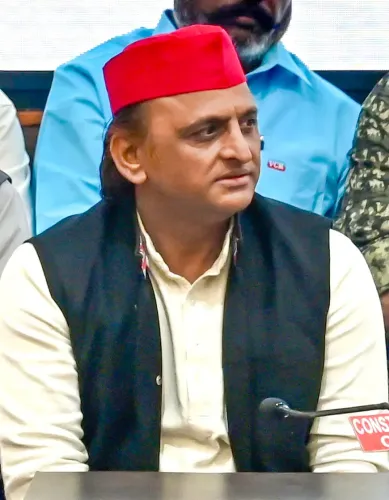
Samajwadi Party president Akhilesh Yadav on Friday, 19 June 2026, called for a Special Investigation Team (SIT) to examine what he described as record-breaking visits to Ayodhya by an unnamed individual, sharpening his party's accountability offensive against the ruling establishment in Uttar Pradesh.
Context
Yadav's post in Hindi reads: 'Ek SIT kisi ki record tod Ayodhya yatraon ki padtal ke liye bhi banani chahiye' — 'An SIT should also be constituted to investigate someone's record-breaking Ayodhya visits.' The statement is pointedly oblique, referring to an unnamed person whose repeated trips to the pilgrimage city Yadav implies warrant formal scrutiny.
The remark follows an established pattern in which opposition leaders invoke the SIT mechanism — typically reserved for high-profile criminal or communal probes — to demand accountability from ruling-party figures. By applying that frame to Ayodhya visits, Yadav signals that he views such travel as politically motivated and potentially misusing public resources.
Policy Backdrop
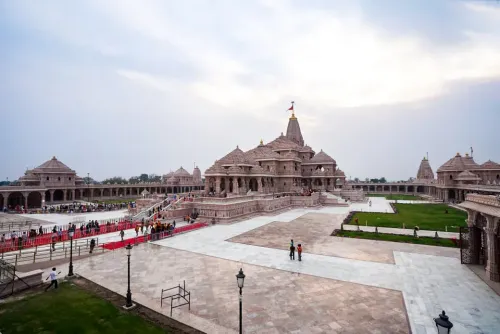
The Supreme Court's November 2019 verdict on the Ram Janmabhoomi title dispute cleared the way for temple construction in Ayodhya, transforming the city into a high-profile political and religious destination. Since the temple's consecration, visits by political figures have drawn both devotion and scrutiny across party lines.
Uttar Pradesh governments have constituted SITs on multiple occasions — covering communal incidents, land disputes, and alleged administrative irregularities — lending the demand rhetorical force as a recognised accountability tool. Yadav, who served as Chief Minister of Uttar Pradesh from 2012 to 2017, is familiar with the instrument from both sides of the political aisle.
Stakeholders and Impact
The barb is directed squarely at the Bharatiya Janata Party government in Lucknow, though Yadav names no individual — a deliberate rhetorical choice that invites audiences to draw their own conclusions while shielding the statement from direct defamation risk. Uttar Pradesh's 24 crore-plus electorate, which delivered a decisive verdict in the 2022 assembly elections and will vote again in 2027, is the implicit audience.
Opposition parties in the state have increasingly used Ayodhya as a lens through which to critique governance priorities, arguing that high-visibility religious optics have overshadowed development delivery. Yadav's post feeds that narrative without making a falsifiable factual claim that could be easily rebutted.
What's Next
The Uttar Pradesh government and the BJP are yet to issue a formal response to Yadav's post. Any official rebuttal or counter-demand from the ruling party would likely amplify the exchange ahead of the 2027 state assembly elections. Observers will watch whether the Samajwadi Party follows up with a formal memorandum or press conference naming specific individuals and travel figures to substantiate the demand.
Point of View
A tool ordinarily associated with criminal accountability, against religious travel, he attempts to recast BJP-aligned Ayodhya visits as a governance and probity issue rather than a devotional one. The timing, roughly 18 months before the 2027 Uttar Pradesh assembly elections, suggests the Samajwadi Party is building a sustained narrative around perceived misuse of public resources and political optics. Whether the attack lands will depend on whether the party can produce verifiable specifics to back the rhetorical charge.
NationPress
18 Sept 2026
Frequently Asked Questions
What did Akhilesh Yadav say about Ayodhya on 19 June 2026?
Akhilesh Yadav posted on X demanding that an SIT be constituted to investigate the 'record-breaking' Ayodhya visits of an unnamed individual, framing such trips as warranting formal scrutiny.
What is an SIT and why is Akhilesh Yadav invoking it?
An SIT, or Special Investigation Team, is an ad-hoc body set up by a government or court to probe specific high-profile cases. Akhilesh Yadav invoked it to signal that the Ayodhya visits in question are serious enough to merit independent investigation, a common opposition tactic in Indian politics.
Who is Akhilesh Yadav targeting with the Ayodhya SIT demand?
Yadav did not name any individual in his post. The deliberate ambiguity is a rhetorical device that invites audiences to draw their own conclusions without making a directly falsifiable claim.
Why is Ayodhya politically significant in Uttar Pradesh?
Ayodhya is the site of the Ram Janmabhoomi temple, built following the Supreme Court's November 2019 verdict. It has since become a high-visibility destination for political figures, making visits to the city a subject of partisan contestation.
What is the Samajwadi Party's broader political strategy ahead of 2027?
The Samajwadi Party, led by Akhilesh Yadav, has been building a narrative around governance accountability and the perceived gap between political optics and development delivery in Uttar Pradesh, targeting the 2027 state assembly elections.