Modi Inaugurates Bharat Renewable Energy Summit in Delhi
Synopsis
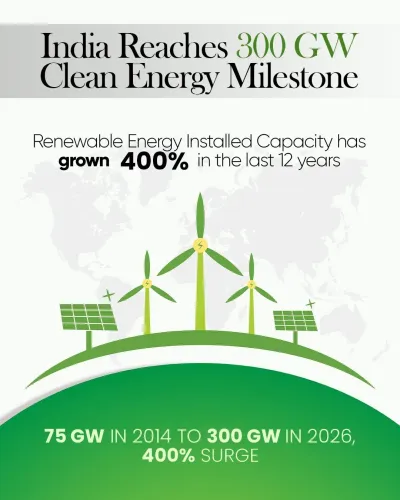
Prime Minister Modi inaugurated the Bharat Renewable Energy Summit and Expo in New Delhi on November 2, 2026, in a ceremony live-streamed by Union Minister Gajendra Singh Shekhawat. The summit spotlights India's Panchamrit pledge to achieve 500 GW non-fossil fuel capacity by 2030 and net-zero by 2070.
Key Takeaways
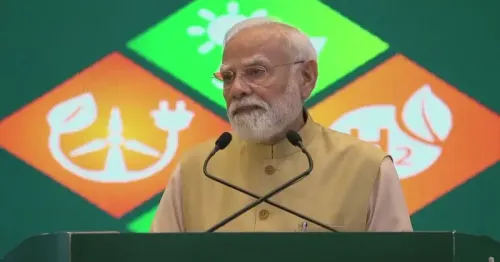
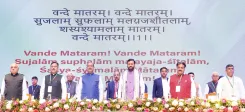
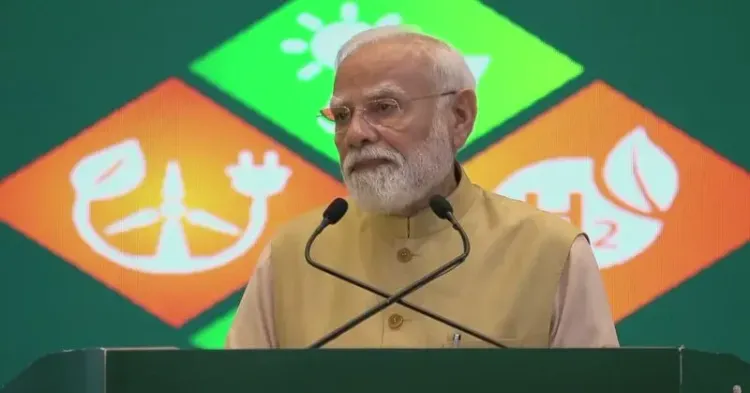
Prime Minister Narendra Modi inaugurated the Bharat Renewable Energy Summit & Expo in New Delhi on November 2, 2026 .
Union Minister Gajendra Singh Shekhawat shared a live broadcast of the inauguration on X.
India's Panchamrit strategy, announced at COP26 in 2021 , targets 500 GW non-fossil fuel capacity by 2030 and net-zero by 2070 .
Modi also founded the International Solar Alliance in 2015 , now spanning over 120 countries .
The summit is expected to generate investment commitments and policy signals from the central government on clean-energy deployment.
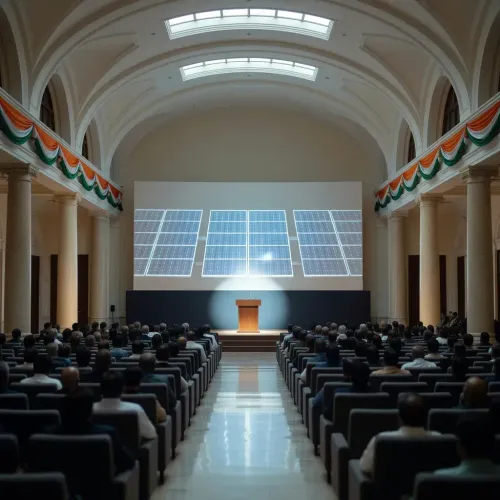
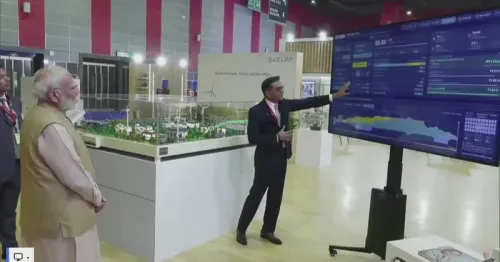
India's clean-energy ambitions stepped into sharper focus on Monday, November 2, 2026, as Prime Minister Narendra Modi inaugurated the Bharat Renewable Energy Summit & Expo in New Delhi — a high-profile gathering of green-energy developers, investors, and policymakers. Union Culture and Tourism Minister Gajendra Singh Shekhawat shared a live broadcast of the ceremony on X, flagging the moment for his followers in real time.
A summit Delhi was built to host
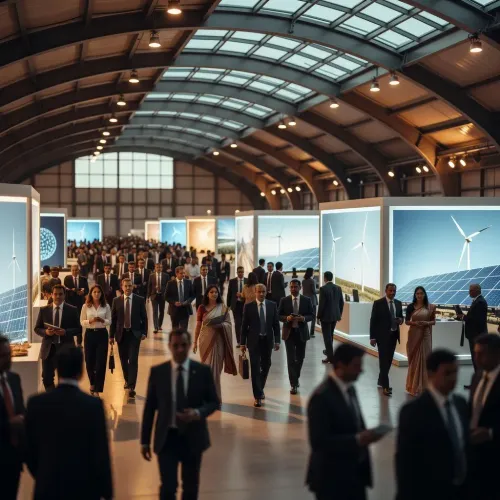
The national capital has become the preferred stage for India's biggest policy-signal events, and an energy summit inaugurated by the Prime Minister himself carries unmistakable intent. By placing his own presence at the opening, Modi underscored that the government's renewable push is not a bureaucratic exercise — it is a leadership-level priority. The event brings together the full spectrum of the clean-energy ecosystem: project developers, equipment manufacturers, grid operators, and the green-finance community.
Panchamrit targets and the road to 500 GW
The backdrop to the summit is India's Panchamrit climate pledge, announced at COP26 in Glasgow in 2021. The strategy commits India to 500 GW of non-fossil fuel capacity by 2030 and net-zero emissions by 2070 — targets that require an extraordinary pace of solar, wind, and storage deployment between now and the end of the decade. Summits of this scale are the pressure valves that convert political ambition into investment pipelines, supply-chain agreements, and regulatory clarity.
India's renewable record already reflects years of deliberate acceleration. Modi was also the driving force behind the International Solar Alliance, launched in 2015, which has since grown into a multilateral platform connecting over 120 countries around solar energy cooperation. The Bharat Renewable Energy Summit sits within that same strategic lineage — domestic muscle married to global credibility.
What investors and developers will be watching
For the renewable energy industry, the key question coming out of any such summit is whether ministerial-level enthusiasm translates into concrete policy action: revised tariff frameworks, streamlined land-acquisition rules, enhanced grid-connection timelines, or fresh production-linked incentive tranches. Budget cycles and regulatory updates in the months following an event like this typically reveal how seriously the signals were meant. The presence of the Prime Minister at the inauguration raises the expectation bar considerably.
India's clean-energy journey has reached the point where the targets are no longer aspirational — they are scheduled. The Bharat Renewable Energy Summit is where that schedule meets accountability.
Point of View
Summits like this serve as investment-mobilisation tools as much as policy platforms. Minister Shekhawat's real-time amplification on X reflects a now-standard BJP communications playbook: keep the party's digital base looped into governance milestones. The sharper test will come in the weeks ahead, when any announced investment figures or regulatory commitments are stress-tested against actual implementation timelines.
NationPress
2 Nov 2026
Frequently Asked Questions
What is the Bharat Renewable Energy Summit and Expo?
The Bharat Renewable Energy Summit and Expo is a major clean-energy industry event in New Delhi inaugurated by Prime Minister Narendra Modi on November 2, 2026, bringing together renewable energy developers, investors, and policymakers.
What is India's Panchamrit renewable energy pledge?
India's Panchamrit strategy, announced at COP26 in Glasgow in 2021, commits the country to achieving 500 GW of non-fossil fuel electricity capacity by 2030 and reaching net-zero carbon emissions by 2070.
Who is Gajendra Singh Shekhawat?
Gajendra Singh Shekhawat is India's Union Minister of Culture and Tourism, a senior BJP leader, and a Lok Sabha MP from Jodhpur, Rajasthan.
What is the International Solar Alliance and how is it connected?
The International Solar Alliance is a Modi-initiated multilateral platform launched in 2015 to promote solar energy cooperation, now with over 120 member countries. It forms part of the same strategic arc as the Bharat Renewable Energy Summit.
What outcomes are expected from the Bharat Renewable Energy Summit?
Observers are watching for investment commitments, regulatory announcements, and policy updates on tariffs, land acquisition, grid connectivity, and incentive schemes that could emerge from or follow the summit.