Kishan Reddy: India's green economy tops $110 bn in 2025
Synopsis
Union Coal and Mines Minister G. Kishan Reddy has declared India 'Asia's green growth powerhouse,' citing green economy revenues surpassing $110 billion in 2025. He credited PM Modi's leadership and pointed to renewable energy, biogas innovation, and irrigation as the pillars driving India's rise as a global climate leader.
Key Takeaways
Union Coal and Mines Minister G.
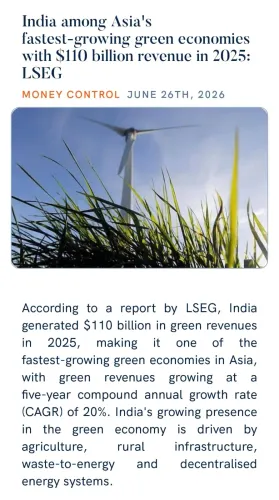
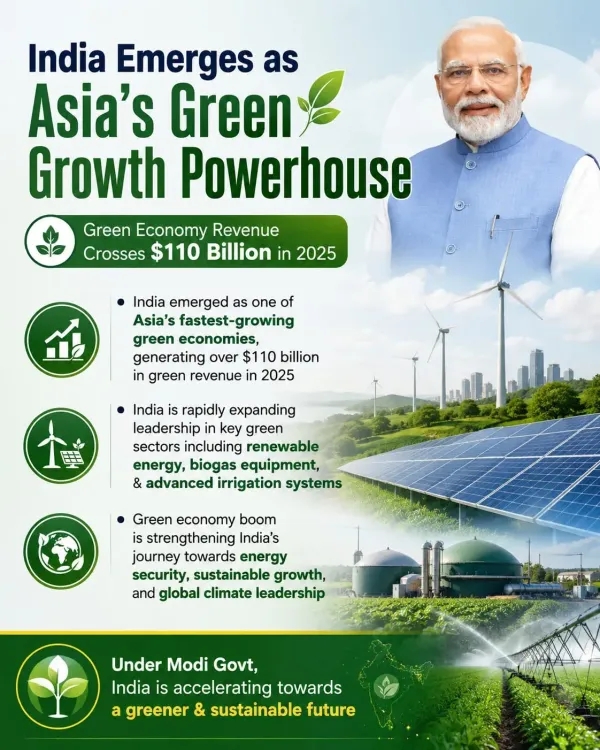
Kishan Reddy posted on 2 July 2026 that India's green economy revenues have surpassed $110 billion in 2025 .
Reddy highlighted three policy pillars: renewable energy , biogas innovation , and advanced irrigation as drivers of India's green growth.
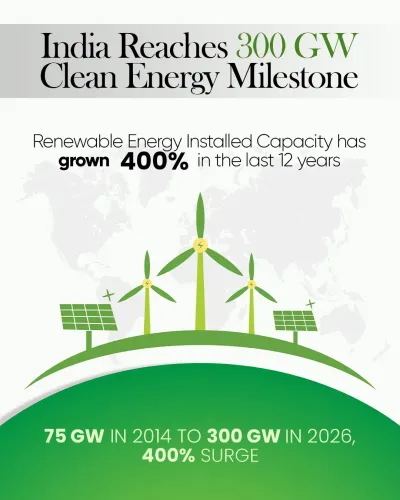
India's climate commitments include 500 GW non-fossil electricity capacity by 2030 and net-zero emissions by 2070 , pledged at COP26.
Key government schemes underpinning these goals include the SATAT scheme (compressed biogas), PMKSY (irrigation), and the International Solar Alliance co-founded with France in 2015.
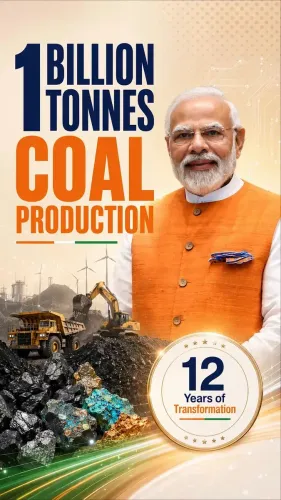
India simultaneously expands coal output for baseload security, reflecting a dual-track energy policy balancing growth and climate targets.
Progress on the National Green Hydrogen Mission and compressed biogas targets are expected to be closely watched in upcoming budget and COP cycles.
Union Coal and Mines Minister and BJP Telangana president G. Kishan Reddy on Thursday, 2 July 2026, credited Prime Minister Narendra Modi's leadership for what he described as India's emergence as 'Asia's green growth powerhouse,' citing green economy revenues surpassing $110 billion in 2025 and pointing to advances in renewable energy, biogas innovation, and irrigation infrastructure.
Context
In his post, Reddy stated that India's green economy revenues have crossed the $110 billion mark in 2025, framing this as evidence of the Modi government's commitment to climate leadership. He specifically highlighted three policy pillars: renewable energy, biogas innovation, and advanced irrigation, arguing that together they are 'cementing India's position as a global climate leader while securing a sustainable and resilient future for the nation.'
The minister's remarks come against the backdrop of India's internationally stated Panchamrit climate commitments, which include achieving 500 GW of non-fossil electricity capacity by 2030 and reaching net-zero emissions by 2070 — pledges first presented at COP26 in 2021.
Policy Backdrop
India's green economy push rests on several interlocking schemes. The SATAT scheme, launched in 2018 by the Ministry of Petroleum, promotes compressed biogas plants using agricultural residue and municipal waste, directly underpinning the 'biogas innovation' Reddy referenced. On the irrigation front, the Pradhan Mantri Krishi Sinchayee Yojana (PMKSY), approved in 2015, has sought to converge irrigation investments across ministries and improve water-use efficiency for farmers.
On the global stage, India co-launched the International Solar Alliance with France in 2015 to accelerate solar deployment among tropical nations — a multilateral initiative that has become a signature element of India's climate diplomacy. The National Biogas and Manure Management Programme, expanded since 2014, further supports household and industrial biogas adoption across rural India.
India's energy policy operates on a dual track: simultaneous expansion of coal output for baseload security alongside rapid scaling of renewables and alternative fuels. This reflects the tension between energy access, economic growth, and emission-intensity reduction under the Paris Agreement — a balance that the government has consistently defended as appropriate for a developing economy.
Stakeholders and Impact
The constituencies most directly affected by this policy arc include renewable energy developers, who benefit from capacity targets and grid integration investments, and farmers and rural households, who stand to gain from improved irrigation efficiency under PMKSY and cleaner cooking fuel through biogas programmes. For Telangana, where Reddy also serves as BJP state president, the green economy narrative carries political salience ahead of state-level electoral cycles.
Broader industrial stakeholders — including manufacturers in the solar equipment, compressed biogas, and agricultural technology sectors — are watching how central targets translate into state-level procurement and subsidy frameworks. The National Green Hydrogen Mission is an additional initiative that analysts expect to feature prominently in upcoming budget and COP review discussions.
What's Next
Progress on the National Green Hydrogen Mission and state-level compressed biogas targets are expected to be key metrics in the next Union Budget and in India's submissions to upcoming COP review cycles. How the government reconciles continued coal sector growth — overseen by Reddy's own ministry — with its renewable ambitions will remain a closely watched policy question. India's trajectory on the 500 GW non-fossil capacity target by 2030 will serve as the most concrete benchmark against which these claims of green leadership will be tested.
Point of View
The statement bridges electoral messaging with policy substance — though the $110 billion figure itself sits beyond independently verifiable data. The broader pattern is significant: a minister who oversees coal expansion is simultaneously championing green credentials, reflecting the government's calculated dual-track narrative. How that tension resolves — particularly on the 500 GW non-fossil target — will define India's credibility in global climate diplomacy through the end of the decade.
NationPress
1 Oct 2026
Frequently Asked Questions
What is India's green economy revenue in 2025 according to G. Kishan Reddy?
According to Union Coal and Mines Minister G. Kishan Reddy, India's green economy revenues surpassed $110 billion in 2025, which he cited as evidence of the country's emergence as Asia's green growth powerhouse.
What are India's key green energy schemes under the Modi government?
Key schemes include the SATAT scheme for compressed biogas (2018), Pradhan Mantri Krishi Sinchayee Yojana for irrigation efficiency (2015), the National Biogas and Manure Management Programme, and the International Solar Alliance co-founded with France in 2015.
What is India's 2030 renewable energy target?
India has pledged to achieve 500 GW of non-fossil electricity capacity by 2030 as part of its Panchamrit climate commitments, first announced at COP26 in 2021.
Who is G. Kishan Reddy?
G. Kishan Reddy is the Union Minister of Coal and Mines in the Government of India and also serves as the BJP's Telangana state president.
What is the SATAT scheme in India?
The SATAT scheme, launched in 2018 by the Ministry of Petroleum, promotes the setting up of compressed biogas plants using agricultural residue and municipal waste, supporting India's biogas and clean energy goals.