CM Mohan Yadav: Judiciary is democracy's strongest pillar
Synopsis
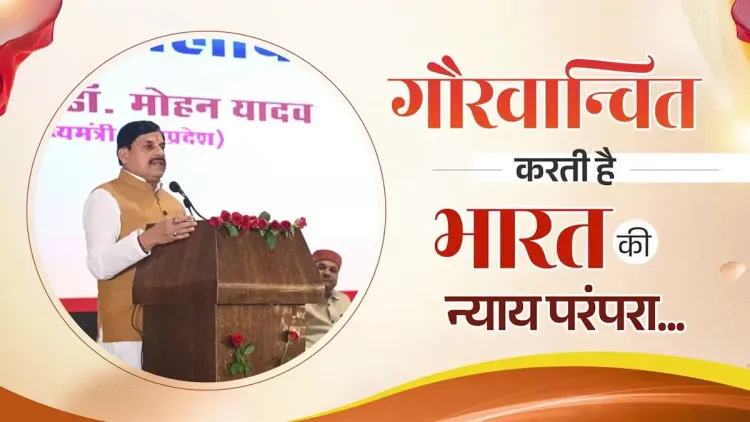
Madhya Pradesh CM Dr. Mohan Yadav reaffirmed on 30 October 2026 that India, as the world's largest democracy, draws its core strength from a robust judicial tradition — calling the judiciary an indispensable pillar of the constitutional order.
Key Takeaways
Mohan Yadav publicly reaffirmed the judiciary as a vital pillar of India's democratic system on 30 October 2026 .
He described India as the world's largest democratic nation and its justice tradition as its greatest strength.
The statement framed the judiciary as the guardian of citizens' rights and principles of justice .
Madhya Pradesh 's constitutional framework, like the broader Indian republic, rests on three co-equal branches established since 1950 .
The exact occasion prompting the statement has not been officially disclosed by the Chief Minister's Office.
India's democracy draws its deepest strength not from ballots alone, but from the bedrock of justice — and Madhya Pradesh Chief Minister Dr. Mohan Yadav put that conviction on record on Friday, 30 October 2026, reaffirming the judiciary's indispensable role in the nation's constitutional architecture.
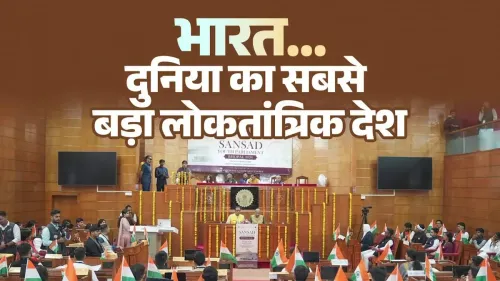
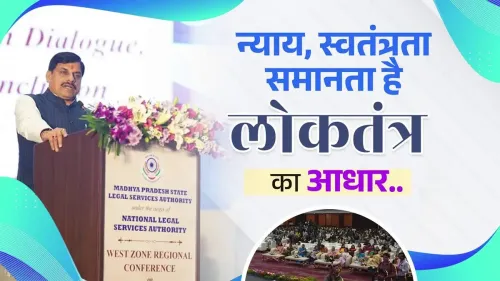
Speaking through the official Chief Minister's Office account on X, Dr. Yadav stated: 'भारत दुनिया का सबसे बड़ा लोकतांत्रिक देश है' ['India is the world's largest democratic nation'] and that 'न्यायपालिका लोकतांत्रिक व्यवस्था का महत्वपूर्ण स्तंभ है' ['the judiciary is an important pillar of the democratic system'] — one that protects citizens' rights and the principles of justice.
Three pillars, one republic
India's constitutional design, in force since 1950, distributes sovereign power across three co-equal branches: the legislature, the executive, and the judiciary. The statement from Bhopal echoes that foundational architecture, positioning an independent judiciary not as a check on democracy but as its very precondition. When courts function without fear or favour, every other democratic guarantee — free speech, due process, equal protection — has a guarantor.
Madhya Pradesh, a state with one of India's largest territorial footprints and a population of over 80 million, has a High Court bench that regularly handles matters spanning land rights, civil liberties, and administrative accountability. A Chief Minister's public affirmation of judicial primacy carries symbolic weight at a moment when the relationship between elected governments and the courts remains a live national conversation.
Why CM Yadav's framing matters
Dr. Yadav anchored his remarks in the language of sudriddh nyay parampara — a 'robust tradition of justice' — rather than in transactional or legalistic terms. That framing positions the judiciary as a civilisational inheritance, not merely a constitutional convenience. Indian state governments periodically issue such affirmations, often timed to legal events, High Court anniversaries, or Constitution Day observances. The exact occasion prompting Friday's statement has not been officially disclosed.
What is clear is the message itself: in a democracy as vast and diverse as India's, the courtroom is where rights become real. For citizens navigating bureaucracy, seeking redress, or asserting their fundamental freedoms, that promise lands with practical weight.
The ball is now in the judiciary's own court — and the Chief Minister of Madhya Pradesh has just said, publicly, that he wants it to stay there.
Point of View
Or staking a constitutional-values position in a national debate. Dr. Yadav's framing — rooting the judiciary in India's civilisational 'justice tradition' rather than its post-1950 constitutional text — signals an appeal to deep legitimacy rather than narrow legalism. With the relationship between elected governments and courts under scrutiny nationally, a state executive voluntarily placing the judiciary on a pedestal is a notable posture. Whether it translates into policy deference to court directives will be the real test.
NationPress
30 Oct 2026
Frequently Asked Questions
What did MP CM Mohan Yadav say about the judiciary?
CM Dr. Mohan Yadav stated on 30 October 2026 that the judiciary is an important pillar of India's democratic system, protecting citizens' rights and the principles of justice, and that India's robust justice tradition is its greatest democratic strength.
Why is the judiciary called a pillar of Indian democracy?
India's constitution, in force since 1950, establishes the judiciary as one of three co-equal branches of governance alongside the legislature and executive. Its independence ensures citizens can seek enforceable protection of their fundamental rights.
Who is Dr. Mohan Yadav?
Dr. Mohan Yadav is the Chief Minister of Madhya Pradesh, heading the state government based in Bhopal.
What is Madhya Pradesh's connection to India's judicial system?
Madhya Pradesh is one of India's largest states by area, with its own High Court that handles a wide range of civil, criminal, and constitutional matters affecting the state's population of over 80 million.
What occasion prompted CM Yadav's statement on the judiciary?
The Chief Minister's Office has not officially disclosed the specific occasion or event that prompted the statement on 30 October 2026.